
A low FODMAP diet guide helps people with IBS-like bloating, gas, and pain identify carbohydrate triggers without guessing forever. FODMAPs are fermentable oligosaccharides, disaccharides, monosaccharides, and polyols—short-chain carbs that can draw water into the intestine and feed gas-producing bacteria. This article explains a low FODMAP food list approach, how a low FODMAP diet for IBS is supposed to work in phases, and foods to avoid on low FODMAP during the elimination stage.
Important: low FODMAP is a short-term diagnostic diet best done with a registered dietitian. It is not a forever “healthy eating” brand and not appropriate for every digestive problem.
Quick answer: what is the low FODMAP diet?
You temporarily reduce high-FODMAP foods, note symptom change, then systematically reintroduce foods to learn personal tolerances. The end goal is the most varied diet you can enjoy with manageable symptoms—not lifelong extreme restriction.
Who a low FODMAP diet for IBS is for
A low FODMAP diet for IBS is most studied in people with irritable bowel syndrome after other red flags are addressed. It may help bloating, pain, and altered bowel habits in a substantial subset of patients. It is not first-line for unexplained weight loss, bleeding, fever, or suspected celiac disease without testing.
Read our overview of IBS symptoms, triggers, and relief before assuming every gut symptom is IBS. Related bloating education: bloating causes and relief.
The three phases (do not skip reintroduction)
- Elimination (usually 2–6 weeks): Follow a structured low FODMAP food list under guidance.
- Reintroduction: Challenge one FODMAP group at a time while keeping the base diet low FODMAP.
- Personalization: Keep only the restrictions you truly need; restore as many foods as possible.
Staying in elimination for months without reintroduction risks nutrient gaps, food fear, and a weaker microbiome from low diversity.
Low FODMAP food list: examples by category
Lists change with portion size. A food can be low FODMAP at one serve and high at another. Use a trusted dietitian resource or Monash-style guidance for exact serves. Examples often allowed in suitable portions during elimination:
Often lower FODMAP options
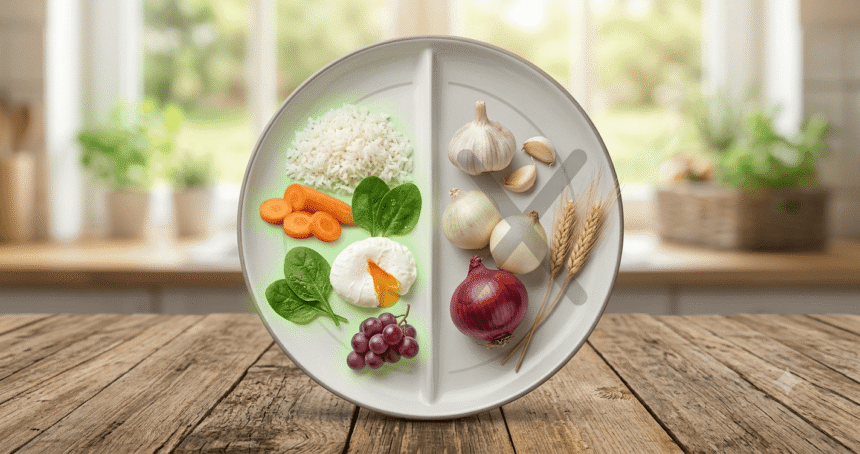
- Proteins: plain meat, fish, eggs, firm tofu (check labels for onion/garlic powders)
- Dairy alternatives: lactose-free milk, many hard cheeses in moderate amounts
- Grains: rice, quinoa, oats (portion-aware), sourdough wheat sometimes tolerated differently than regular wheat—follow current guidance
- Vegetables: carrot, cucumber, zucchini, eggplant, spinach, potato (portions matter for some)
- Fruit: banana (firm), orange, kiwi, strawberries in listed serves
- Fats: olive oil, butter in usual cooking amounts
Foods to avoid on low FODMAP (elimination phase examples)
- Onion and garlic (including many sauces and stocks)
- Wheat-, rye-, or barley-heavy foods in typical serves for oligosaccharide sensitivity
- Milk and soft cheeses if lactose is a trigger
- Apples, pears, mango, watermelon in usual serves
- Beans and lentils in standard cans/cups (some canned lentils may be trialled later in small serves per guidance)
- Cauliflower, mushrooms, and certain other vegetables at common portions
- Sugar alcohols: sorbitol, mannitol, xylitol in gum and “diet” products
- High-fructose items and some honey or agave depending on the list used
“Foods to avoid on low FODMAP” is phase-specific. Many of these return in tested amounts after reintroduction.
How to grocery shop without panic
- Read ingredient lists for onion, garlic, high-fructose corn syrup, and polyols
- Cook simple proteins with allowed herbs, garlic-infused oil (if advised), citrus, and salt
- Batch rice, potatoes, and low FODMAP vegetables
- Avoid “gluten-free” as an automatic synonym for low FODMAP—many GF products still contain high FODMAP ingredients
Hydration still matters when fiber patterns change—see dehydration symptoms and hydrating foods.
Sample elimination-day menu (illustrative)
- Breakfast: Eggs with spinach and lactose-free yogurt if included on your list
- Lunch: Grilled chicken, rice, cucumber, carrot
- Snack: Firm banana or oranges per serve guidance
- Dinner: Baked fish, potato, zucchini
Exact menus must match the list your dietitian provides. This sample is educational only.
Common mistakes
- Starting low FODMAP without ruling out celiac disease when indicated
- Staying restricted for a year “just in case”
- Blaming every symptom on FODMAPs while ignoring stress, sleep, and meal size
- Using random blog lists that disagree with each other
- Cutting protein and calories so low that energy crashes
After you liberalize the diet, rebuild plant diversity using ideas from best foods for gut health and an anti-inflammatory foods list as tolerated.
Reflux, coffee, and fasting interactions
Low FODMAP does not automatically fix reflux. Large fatty meals and late eating still matter—see acid reflux remedies. Coffee can agitate some guts: coffee stomach pain. Aggressive intermittent fasting plus high restriction can worsen food anxiety—use intermittent fasting for beginners only if appropriate and approved.
When to get help urgently
- Blood in stool, black stools, or vomiting blood
- Unintentional weight loss or anemia
- Fever with abdominal pain
- Symptoms that wake you nightly with progressive severity
- Difficulty swallowing or persistent vomiting
Reintroduction: the part most people skip
A low FODMAP diet guide that stops at elimination is incomplete. Reintroduction teaches you whether fructans, lactose, polyols, excess fructose, or GOS are your main issues. Typical practice challenges one group for a few days while the base diet stays low FODMAP, then returns to baseline before the next challenge. Keep a simple log: food, portion, symptoms at 0–24 hours, stool changes, and stress level that day.
If a challenge fails, you still may tolerate a smaller portion later. “Never again” lists create fear. The personalized phase aims for the broadest diet that keeps life livable.
Eating out on a low FODMAP food list mindset
- Choose plain grilled proteins, rice, baked potato, and simple salads you can customize
- Ask for no onion or garlic in sauces; request oil and herbs instead
- Beware stocks, gravies, spice blends, and “house marinades”
- Skip onion-heavy salsas and loaded sandwiches during strict elimination
- Carry a safe snack so hunger does not force a high-FODMAP compromise
Travel weeks are imperfect. Prioritize symptom control and nutrition adequacy over purity theater.
Nutrients to watch during elimination
Long elimination without guidance can reduce calcium (if dairy is cut), fiber, and certain phytochemicals from restricted fruits and vegetables. Lactose-free dairy, canned fish with bones, fortified alternatives, firm tofu, and allowed fruits help. Protein should stay adequate—lean meats, eggs, and suitable soy foods fit many low FODMAP templates. Pair with ideas from high protein foods for weight loss when appetite is low.
After liberalization, rebuild colorful plants using an anti-inflammatory foods list and fermented options from best foods for gut health as tolerated.
Stress, sleep, and why food is not the only lever
IBS is a gut–brain disorder for many people. A perfect low FODMAP plate will not erase a week of five-hour nights and high anxiety. Gentle movement, paced breathing, and mental health support can reduce symptom amplification. Use mental health tips as adjuncts, and seek therapy when food fear or compulsive restriction appears.
Children, athletes, and special groups
Children should not start unsupervised elimination diets. Athletes may need higher carbohydrate strategies that conflict with strict lists—work with sports dietitians. Pregnant people need individualized care before cutting food groups. Anyone with a history of eating disorders should ask whether a different IBS therapy (medicines, gut-directed hypnotherapy, fiber titration) is safer than elimination.
Garlic and onion workarounds
Garlic and onion are among the hardest foods to avoid socially because they hide in sauces. Garlic-infused oil is often allowed in low FODMAP protocols because FODMAPs are water-soluble while flavor compounds can infuse oil—confirm with your dietitian’s current guidance. Fresh chives or green onion tops are sometimes better tolerated in small amounts than bulbs. Learning these swaps keeps food enjoyable so you do not abandon the plan after one bland week.
Keep a short card of safe seasonings: salt, pepper, lemon, lime, ginger, certain herbs, mustard without onion, and approved spice blends. Boredom—not hunger—is what breaks many eliminations.
How long until you judge results?
Many people notice change within two to six weeks of consistent elimination if FODMAPs were a major driver. No change may mean the diagnosis needs revisit, adherence was incomplete (hidden onion is common), or stress and sleep dominate. Do not stack three new supplements, a juice cleanse, and low FODMAP in the same week—you will not know what helped.
Frequently asked questions
What is included in a low FODMAP diet guide?
An explanation of FODMAPs, a phased elimination and reintroduction plan, example food lists, and safety cautions. Working with a dietitian improves accuracy and nutrition balance.
Where can I find a reliable low FODMAP food list?
Use clinician-recommended databases or apps that update portion data. Blog lists can be outdated. Portion size often decides whether a food is low or high FODMAP.
Does a low FODMAP diet for IBS work for everyone?
No. Many people improve, but not all. Wrong diagnosis, incomplete reintroduction, or other conditions can limit results.
What are foods to avoid on low FODMAP during elimination?
Common examples include onion, garlic, many legumes at standard serves, apples and pears, lactose-containing milk for sensitive people, wheat in typical serves, and sugar alcohols. Reintroduction later clarifies what you personally need to limit.
Related reading
- SIBO: symptoms, causes, and treatment
- Leaky gut syndrome: causes, symptoms, and evidence
- IBS symptoms and triggers
- Bloating causes and relief
- Best foods for gut health
- Anti-inflammatory foods list
- High protein foods for weight loss
Disclaimer
This low FODMAP diet guide is educational information, not a prescription or medical diagnosis. Work with a qualified clinician and registered dietitian before starting elimination diets, especially if you have complex medical history or risk of disordered eating.