
If you’ve been dealing with bloating, gas, and irregular bowel habits that never quite resolve — even after trying typical fixes — small intestinal bacterial overgrowth, or SIBO, may be worth discussing with a doctor. Unlike some digestive buzzwords, SIBO is a recognized, diagnosable medical condition with established testing and treatment options. This guide walks through what SIBO is, its symptoms and causes, how it’s diagnosed, and what treatment generally involves.
What Is SIBO?
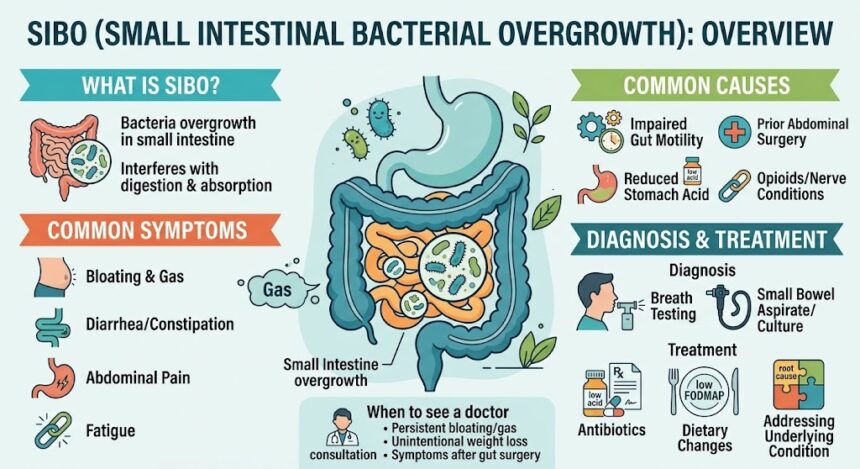
Your small intestine normally contains a relatively small amount of bacteria compared to your colon. SIBO occurs when bacteria — either too much of the normal kind, or the wrong kind — build up in the small intestine. This overgrowth interferes with normal digestion and nutrient absorption, and the bacteria can ferment food you eat, producing gas and other byproducts that cause noticeable symptoms.
SIBO is increasingly recognized as an underlying factor in many cases of unexplained digestive distress, including a meaningful subset of people diagnosed with irritable bowel syndrome.
SIBO Symptoms
SIBO symptoms are often nonspecific, which is part of why the condition can take time to diagnose. Common symptoms include:
- Bloating and abdominal distension, often worse after eating
- Excess gas
- Diarrhea, constipation, or an alternating pattern of both
- Abdominal pain or discomfort
- Nausea
- Unintentional weight loss
- Fatigue
Interestingly, the type of bacteria involved can shape which symptoms show up. Hydrogen-producing bacteria are more often associated with diarrhea, while methane-producing organisms (sometimes referred to separately as intestinal methanogen overgrowth) are more often linked to constipation. Because malabsorption can also occur, some people with SIBO develop nutrient deficiencies — particularly vitamin B12 — that lead to additional symptoms like fatigue, nerve tingling, or anemia over time.
SIBO vs. IBS: What’s the Difference?
SIBO and IBS share significant symptom overlap — bloating, altered bowel habits, and abdominal discomfort appear in both. The key difference is that SIBO has an identifiable cause (bacterial overgrowth in the small intestine) that can be tested for, while IBS is typically a diagnosis made after ruling out other specific conditions. Research suggests a meaningful percentage of people with an IBS diagnosis, particularly IBS with diarrhea, may actually have undiagnosed SIBO as a contributing factor. This is one reason doctors sometimes test for SIBO in people who haven’t responded well to standard IBS management.
What Causes SIBO?
SIBO develops when the normal mechanisms that keep small intestine bacteria in check break down. Common contributing factors include:
Impaired Gut Motility
Your digestive system relies on a wave-like muscular movement (the migrating motor complex) to sweep bacteria through the small intestine and prevent buildup. Conditions or medications that slow this process — including diabetes, scleroderma, and certain nerve-related conditions — increase SIBO risk.
Structural Issues
Prior abdominal surgery, intestinal strictures, or diverticula can create pockets where bacteria accumulate more easily.
Reduced Stomach Acid
Stomach acid helps limit the amount of bacteria that survive into the small intestine. Long-term use of acid-suppressing medications, such as proton pump inhibitors, has been associated with increased SIBO risk in some studies.
Underlying Conditions
SIBO is more common in people with Crohn’s disease, celiac disease, chronic pancreatitis, or prior gastric bypass surgery, all of which can alter the small intestine’s normal environment or anatomy.
Opioid Use
Opioid medications slow gut motility significantly, which is a recognized risk factor for bacterial overgrowth.
How SIBO Is Diagnosed
Unlike leaky gut, SIBO has established diagnostic pathways, though none are perfect.
Breath Testing
The most common non-invasive test is a lactulose or glucose breath test. After fasting, you drink a sugar solution that gut bacteria ferment, producing hydrogen and/or methane gas. You then breathe into a collection device at set intervals; elevated gas levels suggest bacterial overgrowth. This test isn’t perfectly precise — there’s no universally agreed-upon threshold for a positive result — but it remains the standard first-line approach because it’s accessible and non-invasive.
Small Bowel Aspirate and Culture
Considered the diagnostic gold standard, this test involves collecting fluid directly from the small intestine during an endoscopy and culturing it for bacterial counts. It’s more accurate but also more invasive and less commonly used in routine practice.
Additional Testing
Because SIBO symptoms overlap with several other conditions, your doctor may also recommend blood tests to check for nutrient deficiencies or markers of inflammation, and may evaluate for underlying motility or structural issues that could be contributing factors.
SIBO Treatment
Treatment generally targets three things: reducing the bacterial overgrowth itself, managing symptoms, and addressing whatever underlying issue allowed the overgrowth to develop in the first place.
Antibiotics
Rifaximin is the most studied and commonly prescribed antibiotic for SIBO, largely because it acts primarily in the gut with minimal systemic absorption. For methane-dominant SIBO, it’s sometimes combined with a second antibiotic, such as neomycin, since methane-producing organisms tend to respond differently to treatment.
Dietary Changes
A low FODMAP diet is commonly used to reduce the fermentable carbohydrates that feed bacterial overgrowth and ease symptoms during treatment. It’s generally used short-term under guidance, since it’s restrictive and not intended as a permanent eating pattern. For a full breakdown of how this works, see our low FODMAP diet guide. Spacing meals further apart to allow the migrating motor complex to do its job between eating windows is another commonly recommended strategy.
Addressing the Underlying Cause
Because SIBO often recurs if the root cause isn’t addressed, treatment plans frequently include managing the condition that led to bacterial overgrowth in the first place — whether that’s adjusting medications, treating a motility disorder, or managing an underlying condition like diabetes or Crohn’s disease.
Probiotics: A Mixed Picture
Probiotic use in SIBO is debated. Some small studies suggest certain strains may help after antibiotic treatment, while others caution that probiotics could theoretically add to bacterial load in the small intestine for some patients. This is an area where working with a knowledgeable provider matters more than following generic advice.
SIBO Recurrence: Why It Comes Back
One of the most frustrating aspects of SIBO is how often it returns after seemingly successful treatment. Studies tracking patients after antibiotic therapy have found recurrence rates that can exceed 40% within nine months, particularly in people whose underlying cause hasn’t been resolved. Common recurrence risk factors include older age, a history of appendectomy, and ongoing use of proton pump inhibitors.
Because of this, many gastroenterologists now treat SIBO as a condition to be managed long-term rather than cured with a single antibiotic course. This often means periodic retesting, dietary vigilance during flare-ups, and closer attention to the underlying motility or structural issue that allowed bacterial overgrowth to develop in the first place.
The Elemental Diet: A More Intensive Option
For cases that don’t respond well to antibiotics, some clinicians recommend a short-term elemental diet — a liquid formula containing pre-digested nutrients (amino acids, simple sugars, and fats) that require minimal digestive effort. The idea is to starve overgrown bacteria of fermentable material while still providing the body with nutrition. Research suggests elemental diets can be effective, with some studies reporting normalization of breath tests in a majority of participants after two to three weeks. However, the diet is restrictive, unpalatable for many people, and typically used only under close medical supervision when other approaches haven’t worked.
Living With SIBO: What to Expect
SIBO can be a frustrating condition to manage because recurrence is common, particularly when an underlying cause (like slow motility) can’t be fully resolved. Many people need more than one round of treatment, and some benefit from longer-term dietary adjustments even after bacteria levels normalize. Tracking your symptoms and triggers, working consistently with a gastroenterologist or dietitian, and being patient with the process all improve outcomes over time.
When to See a Doctor
Consider seeing a doctor if you have:
- Persistent bloating, gas, or altered bowel habits lasting more than a few weeks
- Digestive symptoms that haven’t improved with standard IBS management
- Unexplained weight loss or signs of nutrient deficiency (fatigue, tingling, pale skin)
- A history of abdominal surgery, diabetes, or motility disorders alongside new digestive symptoms
A gastroenterologist can order appropriate testing and help distinguish SIBO from overlapping conditions like IBS, acid reflux, or general food intolerances. SIBO has also been linked to skin conditions like acne — see our guide to the gut-skin connection for more. SIBO is also increasingly discussed alongside histamine intolerance, since both involve overlapping gut mechanisms.
Frequently Asked Questions
Is SIBO the same as leaky gut?
No. SIBO is a specific, diagnosable condition involving bacterial overgrowth in the small intestine, confirmed through breath testing or bacterial culture. Leaky gut refers to increased intestinal permeability and is not currently an officially recognized standalone diagnosis, though the two can occur together.
Can SIBO go away on its own?
It’s uncommon for SIBO to resolve without treatment, particularly if an underlying cause like slow gut motility remains unaddressed. Most people need antibiotic treatment, dietary changes, or both.
How long does SIBO treatment take?
A typical course of antibiotics for SIBO runs about 10–14 days, though symptom improvement and normalization of breath test results can take longer. Because recurrence is common, many people need repeat treatment courses over time.
What foods should I avoid with SIBO?
During active treatment, many people find relief by temporarily reducing high-FODMAP foods, which feed bacterial fermentation. This isn’t meant to be permanent — working with a dietitian to reintroduce foods gradually after treatment is generally recommended.
Can SIBO cause weight gain or weight loss?
SIBO more commonly causes unintentional weight loss due to malabsorption, though bloating can also make weight fluctuations feel confusing. Significant unexplained weight change of either kind is a reason to see a doctor.
Final Thoughts
Unlike some trending gut-health terms, SIBO is a well-established, testable, and treatable condition — which means persistent, unexplained digestive symptoms don’t have to remain a mystery. If bloating, altered bowel habits, or digestive discomfort have been dragging on despite typical fixes, a conversation with a gastroenterologist about SIBO testing may be a more productive next step than another round of general dietary guesswork.