
Acid reflux symptoms and remedies are among the most searched digestive health topics—and among the most misunderstood. Many people use “heartburn,” “acid reflux,” and “GERD” interchangeably. They are related but not identical. This guide clarifies acid reflux vs heartburn, explains GERD vs acid reflux, lists foods that trigger acid reflux, and covers evidence-based home remedies for acid reflux plus when clinic care is essential.
This is educational information for adults with general symptoms. It is not a substitute for personalized medical advice, especially if you have chest pain, weight loss, or trouble swallowing.
Quick answer: what is acid reflux?
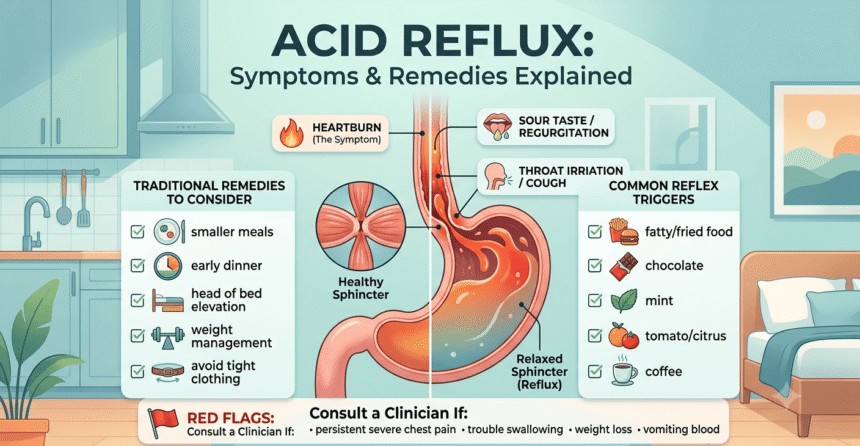
Acid reflux happens when stomach contents—including acid and digestive enzymes—flow backward into the esophagus. The lining of the esophagus is not built for acid, so you may feel burning, sour taste, regurgitation, or upper abdominal discomfort. Occasional reflux after a large or late meal is common. Frequent or damaging reflux may be gastroesophageal reflux disease (GERD).
Acid reflux vs heartburn
Acid reflux is the physical event: gastric contents moving up into the esophagus, sometimes reaching the throat or mouth.
Heartburn is a symptom—usually a burning feeling behind the breastbone. You can have reflux without noticeable heartburn (silent reflux), and you can feel burning that is not reflux (for example, certain cardiac or esophageal conditions). That is why new, severe, or exertional chest pain needs urgent evaluation, not antacids alone.
Other reflux symptoms include regurgitation of food or sour liquid, belching, hoarseness, chronic cough, throat clearing, dental erosion, and worsening asthma in some people.
GERD vs acid reflux: when occasional becomes disease
Everyone may experience acid reflux sometimes. GERD is typically defined as reflux that is frequent or troublesome enough to affect quality of life, or that causes complications such as esophagitis, stricture, or Barrett’s esophagus in some cases.
Practical clues that reflux may be GERD rather than a rare event:
- heartburn or regurgitation two or more times per week
- symptoms that disrupt sleep or meals
- dependence on antacids most days
- persistent cough, hoarseness, or sour taste without a clear cold
- symptoms that return quickly when stopping prescribed acid-suppressing medicine
Only a clinician can diagnose GERD and decide whether endoscopy, pH monitoring, or long-term medication is appropriate.
Common acid reflux symptoms
- Burning behind the sternum, often after eating or when lying down
- Sour or bitter taste in the mouth
- Regurgitation of food or fluid
- Upper abdominal fullness or pain
- Difficulty swallowing or sensation of a lump in the throat (globus)
- Chronic cough, sore throat, or hoarseness, especially in the morning
- Nausea after meals in some people
Symptoms often worsen after large fatty meals, chocolate, peppermint, caffeine, alcohol, or lying down within three hours of eating. Tight belts and abdominal weight can increase pressure on the stomach.
How reflux happens: a simple mechanism
A ring of muscle—the lower esophageal sphincter (LES)—normally limits upward flow. The LES relaxes when you swallow, belch, or vomit; it should stay closed otherwise. Reflux increases when the LES relaxes inappropriately, when stomach pressure rises (overeating, hiatal hernia, pregnancy), when gastric emptying is delayed, or when acid production is high.
Caffeinated and acidic drinks are frequent triggers in real life. If coffee is part of your pattern, our article on why coffee hurts the stomach walks through timing, roast, and empty-stomach factors that overlap with reflux.
Foods that trigger acid reflux
Triggers vary, but these are widely reported:
- Fatty and fried foods: delay stomach emptying
- Chocolate: can relax the LES and contains fat
- Peppermint and spearmint: relax the LES—ironic because mint teas are often suggested for digestion
- Tomato and citrus: acidic; can irritate an already inflamed esophagus
- Onions and garlic: fermentable and irritating for some
- Spicy foods: capsaicin may worsen burning in sensitive people
- Coffee and caffeinated tea: lower LES pressure in some studies
- Alcohol: irritates mucosa and relaxes the LES
- Carbonated beverages: increase gastric distension and belching
- Large late-night meals: mechanical trigger regardless of food type
Keeping a symptom diary for two weeks beats eliminating everything at once. Pair dietary changes with meal timing: smaller dinners, no lying flat for two to three hours afterward, and elevating the head of the bed if night symptoms dominate.
People who also struggle with post-meal fullness or gas may benefit from reading about bloating causes and relief alongside reflux changes—bloating and reflux often share meal-size and trigger-food patterns.
Home remedies for acid reflux that are reasonable first steps
Home remedies for acid reflux should be low-risk, reversible, and abandoned if symptoms worsen.
1. Meal size and timing
Eat smaller meals. Finish dinner earlier. Avoid snacking in bed. These changes alone help many people with mild reflux.
2. Head-of-bed elevation
Raising the torso with bed blocks or a wedge—not just extra pillows that bend the neck—reduces nighttime reflux. Aim for about six to eight inches at the head.
3. Weight and clothing
Even modest weight loss can reduce reflux frequency in overweight adults. Avoid tight waistbands and belts during meals.
4. Over-the-counter antacids
Calcium carbonate or magnesium-based antacids neutralize acid briefly. They are fine for occasional heartburn. Frequent daily use warrants clinician input because persistent symptoms may need investigation.
5. H2 blockers and PPIs
Famotidine and similar H2 blockers reduce acid production for hours. Proton pump inhibitors (PPIs) such as omeprazole are stronger and are labeled for short courses of frequent heartburn. Long-term PPI use has risks and benefits that should be discussed with a pharmacist or clinician. Do not combine multiple acid suppressants without guidance.
6. Chewing sugar-free gum
Chewing gum increases saliva, which can help clear acid from the esophagus. Avoid peppermint gum if mint triggers you.
7. Identify personal triggers
Remove one suspect food or habit at a time for a week. Common tests: no late meals, decaf coffee only, or no alcohol for two weeks.
8. Stress and sleep
Poor sleep and high stress amplify symptom perception and may worsen reflux through multiple pathways. General mental-health routines—see practical mental health tips—support overall resilience but do not replace reflux treatment when symptoms are frequent.
What to skip or use cautiously
- Apple cider vinegar shots—can worsen esophageal irritation
- Baking soda in large or repeated doses—sodium load and electrolyte issues
- Unregulated “alkaline water” cures—marketing often exceeds evidence
- Peppermint tea when LES relaxation is your main problem
Lifestyle remedies that support long-term control
Quitting smoking improves LES function and cough. Reducing alcohol helps many people. Regular walking after meals aids gastric emptying. Hydration matters for overall digestion—if you drink little water, review dehydration symptoms and aim for steady fluid intake spread through the day rather than chugging with meals, which can distend the stomach.
Gentle foods during flares—oatmeal, bananas, melons, lean poultry, rice—are tolerability strategies, not magic cures. Very restrictive “acid reflux diets” copied from social media can create nutritional gaps without addressing hiatal hernia or true GERD.
When acid reflux overlaps with IBS or functional dyspepsia
Upper abdominal burning, early fullness, and nausea sometimes sit in the “functional dyspepsia” category when endoscopy is normal. Overlap with IBS is common. Treatment may combine acid suppression, meal pacing, and gut-directed therapies. Self-labeling everything as “just reflux” can delay care for ulcers, H. pylori infection, or gallbladder disease.
Red flags: do not rely on home remedies alone
- Chest pain with sweating, shortness of breath, jaw or arm pain, or fainting
- Difficulty swallowing, painful swallowing, or food sticking
- Vomiting blood or material that looks like coffee grounds
- Black tarry stools
- Unintentional weight loss or anemia
- Chronic cough with wheezing that does not respond to reasonable trials
- Symptoms lasting more than two weeks despite OTC treatment
Medical treatments your clinician may consider
Beyond OTC medicines, options include prescription-strength PPIs, alginate formulations that form a raft on stomach contents, prokinetic drugs in selected cases, and endoscopic or surgical approaches for refractory GERD with documented reflux. H. pylori testing and treatment apply when infection is present—not for every heartburn patient.
Questions to ask at your appointment
- Is this GERD, functional dyspepsia, or something else?
- Do I need endoscopy based on my age and alarm features?
- How long should I trial a PPI, and how do we stop?
- Could any of my medicines (NSAIDs, bisphosphonates, some blood pressure drugs) contribute?
- Are lifestyle changes enough before long-term medication?
Frequently asked questions
What is the difference between acid reflux and heartburn?
Acid reflux is stomach contents moving up into the esophagus. Heartburn is the burning symptom often caused by that reflux. You can have reflux without classic heartburn, and chest burning always deserves careful evaluation if it is new or severe.
Is GERD the same as acid reflux?
GERD is chronic or troublesome reflux that affects daily life or causes complications. Occasional acid reflux after a large meal is not automatically GERD.
What foods trigger acid reflux most often?
Common triggers include fatty meals, chocolate, mint, tomato, citrus, onion, garlic, spicy foods, caffeine, alcohol, and carbonated drinks. Triggers are individual; use a diary rather than banning all acidic foods forever.
What home remedies for acid reflux work best?
Smaller earlier meals, head-of-bed elevation, weight management, trigger avoidance, and short-term antacids or labeled OTC acid reducers help many people. Persistent symptoms need clinician review rather than endless home experiments.
Can stress cause acid reflux?
Stress does not replace anatomy, but it can worsen symptoms through meal choices, smoking, alcohol, sleep disruption, and heightened sensitivity. Stress management complements medical treatment; it rarely cures GERD alone.
Related reading
- Low FODMAP Diet Guide: Food List and IBS Tips
- Best Foods for Gut Health: Probiotics and Prebiotics
- Stomach pain and coffee: reflux links
- Bloating causes and relief after eating
- IBS symptoms and triggers
- Dehydration and digestion
- Hydrating foods for meal balance
Disclaimer
This article describes acid reflux symptoms and remedies for general education. It is not medical advice. Seek urgent care for possible cardiac chest pain or alarm digestive symptoms. Work with a qualified clinician for diagnosis, medication duration, and screening when indicated.