
Stomach pain after coffee is usually caused by extra stomach acid, caffeine speeding up digestion, drinking coffee on an empty stomach, or add-ins like milk and syrup. For most people it is uncomfortable, not dangerous, and improves with simple changes.
This guide explains the main causes, warning signs, and practical fixes so you can keep coffee in your routine when possible.
Quick answer: why coffee hurts your stomach
Coffee is mildly acidic (about pH 4.8–5.1) and can increase gastric acid. Caffeine also stimulates gastrin and can relax the lower esophageal sphincter, which makes reflux more likely. Those effects hit harder when there is no food to buffer the acid.
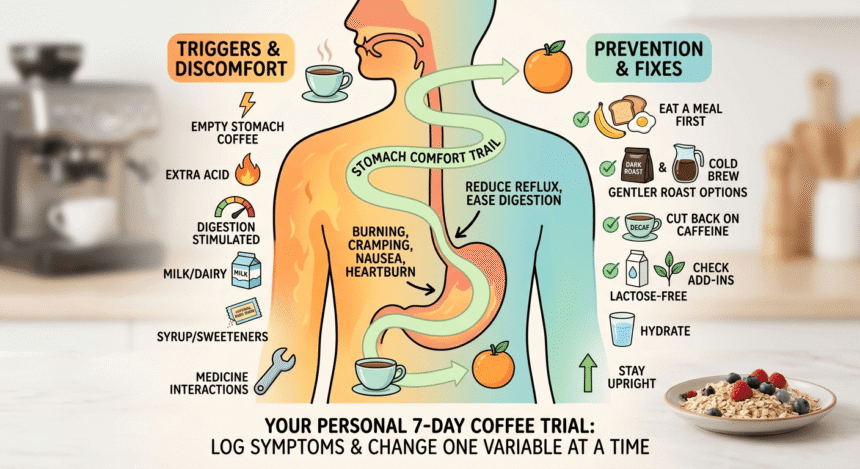
Common triggers include empty-stomach coffee, large or very hot cups, light roasts, dairy, sugar alcohols, and underlying IBS, GERD, gastritis, or ulcers.
What causes stomach pain after coffee
1. Coffee increases stomach acid
Caffeine can push acid production higher. On an empty stomach, that acid sits against the lining and can feel like burning, gnawing pain, or nausea. Chlorogenic acids and roast compounds add irritation for some people even when caffeine is modest. A second cup stacked on an empty first cup is a common pattern behind mid-morning nausea.
2. Caffeine speeds up digestion
Caffeine stimulates gut motility. That can cause cramping, bloating, or an urgent bowel movement soon after your cup. Other coffee compounds, not only caffeine, contribute to the gastrocolic reflex. That is why decaf still sends some people to the bathroom, just less dramatically.
3. Drinking coffee on an empty stomach
Morning coffee before breakfast is one of the most common triggers. A small snack first — oats, banana, toast, or eggs — often reduces pain. Even a few bites of yogurt or a piece of toast changes how fast caffeine hits and how much acid contacts an empty lining.
4. Acid reflux and a relaxed esophageal sphincter
Coffee can lower pressure in the valve between the esophagus and stomach. Acid then moves upward, causing heartburn, chest burn, or sour taste. Large volumes, drinking while slumped at a desk, or lying down after a latte make reflux more likely. Night-time cups are a frequent reason people wake with a sour throat.
5. Milk, cream, syrups, or sweeteners
If black coffee is fine but lattes hurt, lactose or high-fat creamers may be the issue. Sugar alcohols in some syrups can also cause cramps and gas. Vanilla “sugar-free” pumps often contain sucralose plus sugar alcohols. Test one change: lactose-free milk, then unsweetened plant milk, then plain coffee. Changing beans and milk in the same week hides the answer.
6. Caffeine sensitivity or too much coffee at once
Some people feel stomach pain, jitters, or nausea from a small amount of caffeine. Large, fast cups overwhelm the gut more than slow sipping. Add tea, cola, chocolate, pre-workout powder, and headache tablets with caffeine before you conclude “one coffee” is the whole dose.
7. An existing digestive condition
Coffee can worsen:
- Irritable bowel syndrome (IBS)
- GERD / acid reflux
- Gastritis
- Stomach ulcers
Who is more likely to hurt after coffee
People with known reflux, a prior ulcer, H. pylori infection, frequent NSAID use, pregnancy-related heartburn, or IBS-D often notice coffee faster. Anxiety can amplify awareness of stomach sensations and raise caffeine side effects such as tremor and palpitations — the pain is still physical. Older adults may have thinner mucosal defenses and more medication interactions. Teenagers slamming energy drinks plus espresso are a different risk group than someone with a single small breakfast coffee.
Symptoms to expect
- Burning in the stomach or chest
- Cramping or sharp pain
- Bloating or gas
- Nausea
- Urgent bathroom trips
- Heartburn or reflux
Pain usually eases within 30 minutes to 2 hours after you eat, drink water, or the caffeine effect fades.
Chest pressure with sweating, arm pain, shortness of breath, or fainting is an emergency until proven otherwise. Do not label that pattern as reflux at home. Black stools, vomit that looks like coffee grounds, or sudden severe abdominal pain also sit outside a coffee tweak.
How to prevent stomach pain after coffee
- Eat first. Even a small meal buffers acid.
- Choose a lower-acid option. Dark roast or cold brew is often gentler than light roast hot coffee.
- Cut back. Try no more than 1–3 cups a day and avoid chugging.
- Check add-ins. Switch to lactose-free or plant milk if dairy triggers pain.
- Try half-caf or decaf. Less caffeine means less motility and acid stimulation. Decaf is still acidic, so it may not fix reflux alone.
- Drink water with coffee. Hydration can ease irritation. See dehydration symptoms and hydrating foods if you mostly drink coffee and little water.
- Stay upright for at least 30 minutes after drinking.
A seven-day coffee trial (change one variable)
Use a simple log: time, drink type, volume, food with it, add-ins, symptom score 0–10, and bowel urgency. Keep everything else as stable as you can.
- Days 1–2: same coffee, but always after food; sip rather than gulp
- Days 3–4: same timing, switch to dark roast or cold brew, same volume
- Days 5–6: half-caf or smaller cup; keep the roast that felt better
- Day 7: if pain remains, try plain decaf or a pause and note what happens
If symptoms vanish only when caffeine is near zero, sensitivity or total daily caffeine is likely. If decaf still burns, acid, reflux, or an underlying stomach condition deserves more weight than “I am just a caffeine lightweight.” Matcha and tea are not automatically safer; they still contain caffeine. Compare labels and see what is inside matcha before swapping blindly.
What to do if your stomach already hurts
- Eat a bland snack (crackers, banana, toast)
- Sip water
- Try ginger tea
- Skip more coffee, citrus, tomato, and spicy food until you feel better
Antacids may ease brief heartburn. Frequent daily use without a diagnosis can mask ulcers or reflux that need a different plan. Avoid taking ibuprofen “for the stomach ache” — NSAIDs can inflame the lining further.
Medicines and supplements that make coffee pain worse
Ibuprofen, naproxen, aspirin, and some migraine powders irritate the stomach, especially on an empty stomach with coffee. Oral steroids, iron tablets, potassium pills, and some antibiotics (doxycycline is a classic esophagus irritant) add risk. Bisphosphonates for bone density require a full glass of water and remaining upright — pairing them with a scalding latte is a bad combination.
Nicotine, alcohol the night before, and high-dose vitamin C powders can also increase burning. Tell a clinician about herbal “fat burner” caffeine stacks; they can exceed several cups of coffee in a single scoop.
When not to self-treat
Do not run a roast experiment through vomiting blood, black tarry stool, progressive weight loss, trouble swallowing, anemia, or pain that wakes you every night. Do not assume pregnancy heartburn is only coffee without obstetric advice if pain is severe. Do not stop a prescribed steroid, anticoagulant, or cardiac drug because a blog mentioned reflux. Do not use leftover antibiotics to “cover an ulcer.”
When to see a doctor
Get medical care if you have severe or worsening pain, blood in stool or vomit, unexplained weight loss, night pain that wakes you, or symptoms every time you drink coffee that do not improve after 1–2 weeks of changes.
Questions to ask a clinician
- Could this be reflux, gastritis, ulcer, H. pylori, gallbladder disease, or something else?
- Do I need testing before more antacids or acid-suppressing medicine?
- Which of my current medicines could be contributing?
- Is a time-limited pause on coffee safer than switching roasts?
- What symptoms mean I should go to urgent care rather than wait for the appointment?
A useful history includes how many milligrams of caffeine you estimate per day, whether pain is burning versus cramping, relation to meals, stool changes, NSAID use, and any prior endoscopy. Bring that list rather than only saying “coffee hurts.”
If testing is offered, H. pylori stool or breath tests are common first steps when ulcer-type pain is in the story. Blood work may look for anemia. Endoscopy is not automatic for every coffee-related ache; it is more likely with alarm features, older age, or symptoms that persist after simple changes and a medicine trial. Ask what the test would change in the plan before you schedule it.
Frequently asked questions
Can coffee cause stomach ulcers?
Coffee does not usually cause ulcers by itself. It can irritate an existing ulcer or gastritis and make pain worse.
Is cold brew easier on the stomach?
Often yes. Cold brew is typically lower in some acids than hot brew, so many people with sensitive stomachs tolerate it better.
Why does coffee make me poop right away?
Caffeine and other coffee compounds stimulate colon contractions. That is a common, usually harmless response.
Should I stop coffee completely?
Not always. Many people do well after changing timing, roast, volume, or add-ins. Stop and see a clinician if pain is severe or persistent.
Is pain after coffee different in pregnancy?
Heartburn is common in pregnancy because hormones relax the esophageal sphincter and the growing uterus adds pressure. Caffeine limits also change. Confirm a safe daily caffeine cap with your obstetric clinician rather than copying a general adult target.
Related reading
- Acid reflux symptoms and remedies
- Bloating causes and relief
- IBS symptoms, triggers, and relief tips
- 10 dehydration symptoms you should know
- Hydrating foods that support digestion
- What is inside matcha? Nutrients and benefits
- Mental health habits when stress worsens gut symptoms
This article is for general information only and is not medical advice. If symptoms are ongoing or severe, consult a healthcare professional.