

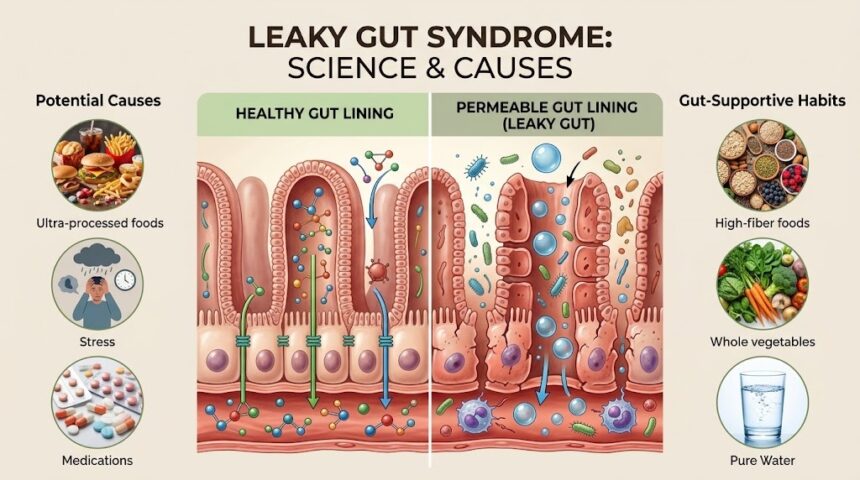
If you’ve spent any time researching digestive symptoms online, you’ve probably come across the term “leaky gut.” It’s used to explain everything from bloating and fatigue to skin breakouts and brain fog. But what does leaky gut syndrome actually mean, and how much of what circulates about it is backed by evidence? This guide explains the science behind intestinal permeability, the symptoms commonly associated with it, what may cause it, and the steps that have reasonable support for protecting your gut lining.
What Is Leaky Gut Syndrome?
Your intestinal lining works like a selective barrier. Digestive enzymes break food down into small molecules, and the intestinal wall is designed to let water and nutrients pass into your bloodstream while keeping larger particles, bacteria, and toxins out. This filtering process is called intestinal permeability.
When that barrier becomes less effective at keeping unwanted substances out, some researchers and practitioners describe this as “leaky gut.” It’s important to understand that leaky gut syndrome is not currently an officially recognized medical diagnosis. Increased intestinal permeability is a real, measurable phenomenon that shows up in several established conditions, but whether it independently causes the wide range of symptoms often attributed to it in popular health content is still being studied.
Leaky Gut Symptoms Commonly Reported
People who describe having leaky gut symptoms typically report a mix of digestive and non-digestive complaints, including:
- Bloating, gas, and abdominal discomfort
- Diarrhea or constipation
- Fatigue and low energy
- Headaches or difficulty concentrating (“brain fog”)
- Skin issues such as acne, eczema, or rosacea flare-ups
- Joint pain
- Food sensitivities that seem to change over time
These symptoms overlap heavily with other, well-established digestive conditions like IBS, food intolerances, and general gut inflammation. That overlap is part of why leaky gut is difficult to diagnose as a distinct condition — the symptom list is broad and non-specific, and there’s no single test that confirms it’s the root cause.
What May Cause Increased Intestinal Permeability
Research points to a handful of factors that can disrupt the gut lining and contribute to increased permeability:
Dysbiosis (Gut Bacteria Imbalance)
An imbalance between beneficial and harmful bacteria in the gut microbiome is one of the most consistently cited contributors. A diverse, well-balanced microbiome helps maintain the gut lining; when harmful bacteria dominate, that support weakens.
Chronic Inflammation
Ongoing inflammation in the small intestine — whether from an underlying condition, infection, or long-term irritation — can gradually wear down the tight junctions that hold intestinal cells together.
Diet
Diets high in ultra-processed foods, added sugar, and alcohol have been associated with disruptions to the gut barrier and microbiome balance. This doesn’t mean any single food “causes” leaky gut, but a consistently poor-quality diet is a recognized contributing factor.
Chronic Stress
The gut and nervous system are closely connected. Prolonged stress can alter gut motility, blood flow, and the composition of gut bacteria, all of which may affect the strength of the intestinal barrier over time.
Certain Medications
Frequent use of NSAIDs (like ibuprofen), certain antibiotics, and other medications has been linked to changes in gut lining integrity in some studies.
Underlying Gastrointestinal Conditions
Increased intestinal permeability is a well-documented feature of several diagnosed conditions, including celiac disease, inflammatory bowel disease (Crohn’s disease and ulcerative colitis), and some cases of IBS. In these cases, gut barrier changes are considered part of the underlying disease process rather than a standalone syndrome.
Leaky Gut and Other Health Conditions: What the Evidence Actually Shows
You’ll often see leaky gut linked to autoimmune conditions, anxiety and depression, chronic fatigue syndrome, and even autism. It’s worth being precise here: researchers have found associations between intestinal permeability and some of these conditions, meaning the two tend to show up together. That is different from proving that a leaky gut causes them. Current medical reviews describe the evidence for most of these broader claims as preliminary or inconclusive, and mainstream clinical guidance stops short of treating leaky gut as an explanation for conditions outside the digestive tract.
Where the science is more established is the connection between gut inflammation and mood — often referred to as the gut-brain axis. A disrupted gut environment can influence neurotransmitter activity and systemic inflammation, both of which play a role in mental health. This is a genuine and active area of research, even if “leaky gut” isn’t always the most precise term for what’s being studied.
The Zonulin Pathway: The Science Behind Tight Junctions
Much of the modern research into intestinal permeability centers on a protein called zonulin, discovered in the early 2000s. Zonulin regulates the “tight junctions” — the seals between the cells lining your intestine that normally control what passes through the gut wall. When zonulin levels rise, these seals loosen, allowing larger molecules to cross into the bloodstream more easily than they should.
Certain triggers, most notably gluten in genetically susceptible individuals and specific gut bacteria, have been shown to increase zonulin release. This pathway is well-documented in celiac disease, where it’s considered part of the established disease mechanism. Outside of celiac disease and similar conditions, however, the clinical significance of elevated zonulin in otherwise healthy people remains an active area of research rather than settled science.
Leaky Gut in Popular Culture vs. Clinical Reality
Part of what makes leaky gut confusing is the gap between how it’s discussed online and how it’s treated in clinical settings. Wellness content often presents leaky gut as a root-cause explanation for dozens of unrelated symptoms, paired with expensive supplement protocols marketed as a “cure.” Mainstream gastroenterology takes a narrower view: intestinal permeability is a real, measurable phenomenon that plays a documented role in specific diagnosed conditions, but treating it as a stand-alone diagnosis explaining unrelated symptoms outpaces current evidence.
This gap doesn’t mean the underlying concern is fake — many people experiencing these symptom clusters are dealing with something real, whether it’s undiagnosed IBS, food intolerances, or another gut condition. It does mean that chasing a “leaky gut protocol” without a proper diagnosis can delay identifying and treating the actual underlying issue.
How Intestinal Permeability Is Assessed
Because leaky gut syndrome isn’t a standard diagnosis, there’s no single accepted clinical test for it. Some functional and integrative practitioners use lab tests such as the lactulose-mannitol test or zonulin blood tests to estimate gut permeability, but these aren’t yet part of mainstream diagnostic guidelines, and results can be difficult to interpret in isolation. If you’re dealing with persistent digestive symptoms, a more productive first step is usually ruling out established conditions — such as IBS, celiac disease, or small intestinal bacterial overgrowth — with a healthcare provider, rather than pursuing gut permeability testing on its own.
Supporting Gut Lining Health: What Has Reasonable Support
Even without a formal leaky gut diagnosis, the habits that support a healthy gut barrier are backed by solid general nutrition and digestive health evidence.
Prioritize Fiber-Rich, Whole Foods
A diet built around vegetables, fruits, legumes, and whole grains supports a diverse gut microbiome, which in turn helps maintain the gut lining. For practical food ideas, see our guide to best foods for gut health.
Limit Ultra-Processed Foods and Added Sugar
Reducing highly processed foods, refined sugar, and excess alcohol is one of the more consistently supported dietary changes for gut and microbiome health.
Manage Chronic Stress
Because the gut-brain connection runs in both directions, stress management techniques — regular sleep, movement, and relaxation practices — can indirectly support digestive health.
Be Thoughtful About Medication Use
If you rely on NSAIDs or other medications regularly, talk to a healthcare provider about whether that’s necessary long-term and what alternatives or protective steps might help.
Consider Anti-Inflammatory Eating Patterns
Diets that emphasize anti-inflammatory foods may support overall gut and systemic health. Our anti-inflammatory foods list covers practical options to build into meals.
When to See a Doctor
Persistent or worsening digestive symptoms deserve a proper medical evaluation rather than a self-diagnosis of leaky gut. See a healthcare provider if you experience:
- Ongoing diarrhea, constipation, or bloating that doesn’t improve with basic dietary changes
- Unintentional weight loss
- Blood in your stool
- Severe or worsening abdominal pain
- Symptoms that significantly affect your daily life or nutrition
A gastroenterologist can help rule out or diagnose conditions like IBS, celiac disease, inflammatory bowel disease, or SIBO, all of which can produce symptoms that overlap heavily with what’s commonly described as leaky gut.
Frequently Asked Questions
Is leaky gut syndrome a real medical condition?
Increased intestinal permeability is a real, measurable phenomenon studied in medical research. However, “leaky gut syndrome” as a standalone diagnosis explaining a broad range of unrelated symptoms is not currently recognized as an official medical condition by most mainstream medical organizations.
Can leaky gut cause skin problems like acne or eczema?
See our full breakdown of the gut-skin connection for more detail on this relationship.
There’s a plausible biological connection between gut inflammation and skin health, and some research has explored links between gut permeability and skin conditions. However, the evidence is still preliminary, and skin issues have many other well-established causes worth ruling out first. See our full guide on the gut-skin connection for more detail.
How long does it take to heal a leaky gut?
Because there’s no standardized diagnosis or treatment protocol, there’s no established timeline. General gut-supportive habits — improved diet, stress management, and reduced processed food intake — typically take several weeks to a few months to produce noticeable digestive improvements.
Do I need a special leaky gut diet?
There’s no clinically validated “leaky gut diet.” General principles that support gut health — more fiber, less ultra-processed food, adequate hydration — are reasonable starting points and align with broader digestive health guidance.
Should I take supplements marketed for leaky gut?
Many supplements marketed specifically for “healing leaky gut” lack strong clinical evidence. If you’re considering supplements like L-glutamine, probiotics, or collagen for gut health, discuss them with a healthcare provider first, particularly if you take other medications.
Final Thoughts
Leaky gut syndrome sits in an unusual space in health information — the underlying phenomenon of intestinal permeability is real and actively researched, but the popularized version of “leaky gut” as an explanation for a wide range of symptoms outpaces the current evidence. If you’re experiencing persistent digestive or systemic symptoms, the most productive path is a proper medical evaluation to rule out established conditions, paired with general gut-supportive habits that have solid backing regardless of the underlying cause.