
Ever had a “gut feeling” before a big decision, or felt your stomach churn right before a stressful event? That’s not just a figure of speech. Your gut and brain are in constant two-way communication through what scientists call the gut-brain connection, or gut-brain axis. This guide explains how that connection actually works, what happens when it’s disrupted, and what the evidence says about supporting it.
What Is the Gut-Brain Axis?
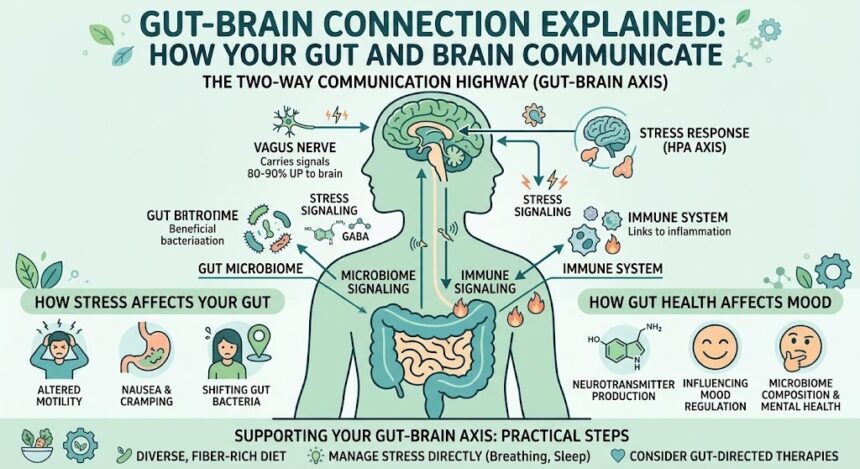
The gut-brain axis is the network of nerves, hormones, and biochemical signals that link your digestive system and your central nervous system. It isn’t a single pathway but a combination of several communication systems working together:
- The vagus nerve: A major nerve that runs from your brainstem down to your gut, carrying signals in both directions. Roughly 80–90% of vagus nerve fibers actually carry information from the gut up to the brain, not the other way around.
- The gut microbiome: The trillions of bacteria, fungi, and other microorganisms living in your intestines. These microbes produce neurotransmitters and other chemical signals that can influence brain function.
- The immune system: A large portion of your body’s immune cells reside in the gut, and their activity can influence inflammation levels that affect both digestive and brain health.
- The hypothalamic-pituitary-adrenal (HPA) axis: Your body’s central stress-response system, which links brain signals to hormone release and can directly affect gut function.
Because this communication runs in both directions, stress and emotional states can change how your gut functions, and gut conditions can influence mood, cognition, and mental health.
How Gut Health Affects Mood and Brain Function
Gut microbes are involved in producing many of the same chemical messengers used in the brain, including a large share of the body’s serotonin, which is produced in the gut rather than the brain itself. While gut-produced serotonin mainly regulates digestion rather than directly crossing into the brain, the broader signaling network it’s part of still appears to influence mood regulation through the vagus nerve and immune pathways.
Research has also found differences in gut microbiome composition between people with depression or anxiety and those without these conditions. This doesn’t prove that gut bacteria cause mental health conditions, but it does suggest the gut environment is one factor worth considering as part of the broader picture of mental and digestive health.
How Stress Affects Your Gut
The brain-to-gut direction of this connection is well documented and easy to recognize in daily life. When you’re stressed, your brain can directly alter gut motility and secretion — this is why anxiety before a big event might cause nausea, cramping, or a sudden urge to use the bathroom. Even short-term stress has been shown to shift gut bacteria composition, including reducing beneficial strains like Lactobacillus.
This bidirectional relationship can create a feedback loop in conditions like IBS: gut symptoms trigger anxiety, and that anxiety worsens gut symptoms, reinforcing the cycle. Doctors now refer to this category of conditions as disorders of the gut-brain interaction (DGBIs), replacing the older term “functional GI disorders.”
Conditions Linked to Gut-Brain Axis Disruption
A disrupted gut-brain connection has been associated with a range of conditions, though the strength of evidence varies:
- IBS and functional constipation or diarrhea — among the most well-established gut-brain connections, with a significant overlap between IBS and anxiety diagnoses
- Inflammatory bowel disease (IBD) — increasingly studied for its bidirectional relationship with mood and neurological symptoms
- Depression and anxiety — associated with distinct microbiome patterns, though causation isn’t established
- Neurodegenerative conditions — early-stage research has explored gut-microbiome connections to conditions like Parkinson’s disease, though this remains an active and evolving research area
It’s worth being cautious about how far to extend these findings. Association research shows that gut and brain conditions often occur together, but it does not establish that treating the gut will resolve neurological or psychiatric conditions on its own.
Supporting Your Gut-Brain Axis: What Has Reasonable Evidence
Eat a Diverse, Fiber-Rich Diet
A varied diet rich in fiber from vegetables, fruits, legumes, and whole grains supports a diverse gut microbiome, which is associated with better gut-brain signaling. Our guide to best foods for gut health covers practical food choices that support this.
Manage Stress Directly
Because stress has such a direct effect on gut function, stress management is one of the more evidence-backed ways to support the gut-brain axis. Practices like deep breathing, regular movement, and adequate sleep have all been shown to reduce the physiological stress response that disrupts gut function. Simple daily habits — consistent sleep, regular movement, and brief mindfulness practice — are consistently linked to lower physiological stress markers, which in turn reduces one of the biggest disruptors of healthy gut-brain signaling.
Consider Gut-Directed Therapies for Digestive Conditions
For people with IBS or other functional gut disorders, gut-directed cognitive behavioral therapy (CBT) and hypnotherapy have shown genuine benefit in clinical studies, specifically because they target the brain side of the gut-brain loop rather than diet alone.
Limit Chronic Inflammation Triggers
Since immune activity is part of the gut-brain communication network, reducing chronic sources of gut inflammation — through diet quality, alcohol moderation, and addressing underlying digestive conditions — may indirectly support this axis. An anti-inflammatory foods list can be a useful starting point.
Be Cautious With Unproven Interventions
Specific probiotic strains are being studied for mood-related effects (sometimes called “psychobiotics”), but the evidence for most commercially available products remains preliminary. Talk to a healthcare provider before using probiotics or supplements specifically to treat mood symptoms.
The Enteric Nervous System: Your “Second Brain”
One reason the gut-brain connection is so powerful is that your digestive tract has its own semi-independent nervous system, called the enteric nervous system (ENS). It contains over 100 million neurons embedded in the walls of the gastrointestinal tract — more than are found in your spinal cord. This is why some researchers refer to it informally as a “second brain.”
The ENS can operate somewhat independently of the central nervous system, controlling motility, secretion, and blood flow in the gut even without direct instructions from the brain. But it stays in constant contact with the brain via the vagus nerve, which is part of why gut sensations can feel so directly tied to emotional states. This dual-control system explains why digestive symptoms often flare during emotionally difficult periods, even when nothing about your diet has changed.
Gut-Brain Axis and Sleep
Sleep quality and gut health influence each other in both directions. Poor sleep has been shown to reduce microbiome diversity and increase gut permeability markers within just a few nights of disruption. At the same time, gut bacteria play a role in producing precursors to melatonin and other sleep-regulating compounds, meaning an imbalanced gut environment may contribute to poor sleep quality.
This creates another feedback loop worth being aware of: poor sleep disrupts the gut, and gut disruption can make quality sleep harder to achieve. Prioritizing a consistent sleep schedule is one of the more practical, low-cost ways to support both sides of the gut-brain axis at once.
When to See a Doctor
Consider professional support if you’re experiencing:
- Digestive symptoms that consistently worsen with stress or anxiety
- Persistent gut symptoms alongside mood changes, low motivation, or anxiety
- Gut symptoms that haven’t improved despite dietary changes
- Mental health symptoms that feel connected to, or worsened by, digestive issues
A combined approach — involving a gastroenterologist for digestive symptoms and a mental health professional for mood-related concerns — often works better than treating either side in isolation, given how closely connected the two systems are.
Frequently Asked Questions
Can gut health really affect anxiety and depression?
There’s a genuine, growing body of research connecting gut microbiome composition to mood regulation, largely through the vagus nerve, immune signaling, and neurotransmitter production. However, this is an association, not proof that gut changes alone cause or cure these conditions.
What is the vagus nerve’s role in the gut-brain connection?
The vagus nerve is the primary physical link between the gut and brain, carrying signals in both directions. The majority of its fibers carry information from the gut to the brain, which is part of why digestive state can influence mood and cognition.
Can improving gut health help with brain fog?
Some people report improved mental clarity alongside better digestive health, and there are plausible biological mechanisms (reduced inflammation, improved nutrient absorption) that could explain this. However, brain fog has many possible causes, so it’s worth having other causes evaluated as well.
Do probiotics help with mood?
Certain probiotic strains, sometimes called psychobiotics, are being studied for mood-related benefits, but the evidence is still early-stage and strain-specific. General gut health support through diet remains better established than any single probiotic product.
Is the gut-brain connection the same as “leaky gut”?
No. The gut-brain axis refers to established communication pathways between the digestive and nervous systems. Leaky gut syndrome is a separate, more controversial concept about intestinal permeability. The two are sometimes discussed together, but they aren’t the same thing.
Final Thoughts
The gut-brain connection is one of the more well-supported ideas to come out of digestive health research in recent years — your gut and brain genuinely do talk to each other constantly, through real, identifiable biological pathways. That said, the science is still developing, particularly around how much gut-focused interventions can influence mental health on their own. The most reliable approach right now is supporting both sides of the connection: manage stress, eat a gut-supportive diet, and get professional support for persistent symptoms on either end.