
If you’ve ever broken out in hives after a glass of wine, gotten a headache from leftovers, or felt bloated and flushed after a meal that seemed harmless, histamine could be part of the picture. Histamine intolerance is an increasingly recognized condition that affects an estimated 1–3% of the population, though many experts believe it’s underdiagnosed because its symptoms so closely mimic allergies and other digestive conditions. This guide explains what histamine intolerance is, its symptoms and causes, how it differs from a true allergy, and what dietary approaches actually have evidence behind them.
What Is Histamine Intolerance?
Histamine is a natural compound that plays several important roles in your body, including regulating stomach acid, supporting immune responses, and acting as a neurotransmitter. It’s also found in many foods, particularly aged, fermented, and leftover items.
Under normal circumstances, an enzyme called diamine oxidase (DAO) breaks down histamine you consume in your gut before it can build up to problematic levels. Histamine intolerance occurs when this breakdown process doesn’t keep pace — either because DAO activity is reduced, or because histamine intake and production simply exceed what your body can clear. The result is a buildup of histamine that can trigger a wide, and often confusing, range of symptoms.
Histamine Intolerance Symptoms
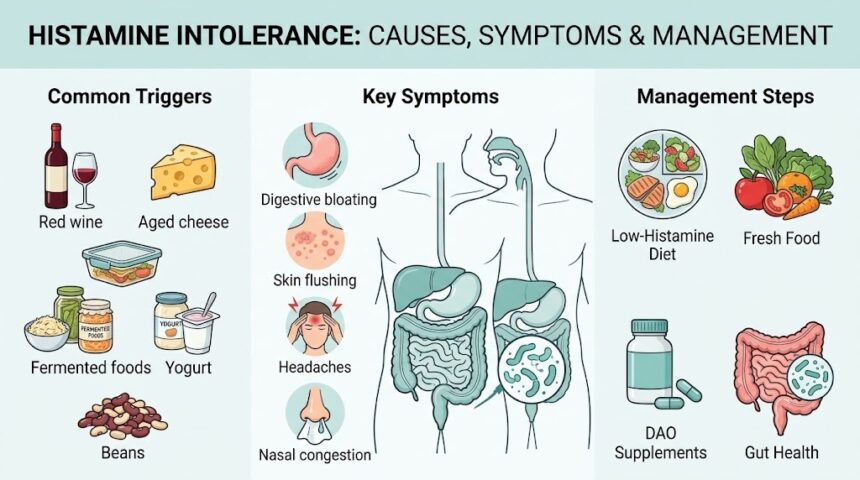
One of the most challenging aspects of histamine intolerance is how broadly its symptoms can present, often across multiple body systems at once:
- Digestive: bloating, abdominal pain, diarrhea, constipation, general discomfort
- Skin: flushing, itching, hives, swelling
- Neurological: headaches or migraine-like symptoms
- Cardiovascular: rapid heartbeat, lightheadedness, low blood pressure
- Respiratory: nasal congestion, sneezing, runny nose
Symptoms typically appear after eating high-histamine foods or drinks, though the timing and severity can vary — the same food might cause a reaction on one occasion but not another, depending on your overall histamine load at the time.
Histamine Intolerance vs. Food Allergy: What’s the Difference?
Despite looking similar on the surface, histamine intolerance and food allergies work through entirely different mechanisms. A true food allergy involves your immune system producing IgE antibodies against a specific food protein, triggering a rapid immune response that can range from mild to life-threatening. Histamine intolerance isn’t an immune-mediated allergic reaction at all — it’s a metabolic issue related to how efficiently your body breaks down histamine, and reactions are generally dose-dependent rather than triggered by any exposure, however small.
This distinction matters clinically: there’s no single reliable diagnostic test for histamine intolerance the way there often is for a specific allergy, which is part of why it remains difficult to diagnose and is sometimes missed or dismissed.
What Causes Histamine Intolerance?
Reduced DAO Enzyme Activity
Lower activity of the DAO enzyme is considered the leading mechanism behind histamine intolerance. This can be influenced by genetics, certain medications that inhibit DAO function, gut inflammation, or damage to the intestinal lining where DAO is produced.
Gut Health and Microbiome Imbalances
Emerging research points to gut health as a significant, and often overlooked, contributor. Certain gut bacteria produce histamine themselves, and an imbalanced gut microbiome may both generate more histamine and impair the gut’s capacity to break it down. This means histamine intolerance often develops alongside — or as a consequence of — other digestive issues rather than as a completely standalone problem. Conditions like SIBO and general gut dysbiosis are increasingly discussed in connection with histamine intolerance for this reason.
Certain Medications
Some common medications, including certain antihistamines (counterintuitively), NSAIDs, and specific antidepressants, can inhibit DAO activity or otherwise interfere with histamine metabolism.
Alcohol
Alcohol both contains histamine (particularly wine and beer) and inhibits DAO activity directly, which is part of why alcohol is one of the most commonly reported triggers.
Underlying Digestive Conditions
Histamine intolerance frequently overlaps with IBS, inflammatory bowel disease, celiac disease, and SIBO, since these conditions can damage the gut lining where DAO is produced or otherwise disrupt normal histamine metabolism.
High-Histamine Foods to Be Aware Of
Histamine levels in food increase with aging, fermentation, and storage time, which is why certain food categories tend to be higher in histamine:
- Aged cheeses
- Cured and processed meats
- Fermented foods (sauerkraut, kimchi, kombucha, vinegar)
- Alcohol, particularly red wine and beer
- Smoked fish and certain shellfish
- Leftovers, since histamine levels rise the longer food sits, even refrigerated
- Certain fruits like citrus, strawberries, and tomatoes (some of which also trigger histamine release in the body rather than containing high histamine themselves)
It’s worth noting the irony here: many of the fermented foods generally recommended for gut health — like the ones covered in our probiotics vs prebiotics vs postbiotics guide — are also high in histamine. For people managing histamine intolerance, this creates a genuine tension between typical gut-health advice and histamine-specific triggers, which is one reason working with a knowledgeable provider matters more than following generic advice.
Managing Histamine Intolerance
Low-Histamine Elimination Approach
A temporary low-histamine diet, followed by gradual reintroduction, is the most commonly used approach for identifying personal triggers. This is generally done under guidance from a dietitian rather than as an indefinite restrictive diet, since histamine tolerance is highly individual and overly rigid, long-term restriction can create unnecessary nutritional gaps.
Addressing Underlying Gut Health
Because gut health and histamine metabolism are so closely connected, working on foundational gut health — rather than histamine avoidance alone — is increasingly seen as important for longer-term improvement. This might include investigating and treating an underlying condition like SIBO if suspected, since resolving that may improve histamine tolerance as a downstream effect.
DAO Enzyme Supplements
DAO supplements, taken before meals, are used by some people to support histamine breakdown from food. Early research on specific products has shown promise for symptom reduction, though this remains an area of ongoing study, and supplements should be discussed with a healthcare provider rather than self-prescribed as a first step.
Limiting Other DAO-Inhibiting Factors
Reducing alcohol intake, reviewing medications with a doctor for DAO-inhibiting effects, and eating fresher food rather than leftovers are practical, lower-risk steps that don’t require a full elimination diet.
When to See a Doctor
Consider seeking medical evaluation if you experience:
- Recurring, unexplained symptoms across multiple systems (digestive, skin, headaches) that seem to follow eating patterns
- Symptoms that developed after a gut infection, food poisoning, or a course of antibiotics
- Suspected histamine intolerance alongside a diagnosed condition like IBS, SIBO, or celiac disease
- Any severe allergic-type reaction involving difficulty breathing or swelling of the throat — this requires emergency care and is not typical of histamine intolerance alone
Because symptoms overlap so heavily with allergies, IBS, and other digestive disorders, a proper evaluation matters more than self-diagnosing based on online symptom checklists.
Frequently Asked Questions
Is histamine intolerance the same as a food allergy?
No. Food allergies involve an immune-mediated IgE response to a specific protein, while histamine intolerance is a metabolic issue related to how efficiently your body breaks down histamine. Reactions in histamine intolerance are generally dose-dependent rather than triggered by any exposure.
Can histamine intolerance be cured?
There’s no single cure, but many people see significant improvement through a combination of dietary adjustment, addressing underlying gut health issues, and in some cases DAO supplementation. Because gut health is often an underlying driver, improving it may reduce histamine intolerance symptoms over time rather than requiring permanent strict avoidance.
Is there a test for histamine intolerance?
There’s no single definitive diagnostic test, which is part of what makes histamine intolerance challenging to diagnose. Diagnosis is typically based on symptom patterns, response to a low-histamine diet, and ruling out other conditions with more established tests.
Can gut health really affect histamine intolerance?
Yes. Certain gut bacteria produce histamine, and gut dysbiosis or conditions like SIBO can both increase histamine production and impair the body’s ability to break it down, making gut health a genuine contributing factor rather than a side issue.
Do I need to avoid all fermented foods if I have histamine intolerance?
Many fermented foods are high in histamine and commonly trigger symptoms, so temporary avoidance during an elimination phase is common. However, individual tolerance varies, and long-term blanket avoidance isn’t always necessary once underlying gut health improves — this is best worked through with a dietitian rather than permanent self-restriction.
Final Thoughts
Histamine intolerance sits at an interesting intersection of digestive health, diet, and gut microbiome balance — and it’s a condition that’s gaining more clinical recognition as research into gut-histamine interactions grows. If you’ve been dealing with a confusing mix of digestive, skin, and headache symptoms that seem to follow certain meals, it may be worth discussing histamine intolerance with a healthcare provider, particularly if you already have a diagnosed gut condition. Addressing the underlying gut health piece, not just avoiding trigger foods indefinitely, tends to offer the most sustainable path forward.