

Kefir has quietly gone from an Eastern European kitchen staple to one of the fastest-growing items in the wellness aisle, with online conversation about it up 16% year over year. If you’ve seen it in the dairy case and wondered whether it’s worth trying, here’s a full breakdown of kefir benefits, how it compares to yogurt, and how to actually work it into your diet.
What Is Kefir?
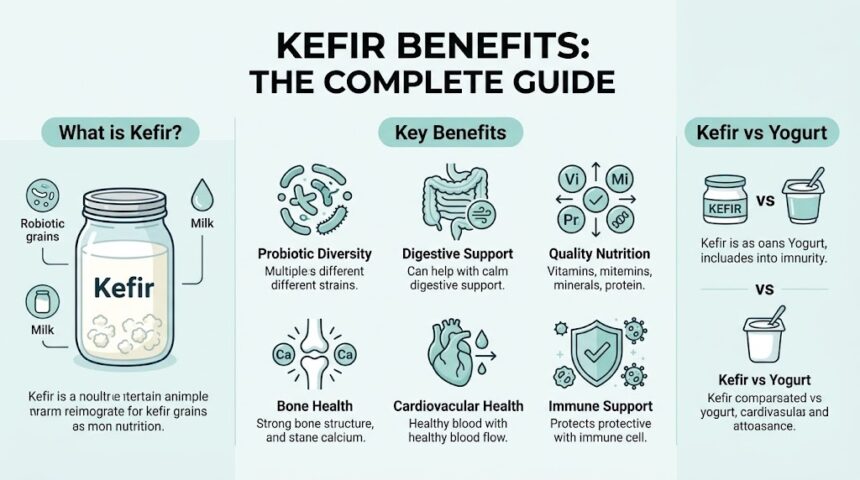
Kefir is a fermented milk drink made by adding kefir grains — a culture of bacteria and yeast that looks a bit like small cauliflower florets — to milk. Over roughly 24 hours, the grains ferment the milk, producing a tangy, slightly effervescent drink. The grains are then strained out and reused for the next batch. While traditionally made with cow’s milk, kefir can also be made with goat or sheep milk, and a dairy-free version called water kefir uses sugar water or coconut water instead.
Kefir Benefits
1. A Broader Range of Probiotics Than Most Fermented Foods
Kefir typically contains around 12 strains of live and active bacterial and yeast cultures, compared to the one to five strains commonly found in yogurt — a meaningfully wider probiotic profile. This diversity is one of the main reasons kefir is often highlighted specifically for gut health over other fermented dairy options.
2. Supports Digestion
The probiotics in kefir can help support a balanced gut microbiome, and some research has linked regular kefir consumption to improved digestion. Because kefir’s live cultures help break down lactose during fermentation, many people with lactose intolerance tolerate kefir better than regular milk.
3. Provides Quality Nutrition Beyond Probiotics
A cup of plain kefir provides roughly 9 grams of protein, along with calcium, potassium, and B vitamins — nutrients that support gut health, bone health, and overall nutrition independent of its probiotic content. Its high water content also makes it a mildly hydrating option compared to thicker dairy products.
4. May Support Bone Health
Kefir’s calcium content, combined with some research suggesting fermented dairy may support calcium absorption, makes it a reasonable addition to a bone-supportive diet, particularly for people who don’t get enough calcium from other sources.
5. Potential Cardiovascular Benefits
Some research has found that kefir may help support healthy blood pressure, potentially through bioactive peptides created during fermentation that influence blood vessel constriction and sodium retention. This research is still developing, but it’s a promising area for a food already worth including for other reasons.
6. May Support Immune Function
Since a significant portion of your immune system is closely tied to gut health, the probiotics in kefir may indirectly support immune function by contributing to a more balanced gut microbiome.
Kefir vs. Yogurt: What’s the Real Difference?
Both are fermented dairy products with genuine health benefits, but they differ in a few meaningful ways:
- Fermentation process: Yogurt is fermented using only bacteria, while kefir is fermented using both bacteria and yeast, which is part of why kefir has a more diverse microbial profile.
- Probiotic diversity: Kefir generally contains more strains and higher counts of live cultures than yogurt.
- Texture: Kefir is thinner and drinkable, similar to a smoothie consistency, while yogurt is thicker and spoonable.
- Protein: Yogurt, particularly Greek yogurt, often contains more protein per serving than kefir, though kefir still provides a meaningful amount.
- Lactose tolerance: Both can be easier to digest than milk for lactose-intolerant individuals, though kefir’s more extensive fermentation process may offer a slight edge for some people.
Neither is objectively “better” across the board — both support gut health through probiotics, and the more practical question is which one you’ll actually enjoy consistently.
How to Make Kefir at Home
Making kefir is straightforward and doesn’t require special equipment beyond a jar and kefir grains, which can be purchased online or from someone already brewing their own:
- Add about 1 tablespoon of kefir grains to 1 cup of milk in a clean glass jar.
- Cover loosely (not airtight — the fermentation process releases gas) and let it sit at room temperature for 18–24 hours, away from direct sunlight.
- The kefir is ready when it has thickened slightly and developed a tangy smell and taste.
- Strain out the kefir grains using a non-metal strainer (metal can affect the culture), and refrigerate the finished kefir.
- Reuse the strained grains to start your next batch, adding fresh milk right away or storing the grains in the refrigerator with a small amount of milk if you’re taking a break.
If you’d rather skip the process, store-bought plain kefir is widely available in the dairy aisle — just check the label for “live and active cultures” and watch for added sugar in flavored versions.
Ways to Add Kefir to Your Diet
- Drink it plain as you would a glass of milk or buttermilk.
- Blend it into smoothies in place of milk or yogurt for a probiotic boost.
- Use it as a base for salad dressings, similar to how you’d use buttermilk.
- Pour it over granola or oats as an alternative to milk or yogurt.
- Use it in baking as a substitute for buttermilk in pancakes or muffins.
Possible Side Effects and Who Should Be Cautious
- Initial digestive adjustment: Introducing any new probiotic-rich food can cause temporary gas, bloating, or changes in bowel habits, especially at first. Starting with a small serving and increasing gradually helps minimize this.
- Dairy sensitivity: While kefir is often better tolerated than milk for people with lactose intolerance, those with a true dairy allergy should avoid dairy-based kefir and consider water kefir instead.
- Compromised immune systems: People with significantly weakened immune systems should talk to a doctor before regularly consuming any product containing live bacterial cultures.
- Added sugar in flavored varieties: Many commercial flavored kefirs contain substantial added sugar. Plain kefir with your own added fruit is a lower-sugar option.
Frequently Asked Questions
Is kefir better than yogurt for gut health?
Kefir generally contains a broader range of probiotic strains than yogurt, which some experts consider an advantage for gut health specifically. That said, both are nutritious, evidence-backed choices, and the best one depends on your preferences and what you’ll actually eat consistently.
Can I drink kefir if I’m lactose intolerant?
Many people with lactose intolerance tolerate kefir better than regular milk, since the fermentation process breaks down much of the lactose. Individual tolerance varies, so it’s worth starting with a small amount to see how you respond.
How much kefir should I drink per day?
There’s no official recommended amount, but around 1 cup (roughly 8 ounces) per day is a commonly cited reasonable serving for most healthy adults. If you’re new to kefir, starting with a smaller amount and working up helps your digestive system adjust.
Can I make dairy-free kefir?
Yes. Water kefir uses different grains fermented in sugar water or coconut water instead of milk, producing a dairy-free probiotic drink with a lighter, less tangy flavor than milk kefir.
Does store-bought kefir have the same benefits as homemade?
Store-bought kefir with “live and active cultures” on the label provides similar probiotic benefits to homemade versions. The main differences are usually added sugar or flavorings in commercial products, so reading labels matters more than the homemade-versus-store-bought distinction itself.
Final Thoughts
Kefir earns its growing popularity — it’s one of the more probiotic-dense fermented foods available, provides solid everyday nutrition, and is easy to work into meals you’re already eating. Whether you make it at home or grab it from the store, plain kefir with minimal added sugar is a practical, well-supported addition to a gut-supportive diet.