

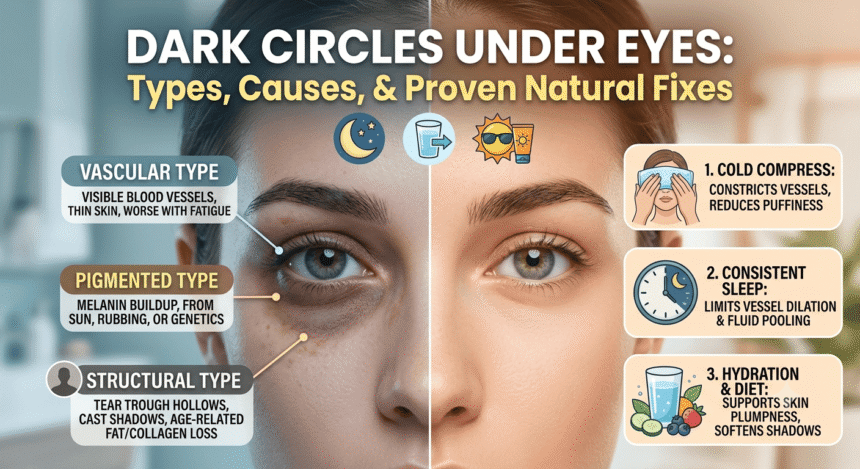
Dark circles under eyes are one of the most common skin complaints, and one of the most misunderstood. Some people are born with them because of thin under-eye skin or deep-set eyes. Others notice them creep in after a few bad nights of sleep, a pollen season, or years of sun exposure. The right fix depends on which of these is actually driving your case, which is why generic advice (“just sleep more”) often disappoints.
This guide walks through what really causes dark circles, the natural and at-home fixes with the best track record, and the signs that mean it is worth a medical check rather than another eye cream. This article is general health information, not a diagnosis or treatment plan.
Quick answer: what causes dark circles under eyes?
Dark circles usually come from one or a mix of four things: thin, translucent under-eye skin that lets blood vessels show through (often genetic), pigment buildup (melanin) from sun exposure, rubbing, or allergies, hollowing from natural fat and collagen loss with age, and temporary puffiness or shadowing from poor sleep, dehydration, or fluid retention. Natural fixes such as consistent sleep, hydration, cold compresses, sun protection, and gentle topical ingredients like vitamin C or caffeine help the temporary, vascular, and mild pigment types most. Genetic and structural dark circles respond only partially to home care.
The main types of dark circles
Dermatologists generally sort dark circles into three overlapping categories, and knowing which one fits you changes what actually works.
1. Vascular (bluish or purplish)
The skin under the eyes is thinner than skin almost anywhere else on the body. When blood vessels sit close to the surface, deoxygenated blood shows through as a blue, purple, or reddish tint. This type often worsens with fatigue, allergies, or crying, and lightens somewhat when you are well rested and hydrated.
2. Pigmented (brown)
This type comes from extra melanin deposited in the under-eye skin. Sun exposure, frequent rubbing (common with allergies or eczema), genetics, and some skin conditions increase pigmentation. It tends to look flat brown rather than shadowy, and it does not fully disappear with sleep or cold compresses alone.
3. Structural (shadowing from hollows)
As people age, fat pads and collagen under the eyes gradually thin. This creates a hollow or “tear trough” that catches light and casts a shadow, which reads visually as a dark circle even without extra pigment. Structural dark circles are the type most resistant to creams and most responsive to volume-restoring approaches.
Many people have a combination — for example, genetic vascular circles that look darker after a poor night’s sleep, on top of some age-related hollowing.
Common causes of dark circles under eyes
Genetics and thin skin
If dark circles run in your family, or you have naturally deep-set eyes and fair, thin skin, you are more likely to see visible vessels regardless of how well you sleep. This is the single biggest reason home remedies fully clear dark circles for some people and only fade them for others.
Sleep deprivation and poor sleep quality
Inadequate or fragmented sleep dilates blood vessels under the eyes and can make skin appear paler, which lets underlying vessels show through more. It can also encourage fluid to pool overnight, adding mild puffiness that casts its own shadow.
Dehydration
When the body is short on fluids, the skin under the eyes can look more sunken and dull, which emphasizes shadows. Chronic mild dehydration is easy to miss day to day — our guide to dehydration symptoms covers the early signs worth watching for.
Allergies and allergic shiners
Seasonal or environmental allergies trigger histamine release, which dilates and can leak small blood vessels around the eyes, producing what clinicians sometimes call “allergic shiners.” Constant rubbing from itchy eyes adds pigmentation and irritation on top of that.
Eye strain and screen time
Long stretches of screen use can strain the muscles around the eyes and dilate surrounding blood vessels, making circles look more prominent by the end of the day.
Sun exposure
UV exposure increases melanin production, including in the delicate under-eye area, and breaks down collagen over time. Unprotected sun exposure is one of the more preventable contributors to pigmented dark circles.
Aging
Collagen and fat naturally decline with age, thinning the skin and creating hollows that cast shadows — the structural type described above.
Diet, alcohol, and smoking
Excess salt can promote fluid retention and puffiness. Alcohol dehydrates and dilates blood vessels. Smoking accelerates collagen breakdown and thins skin. None of these single-handedly causes dark circles, but each can make an existing tendency more visible.
Nutrient gaps
Low iron or vitamin deficiencies are sometimes associated with a paler, more shadowed look under the eyes, since skin tone changes can make underlying vessels more visible. If you also notice fatigue, dizziness, or unusual paleness elsewhere, that pattern is worth mentioning to a doctor rather than self-treating with supplements.
Natural fixes that actually help
1. Prioritize consistent sleep
Aim for a regular sleep and wake time rather than only chasing total hours. Consistency reduces the fluid pooling and vessel dilation that make circles look worse day to day.
2. Cold compress
A clean, cool (not icy) compress, chilled spoons, or cold gel eye masks held under the eyes for 10–15 minutes can constrict blood vessels and temporarily reduce both puffiness and the bluish tint of vascular circles.
3. Stay hydrated through the day
Steady fluid intake supports skin plumpness, which softens shadows. Pairing water with water-rich foods can help; see our hydrating foods guide for practical options beyond plain water.
4. Elevate your head while sleeping
An extra pillow keeps fluid from settling under the eyes overnight, which can reduce morning puffiness and shadowing.
5. Manage allergies
Identify and reduce exposure to known triggers, avoid rubbing your eyes, and ask a pharmacist or doctor about an appropriate antihistamine if seasonal allergies are a recurring pattern. Less rubbing means less added pigmentation over time.
6. Wear sunscreen and sunglasses
Daily SPF around the eye area (using a product formulated for that sensitive skin) and UV-blocking sunglasses limit further melanin buildup and slow collagen breakdown.
7. Try caffeine or vitamin C topically
Caffeine-containing eye creams can temporarily constrict blood vessels and reduce puffiness. Vitamin C serums support collagen production and may gradually even out pigmentation with consistent use over weeks, not days.
8. Chilled tea bags or cucumber slices
These classic remedies work mainly through the cold, gentle compression rather than any special ingredient — caffeine in tea may add a mild vessel-constricting effect. Fifteen minutes, a few times a week, is a low-risk habit to build.
9. Support skin with a balanced, anti-inflammatory diet
Diets with adequate protein, vitamin C, vitamin K, and antioxidants support collagen and vessel health. Our anti-inflammatory foods list is a reasonable starting point if you want to support skin from the inside rather than relying only on topical products.
10. Consider a gentle facial oil or moisturizer
Well-tolerated natural oils can help keep the thin under-eye skin supple, which softens the visual texture of shadows, though oils do not remove pigment or hollowing on their own. If you are exploring topical skin oils generally, our guide to natural body oils covers what to look for and how to patch test before trying a new product near the eyes.
11. Manage stress and protect sleep hygiene
Chronic stress disrupts sleep and can worsen the habits — late nights, alcohol, screen overuse — that make circles more visible. Basic stress and sleep habits from our mental health tips guide apply here as general background support, not a targeted treatment.
12. Cut back on salt and alcohol before bed
Reducing evening salt intake and alcohol can limit overnight fluid retention, making morning puffiness and shadowing less noticeable.
What natural remedies will not fully fix
Genetic vascular circles and age-related structural hollows will improve in appearance with the steps above but rarely disappear completely. For those cases, options such as retinoid creams (which support collagen over months), chemical peels, dermal fillers, or laser treatments are handled by a dermatologist and go beyond home care. It is reasonable to try consistent home measures for six to eight weeks before deciding whether an in-office treatment is worth exploring.
When dark circles need medical attention
Most dark circles are cosmetic rather than dangerous, but a few patterns are worth a doctor’s visit rather than another home remedy:
- Sudden, one-sided swelling or discoloration, especially with pain
- Dark circles appearing alongside unusual fatigue, dizziness, or pale skin, which can point to anemia or a nutrient deficiency
- Puffiness that does not improve with sleep and is paired with facial or leg swelling, which can suggest a kidney, thyroid, or allergy issue needing evaluation
- Associated itching, scaling, or rash around the eyes that could indicate eczema, contact dermatitis, or an infection
- Circles that develop rapidly in someone who was not previously affected, without an obvious cause like a poor night’s sleep
Frequently asked questions
Can dark circles under eyes go away permanently?
Temporary dark circles from sleep, dehydration, or allergies usually fade once the underlying cause is addressed. Genetic or age-related dark circles can be reduced in appearance with consistent home care and sometimes professional treatments, but they rarely disappear completely.
How long does it take for natural remedies to work?
Cold compresses and better sleep can reduce puffiness within a day. Topical ingredients like vitamin C or caffeine typically need four to eight weeks of consistent use before pigmentation or vessel visibility noticeably improves.
Are dark circles a sign of a health problem?
Usually not. Most dark circles are cosmetic and related to genetics, sleep, sun exposure, or allergies. In some cases they can accompany dehydration, iron deficiency, or thyroid issues, so persistent or sudden dark circles with other symptoms are worth mentioning to a doctor.
Does drinking more water remove dark circles?
Hydration helps reduce the sunken, dull look that can make shadows more visible, but it will not remove pigment or reverse volume loss under the eyes. It works best as one part of a broader routine, not a standalone fix.
Related reading
- Dry Skin Causes and Remedies: Home Care Guide
- Acne Causes and Treatment: Clear Skin Guide
- 10 Dehydration Symptoms You Should Know
- Hydrating Foods for Better Health & Energy
- Anti-Inflammatory Foods List
- 10 Mental Health Tips That Actually Work
- Black Sea Body Oil: Uses and Patch Testing
Disclaimer
This article explains common causes of dark circles under the eyes and natural fixes for general education. It is not medical advice, diagnosis, or treatment. See a dermatologist or doctor for persistent, sudden, or unusual changes around the eyes.