
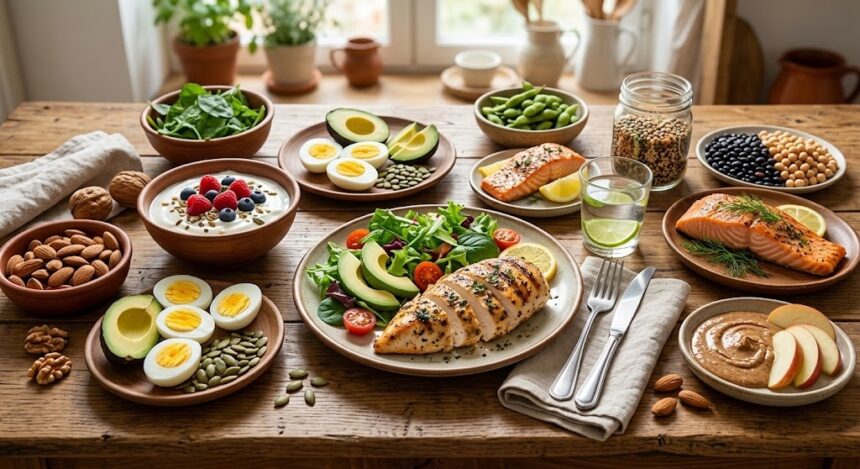
High protein foods for weight loss include chicken breast, eggs, Greek yogurt, fish, legumes, cottage cheese, and lean beef, all of which support weight loss by increasing satiety (feeling fuller for longer), preserving lean muscle mass during a calorie deficit, and requiring more energy to digest than fat or carbohydrates (the “thermic effect of food”). Research generally supports a protein intake of about 1.2-1.6 grams per kilogram of body weight per day for weight loss specifically, higher than standard general health recommendations, since adequate protein is one of the most consistent factors in successful, sustainable weight loss.
This guide covers the best high protein foods for weight loss, how much protein you actually need, and how to build meals that keep you full without excess calories.
Why Does Protein Help With Weight Loss?
Protein supports weight loss through three main mechanisms. It increases satiety more than fat or carbohydrates per calorie, meaning high-protein meals tend to reduce hunger and subsequent snacking more effectively. It has a higher thermic effect of food, meaning the body burns more calories digesting and processing protein (roughly 20-30% of its calories) compared to carbohydrates (5-10%) or fat (0-3%). And it helps preserve lean muscle mass during a calorie deficit, which matters because muscle tissue burns more calories at rest than fat tissue, helping maintain metabolic rate during weight loss rather than losing muscle along with fat.
Best High Protein Foods for Weight Loss
Lean Poultry
Chicken breast and turkey breast provide roughly 25-30g of protein per 100g with minimal fat, making them calorie-efficient protein sources that support satiety without excess calories.
Eggs
Eggs provide about 6g of protein per egg along with healthy fats and micronutrients, and research specifically shows egg-based breakfasts increase satiety and reduce subsequent calorie intake compared to equally caloric carbohydrate-based breakfasts.
Fish and Seafood
White fish like cod and tilapia are very lean and high in protein, while fatty fish like salmon provide protein alongside beneficial omega-3 fats; both support weight loss goals with different additional nutritional benefits.
Greek Yogurt
At roughly double the protein of regular yogurt per serving (around 15-20g per cup), Greek yogurt is a particularly protein-dense dairy option that also supports satiety through its thick, filling texture.
Cottage Cheese
Providing about 25g of protein per cup with relatively few calories, cottage cheese is one of the most protein-dense, lower-calorie foods available, making it especially efficient for weight loss goals.
Legumes
Lentils, chickpeas, and beans combine protein with substantial fiber, and this fiber-protein combination is particularly effective for sustained fullness, making legumes valuable even though their protein content per gram is lower than animal sources.
Lean Beef
Lean cuts of beef (like sirloin or 93%+ lean ground beef) provide high-quality protein along with iron and B12, though portion control matters more here than with very lean options, given beef’s generally higher calorie density from fat.
Tofu and Tempeh
For plant-based diets, tofu and tempeh provide substantial protein (roughly 10-20g per 100g depending on preparation) along with fiber, making them effective vegetarian and vegan options for weight-loss-focused eating.
How Much Protein Do You Need for Weight Loss?
Research on weight loss specifically supports higher protein targets than general health guidelines — roughly 1.2-1.6 grams per kilogram of body weight per day, compared to the general population recommendation of about 0.8 g/kg. For a 70kg (154 lb) person, this translates to roughly 84-112 grams of protein daily. Higher intakes, up to about 2.0-2.2 g/kg, are sometimes used by people combining weight loss with resistance training to maximize muscle retention, though benefits generally plateau beyond this range for most people.
Common Mistakes When Using Protein for Weight Loss
- Relying too heavily on protein shakes and bars while neglecting whole food sources, which provide fiber and micronutrients shakes typically lack
- Adding high protein foods on top of an already sufficient calorie intake rather than using them to replace less filling, lower-protein options, which can stall weight loss despite “eating healthy”
- Choosing high-protein foods that are also high in saturated fat or heavily processed (like fatty processed meats) as a primary protein source, missing an opportunity for leaner, more nutrient-dense options
- Ignoring fiber intake while focusing exclusively on protein, since fiber is equally important for satiety and overall diet quality during weight loss
- Assuming more protein always means better results, when total calorie balance still ultimately determines whether weight loss occurs
Does Protein Timing Matter for Weight Loss?
Total daily protein intake matters considerably more than precise timing for most people’s weight loss goals. That said, distributing protein relatively evenly across meals (rather than consuming most of it in one meal) appears to support satiety and muscle protein synthesis somewhat better than heavily skewed distribution, based on current research. A practical approach is aiming for roughly 25-40g of protein per meal across three to four meals, rather than obsessing over exact timing relative to workouts or specific hours of the day.
High Protein Meal Ideas for Weight Loss
- Breakfast: Greek yogurt with berries and a sprinkle of nuts, or eggs with vegetables
- Lunch: Grilled chicken salad with mixed greens, chickpeas, and a light dressing
- Snack: Cottage cheese with fruit, or a hard-boiled egg
- Dinner: Baked fish or lean beef with a large portion of vegetables and a modest portion of whole grains
- Snack: Plain Greek yogurt or a small handful of edamame
Building each meal around a clear protein source first, then adding vegetables and a modest amount of carbohydrate or fat, is a simple, sustainable structure for weight-loss-focused eating.
Can You Get Too Much Protein?
For most healthy people, protein intake up to about 2.0-2.2 g/kg body weight per day is considered safe and well-tolerated. Very high intakes beyond this range haven’t shown additional weight-loss benefit in research and may be harder to sustain long-term or displace other important nutrients like fiber-rich carbohydrates. People with kidney disease should discuss appropriate protein intake with a doctor, since impaired kidney function may require a different, often lower, protein target.
Frequently Asked Questions
What is the best high protein food for weight loss?
There’s no single best food — lean poultry, fish, eggs, Greek yogurt, cottage cheese, and legumes are all excellent, calorie-efficient protein sources, and variety across these options supports both nutrition and long-term adherence better than relying on just one food.
How much protein should I eat per day to lose weight?
Research generally supports 1.2-1.6 grams of protein per kilogram of body weight per day for weight loss, which is higher than general health guidelines and helps preserve muscle mass and support satiety during a calorie deficit.
Can eating more protein help me lose belly fat specifically?
Protein supports overall fat loss through satiety, thermic effect, and muscle preservation, but it doesn’t target fat loss in a specific body area; where fat is lost from first is largely determined by genetics and overall body composition changes, not the source of dietary macronutrients.
Is it better to get protein from food or supplements for weight loss?
Whole food sources are generally preferred when practical, since they provide protein alongside other beneficial nutrients like fiber, vitamins, and minerals; protein powder or shakes can be a useful, convenient supplement when whole food intake alone doesn’t meet your target, particularly around busy schedules.
Does a high protein diet slow down metabolism less than other diets?
Yes, higher protein intake during weight loss is associated with better preservation of lean muscle mass compared to lower-protein calorie-restricted diets, and since muscle tissue burns more calories at rest than fat tissue, this helps limit the metabolic slowdown that often accompanies significant weight loss.
Can vegetarians and vegans get enough protein for weight loss?
Yes, though it requires more intentional meal planning — combining legumes, tofu, tempeh, seitan, and plant-based protein powders can meet weight-loss protein targets, though vegetarians and vegans may need to eat somewhat larger portions or more frequent protein-containing meals to reach the same protein intake as an omnivorous diet.
Will eating more protein make me gain muscle instead of losing weight?
No, protein alone doesn’t build significant muscle without a resistance training stimulus; for most people not doing structured strength training, extra protein supports fat loss and muscle preservation during a deficit rather than causing muscle gain, since muscle growth requires both a training stimulus and, typically, a calorie surplus.
Is it necessary to eat protein at every single meal for weight loss?
While not strictly required, spreading protein across most meals throughout the day tends to support better satiety and more consistent adherence than loading most protein into one meal, making it a practical habit worth building even if occasional variation is fine.
Related Reading
- Whey protein vs plant protein: which should you choose?
- Greek yogurt benefits: what makes it different and why it matters
- Mediterranean diet meal plan: a full week of meals and how to start
- Best fiber foods for digestion
- Mindful eating practices: a practical guide to getting started
Informational only — not medical advice. See a doctor or registered dietitian for personalized guidance, especially if managing kidney disease or another chronic condition.