
This is educational content, not personalized medical advice. If you have a diagnosed digestive condition such as IBS, IBD, or a history of bowel obstruction, talk to a clinician before making major fiber changes.
Why fiber matters for digestion
Fiber is the part of plant food your body can’t fully break down. Instead of being absorbed, it passes through the digestive tract, where it adds bulk to stool, feeds beneficial gut bacteria, and helps regulate how quickly food moves through the gut. This is why adequate fiber intake is linked to more regular bowel movements, lower constipation risk, better blood sugar control, and a more diverse gut microbiome.
Soluble vs insoluble fiber: what’s the difference?
Soluble fiber dissolves in water to form a gel-like substance. It slows digestion, helps stabilize blood sugar, and can soften stool, which makes it especially useful for people with loose or irregular bowel patterns. Good sources include oats, chia seeds, flaxseed, apples, citrus fruits, carrots, and legumes.
Insoluble fiber does not dissolve in water. It adds bulk to stool and helps food move through the intestines more quickly, which is particularly helpful for constipation. Sources include whole wheat, wheat bran, nuts, seeds, and the skins of many fruits and vegetables.
Most whole foods contain a mix of both types, which is one reason whole, minimally processed plant foods tend to outperform isolated fiber supplements for overall digestive health.
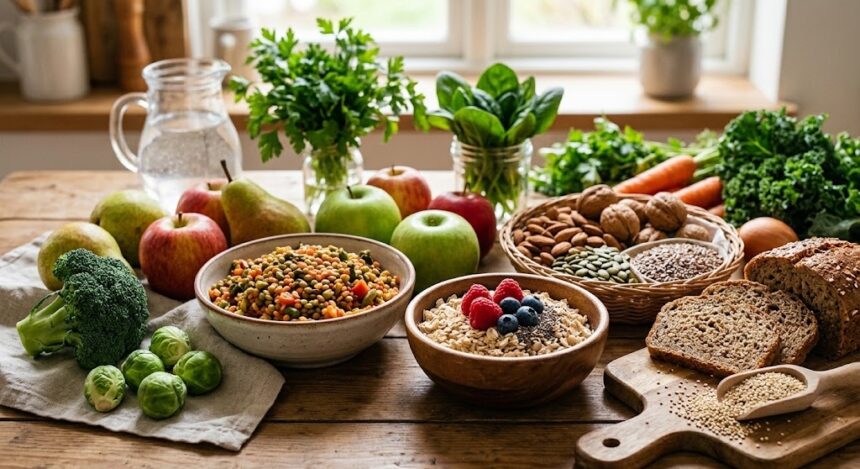
Best fiber foods for digestion
1. Legumes (beans, lentils, chickpeas)
Legumes are among the highest-fiber foods available, often providing 7 to 10 grams of fiber per cooked cup, along with plant protein and resistant starch that feeds beneficial gut bacteria. Because legumes are also high in fermentable carbohydrates, people prone to gas or bloating should increase portions gradually.
2. Oats
Oats are rich in beta-glucan, a soluble fiber shown to support healthy cholesterol levels and steady digestion. A bowl of oatmeal is one of the gentlest ways to add soluble fiber to breakfast without overwhelming a sensitive gut.
3. Chia seeds and flaxseed
Both are concentrated sources of soluble fiber that absorb water and form a gel, which can help soften stool and ease constipation. Ground flaxseed is generally better absorbed than whole flaxseed. Start with one tablespoon a day and increase slowly, along with extra water.
4. Berries
Raspberries, blackberries, and strawberries offer a favorable balance of fiber to sugar compared with many other fruits, along with antioxidants that support overall gut lining health.
5. Apples and pears (with skin)
Much of the fiber in apples and pears is in the skin, so eating them unpeeled maximizes both soluble fiber (pectin) and insoluble fiber. Pectin in particular has been studied for its role in supporting regular bowel movements.
6. Broccoli and Brussels sprouts
Cruciferous vegetables are high in fiber and micronutrients, but they also contain fermentable carbohydrates that can cause gas in sensitive individuals. Lightly cooking them, rather than eating them raw, can make them easier to digest.
7. Whole grains (brown rice, quinoa, whole wheat, barley)
Swapping refined grains for whole grains is one of the simplest, most sustainable ways to raise daily fiber intake, since whole grains retain the bran and germ layers that refined grains strip away.
8. Nuts and seeds
Almonds, pistachios, chia, and sunflower seeds all contribute meaningful fiber alongside healthy fats. Portion control matters here since nuts and seeds are calorie-dense.
9. Psyllium husk
Psyllium is a concentrated soluble fiber supplement widely studied for both constipation and diarrhea-predominant bowel patterns, since it absorbs water and normalizes stool consistency in either direction. It’s a reasonable option when whole-food fiber intake alone isn’t enough, ideally used under guidance if you have an existing digestive condition.
10. Leafy greens and root vegetables
Spinach, kale, carrots, and sweet potatoes add steady fiber without the fermentable-carb load of some other high-fiber foods, making them a good option for people who are fiber-sensitive.
For a broader look at gut-supportive eating patterns beyond fiber alone, see our guide to best foods for gut health, which covers fermented foods and prebiotics as well.
How much fiber do you actually need?
General guidance suggests around 25 grams of fiber per day for adult women and around 38 grams per day for adult men, though needs vary by age and calorie intake. Most people eating a typical Western diet get well under half of this amount, which is one reason constipation and irregularity are so common.
How to increase fiber without bloating or gas
A sudden jump in fiber intake is one of the most common causes of temporary gas, bloating, and cramping. The gut microbiome needs time to adjust to a higher fiber load. To avoid this:
- Increase fiber gradually over two to three weeks rather than all at once
- Pair fiber increases with extra water, since fiber without enough fluid can worsen constipation instead of helping it
- Spread fiber intake across meals instead of loading it all at dinner
- Cook gas-producing vegetables (broccoli, cabbage, beans) rather than eating them raw
- If you notice bloating with specific high-FODMAP fiber sources, reduce portion size rather than cutting fiber entirely
If you’re prone to gas after eating in general, our guide to bloating causes and relief covers additional strategies that pair well with a higher-fiber diet.
Fiber and IBS: proceed with more care
People with irritable bowel syndrome often react differently to soluble versus insoluble fiber, and many high-fiber foods are also high-FODMAP, which can trigger symptoms. Soluble fiber (oats, psyllium) is generally better tolerated than insoluble, roughage-heavy fiber (wheat bran, raw vegetable skins) for IBS-related bloating and pain. If you suspect IBS is behind your symptoms, our guide to IBS symptoms, triggers, and relief tips and the low FODMAP diet guide walk through how to identify your personal triggers before eliminating fiber altogether.
Fiber can also interact with small intestinal bacterial overgrowth (SIBO), where fermentable fiber may worsen symptoms until the underlying bacterial imbalance is addressed. See our overview of SIBO symptoms, causes, and treatment if fiber consistently makes your bloating worse rather than better.
Fiber supplements vs whole foods
Fiber supplements like psyllium husk, methylcellulose, or inulin powder can help close a gap when whole-food intake falls short, but they don’t fully replace the vitamins, minerals, and diverse plant compounds found in whole high-fiber foods. Whole foods should generally be the primary source, with supplements used to fill specific gaps rather than as a shortcut around a low-fiber diet.
When to see a doctor
Most digestive discomfort from adjusting fiber intake is temporary and resolves within a couple of weeks. See a healthcare provider if you experience:
- Severe or worsening abdominal pain
- Blood in your stool
- Unintentional weight loss
- Persistent bloating or constipation that doesn’t improve with dietary changes
- A sudden, significant change in bowel habits lasting more than a few weeks
Frequently asked questions
What is the best fiber food for constipation?
Prunes, chia seeds, flaxseed, and psyllium husk are among the most effective for constipation because they combine soluble fiber with a strong water-absorbing effect, which softens and bulks stool.
Can too much fiber cause bloating?
Yes. Increasing fiber too quickly, especially fermentable fiber, is a common cause of temporary gas and bloating. Gradual increases paired with adequate water intake usually prevent this.
Is fruit or vegetable fiber better for digestion?
Neither is universally “better” — both matter. A mix of fruits, vegetables, legumes, and whole grains provides both soluble and insoluble fiber, which supports digestion more effectively than relying on one food group alone.
Should I take a fiber supplement every day?
Daily fiber supplements like psyllium can be appropriate for many people, but whole food sources should be the first approach. If you have a digestive condition, check with a clinician before starting a daily supplement.
Related reading
- Best Foods for Gut Health: Probiotics and Prebiotics
- Bloating Causes and Relief: What Helps After Eating
- Low FODMAP Diet Guide: Food List and IBS Tips
- IBS Symptoms Explained: Triggers and Relief Tips
- SIBO: Symptoms, Causes, and Treatment
Disclaimer
This article describes the best fiber foods for digestion for general education. It is not medical advice. If you have a diagnosed digestive condition or persistent symptoms, consult a qualified healthcare provider before making significant dietary changes.
]]>