

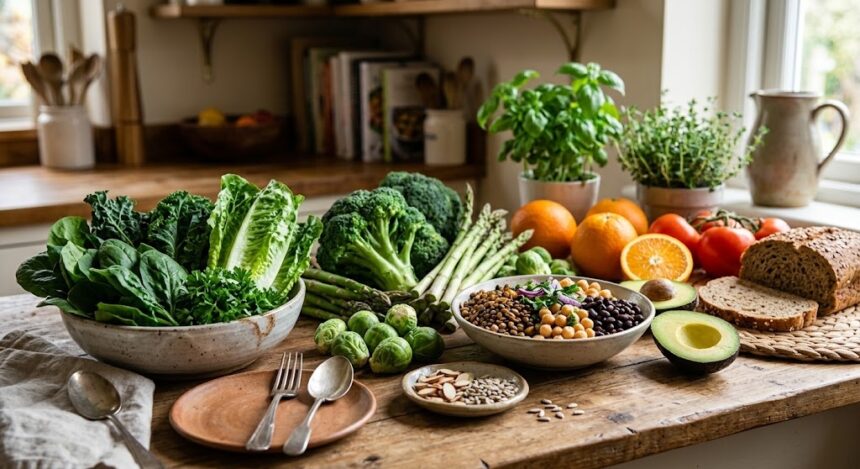
Folate rich foods include leafy greens like spinach and romaine lettuce, legumes like lentils and chickpeas, asparagus, avocado, citrus fruits, and fortified grains and cereals. Folate (vitamin B9) is essential for DNA synthesis, red blood cell formation, and cell division, and it’s particularly critical during early pregnancy, when adequate intake significantly reduces the risk of neural tube defects — a large part of why fortified foods and prenatal supplements are so strongly emphasized for people who are or may become pregnant.
This guide covers why folate matters, the best food sources, the difference between folate and folic acid, and answers to common questions about folate intake.
Why Folate Matters
Folate plays a central role in DNA and RNA synthesis and cell division, which makes it especially important during periods of rapid growth, including fetal development, infancy, and adolescence. It also works alongside vitamin B12 in red blood cell formation, and low folate levels can contribute to a type of anemia (megaloblastic anemia) marked by unusually large, poorly functioning red blood cells. Beyond pregnancy, adequate folate supports normal cell turnover, nervous system function, and helps regulate homocysteine, an amino acid linked at high levels to increased cardiovascular risk.
Best Folate-Rich Foods
Leafy Greens
- Spinach (raw or cooked)
- Romaine lettuce
- Collard greens and turnip greens
Legumes
- Lentils — one of the richest natural sources
- Chickpeas and black-eyed peas
- Black beans and kidney beans
Vegetables
- Asparagus
- Broccoli and Brussels sprouts
- Beets
Fruits
- Avocado
- Oranges and other citrus fruits
- Papaya
Grains, Nuts, and Fortified Foods
- Fortified breakfast cereals — in many countries, grain products are fortified specifically to help prevent widespread folate deficiency
- Fortified bread and pasta
- Sunflower seeds
- Peanuts
Folate vs Folic Acid: What’s the Difference?
Folate is the natural form of vitamin B9 found in whole foods like leafy greens and legumes. Folic acid is the synthetic, more stable form used in fortified foods and supplements, which the body converts into usable folate through a metabolic process. Both count toward total intake, and for most people this distinction doesn’t require special attention, though people with certain genetic variations affecting folate metabolism (like MTHFR variants) sometimes benefit from a specific active form called methylfolate instead of folic acid — a topic worth discussing with a doctor if relevant to your situation rather than assumed.
Folate and Pregnancy
Adequate folate intake before conception and during early pregnancy substantially reduces the risk of neural tube defects, serious birth defects affecting the brain and spine that develop very early, often before many people know they’re pregnant. This is why health organizations recommend that anyone who could become pregnant get adequate folic acid, typically through a combination of diet and a prenatal vitamin, starting before conception whenever possible rather than only after a pregnancy is confirmed.
Signs of Folate Deficiency
- Fatigue and weakness
- Pale skin
- Mouth sores or a swollen, sore tongue
- Irritability or difficulty concentrating
- Shortness of breath, related to the anemia that severe deficiency can cause
Folate deficiency is confirmed with blood tests rather than symptoms alone, since these signs overlap with other nutrient deficiencies, including iron deficiency and vitamin B12 deficiency.
Who Is Most at Risk of Folate Deficiency?
- Pregnant people, given significantly increased needs
- People with alcohol use disorder, since alcohol interferes with folate absorption and metabolism
- People with malabsorption conditions like celiac disease or inflammatory bowel disease
- People on certain medications, including some anti-seizure medications and methotrexate, which can interfere with folate metabolism
- People eating a diet low in fruits, vegetables, and legumes overall
Frequently Asked Questions
What foods are highest in folate?
Lentils, leafy greens like spinach, asparagus, and fortified cereals and grains are among the richest folate sources, along with legumes like chickpeas and black beans.
Why is folate so important during pregnancy?
Adequate folate before conception and during early pregnancy significantly reduces the risk of neural tube defects, which develop very early in fetal development, often before pregnancy is confirmed — which is why folate intake matters even for those who might become pregnant, not just those who already are.
What’s the difference between folate and folic acid?
Folate is the natural form found in whole foods, while folic acid is the synthetic form used in fortified foods and most supplements; the body converts folic acid into usable folate, and both count toward daily intake for most people.
Can you get too much folate?
Excess folate from food alone is very unlikely to cause problems, but very high intake from supplements can, in rare cases, mask an underlying vitamin B12 deficiency, which is part of why supplementing beyond recommended amounts should generally be guided by a doctor.
Does cooking destroy folate in food?
Folate is water-soluble and heat-sensitive, so boiling can reduce the folate content of vegetables meaningfully; steaming, microwaving, or eating folate-rich vegetables raw when practical helps preserve more of their natural folate content.
Related Reading
- Nutrition for breastfeeding mothers: what actually matters
- Best sources of iron in food: complete guide
- Complex carbohydrates food list: best sources
- Avocado nutrition benefits: what the research actually shows
Informational only — not medical advice. See a doctor about folate needs, particularly if you are, or may become, pregnant, or take medications that can affect folate levels.