

Not all probiotics are the same, and “take a probiotic” is often too vague to actually help with bloating. Effects are strain-specific — meaning the exact bacterial strain, not just the species or the word “probiotic” on the label, determines whether it’s likely to help with gas and bloating. This guide covers the best probiotic strains for bloating, what the research actually shows, and how to choose (and use) a probiotic sensibly.
This is educational content, not personalized medical advice. Probiotic research is ongoing and often based on small studies, so treat strain-specific claims as reasonable starting points rather than guarantees.
Why strain matters more than the word “probiotic”
Probiotic naming follows a genus-species-strain format (for example, Lactobacillus plantarum 299v). Two products can share the same species but behave completely differently in the gut, because the specific strain determines what the bacteria actually do — some produce gas-reducing enzymes, others support motility, and others do neither. This is why a probiotic that helped a friend’s bloating might do nothing for you, and why choosing based on strain research (not just marketing) matters. For the broader distinction between probiotics, prebiotics, and postbiotics, see our probiotics vs prebiotics vs postbiotics guide.
Probiotic strains most studied for bloating and gas
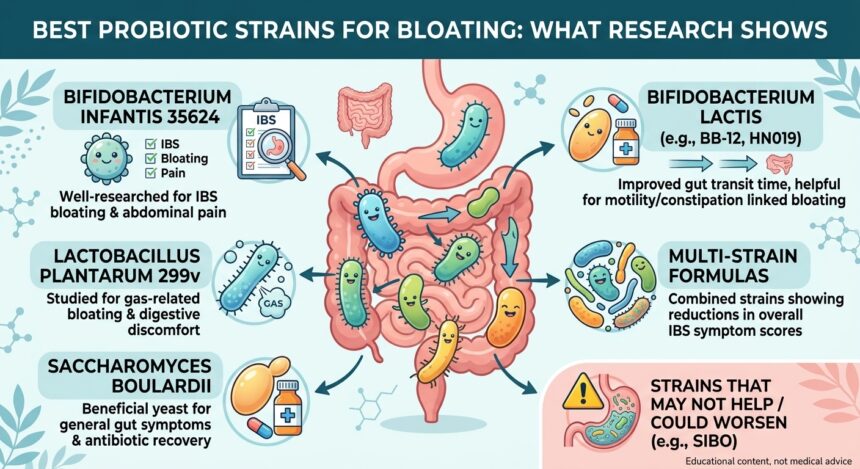
Bifidobacterium infantis 35624
One of the more well-researched strains specifically for IBS symptoms, including bloating. Clinical trials have found meaningful improvement in bloating, abdominal pain, and overall symptom scores in IBS patients using this strain, making it one of the more evidence-backed options for bloating tied to IBS.
Lactobacillus plantarum 299v
Studied specifically for gas-related bloating and abdominal discomfort. Some research suggests it may help reduce bloating severity and frequency in people with IBS-type symptoms, likely by influencing gas production and gut motility.
Saccharomyces boulardii
A beneficial yeast (not a bacteria) with research support for diarrhea-related digestive upset and general gut symptom relief, including bloating in some studies. It’s also commonly used to help offset digestive disruption from antibiotic use.
Bifidobacterium lactis (various strains, e.g. BB-12, HN019)
Associated with improved gut transit time in several studies, which can indirectly reduce bloating linked to slow motility and constipation, rather than directly targeting gas production.
Multi-strain formulas
Some clinical trials on multi-strain probiotic blends (combining several Lactobacillus and Bifidobacterium species) have shown reductions in bloating and overall IBS symptom scores. Multi-strain products can be a reasonable option when a single well-studied strain isn’t available, though it’s harder to isolate which strain is doing the work.
Strains that may not help — or could make bloating worse
Not every probiotic is a good fit for bloating, and in some cases, probiotics can temporarily worsen gas as your gut microbiome adjusts. This is especially relevant if SIBO is the underlying cause of your bloating — introducing more bacteria into an already overgrown small intestine can sometimes worsen symptoms rather than help, which is why probiotic use in SIBO is considered a mixed picture requiring individual assessment. If bloating gets noticeably worse within the first week of starting a probiotic and doesn’t settle, it’s reasonable to stop and reassess rather than push through.
How to choose a probiotic for bloating
- Check for the full strain designation on the label (genus, species, and strain code), not just “Lactobacillus” or “probiotic blend”
- Look for CFU count (colony-forming units) — most clinical studies use products in the 1–10 billion CFU range, though this varies by strain
- Match the strain to your symptom pattern — bloating with IBS-type symptoms, bloating with constipation, and bloating after antibiotics may respond to different strains
- Give it a fair trial — most probiotic research uses a 4 to 8 week trial period before evaluating whether a strain is helping
- Track your symptoms in a simple diary so you can objectively assess whether bloating actually improves
Food sources vs supplements
Fermented foods like yogurt with live cultures, kefir, sauerkraut, and kimchi provide a broader, less concentrated mix of bacterial strains than a targeted supplement. Kefir in particular tends to contain a wider range of live strains than most other fermented foods. For general gut health, food-based sources are a reasonable starting point; for targeting a specific symptom like bloating, a strain-specific supplement backed by clinical research is more likely to produce a noticeable, attributable effect.
Pairing probiotics with other bloating strategies
Probiotics work best as one part of a broader approach rather than a standalone fix. Pairing a targeted probiotic strain with dietary changes — such as identifying trigger foods through a low FODMAP approach, increasing fiber gradually with our best fiber foods for digestion guide, and staying active per our exercise and digestion guide — tends to produce better results than probiotics alone. For a wider overview of bloating triggers in general, see our guide to bloating causes and relief.
When to see a doctor
Talk to a healthcare provider before starting a probiotic, or if bloating persists despite trying one, if you experience:
- A compromised or suppressed immune system
- Bloating that worsens significantly after starting a probiotic
- Persistent bloating alongside weight loss, blood in stool, or severe pain
- No improvement after a full 6 to 8 week trial of a well-matched strain
Frequently asked questions
What is the single best probiotic strain for bloating?
There’s no single universal best strain, but Bifidobacterium infantis 35624 and Lactobacillus plantarum 299v have the most direct research support for reducing bloating, particularly in IBS-related cases.
How long does it take for probiotics to help with bloating?
Most clinical studies evaluate probiotics over 4 to 8 weeks. Some people notice changes sooner, but a full trial period is recommended before deciding a strain isn’t working.
Can probiotics make bloating worse?
Yes, temporarily, as your gut microbiome adjusts. In people with SIBO, probiotics can sometimes worsen symptoms rather than help, since the underlying issue is bacterial overgrowth rather than a bacterial deficiency.
Is it better to get probiotics from food or supplements for bloating?
For targeting bloating specifically, a strain-specific supplement with clinical research behind it is more likely to produce a measurable effect than fermented foods alone, which contain a broader but less concentrated and less predictable mix of strains.
Related reading
- Probiotics vs Prebiotics vs Postbiotics
- Bloating Causes and Relief: What Helps After Eating
- SIBO: Symptoms, Causes, and Treatment
- Low FODMAP Diet Guide
- Kefir Benefits: The Complete Guide
Disclaimer
This article on probiotic strains for bloating is for general education. It is not medical advice. Consult a qualified healthcare provider before starting any new supplement, particularly if you have an underlying digestive condition.
]]>