
A SIBO diet is not one fixed meal plan — it’s a set of eating approaches used alongside medical treatment to reduce symptoms caused by small intestinal bacterial overgrowth. Because SIBO involves bacteria that shouldn’t normally be living in large numbers in the small intestine, diet works mainly by temporarily limiting the fermentable carbohydrates that feed those bacteria, while medical treatment (usually antibiotics or herbal antimicrobials) addresses the overgrowth itself.
This guide walks through why diet matters for SIBO, the main dietary approaches people use, a sample day of eating, foods to limit, foods that are usually better tolerated, and the mistakes that commonly derail a SIBO diet.
Why Diet Matters for SIBO
In a healthy gut, most bacteria live in the large intestine, where they ferment fiber and produce gas as a normal part of digestion. With SIBO, bacteria that should be in the colon are present in excessive numbers in the small intestine instead. When you eat fermentable carbohydrates, those misplaced bacteria ferment them too — closer to the stomach, and in a section of gut not built to handle that volume of gas production. The result is often bloating, cramping, and altered bowel habits shortly after eating.
Diet does not cure SIBO on its own for most people, since it doesn’t reduce the bacterial population directly. What it does is lower the fermentable fuel available to those bacteria, which can meaningfully calm symptoms while the underlying overgrowth is being treated medically. This is why most clinicians frame a SIBO diet as a symptom-management tool used during and after treatment, not a standalone cure.
Main SIBO Diet Approaches
Several structured eating approaches are used for SIBO, and different clinicians favor different ones depending on symptom severity and how someone responds. None of them are meant to be followed indefinitely.
Low-FODMAP Diet
The low-FODMAP diet is the most researched dietary approach for SIBO and IBS-like symptoms. FODMAPs are fermentable oligosaccharides, disaccharides, monosaccharides, and polyols — short-chain carbohydrates found in foods like wheat, onion, garlic, certain fruits, legumes, and sugar alcohols. Because these carbohydrates are poorly absorbed and ferment quickly, they’re a major fuel source for the excess bacteria in SIBO. A structured low-FODMAP trial usually runs two to six weeks, followed by a careful reintroduction phase to identify which specific FODMAP groups trigger symptoms for you personally. For a full breakdown of the food lists and phases, see our low-FODMAP diet guide.
SIBO Specific Diet (SSD)
The SIBO Specific Diet combines elements of low-FODMAP eating with the Specific Carbohydrate Diet, restricting most grains, starchy vegetables, and most sugars beyond monosaccharides. It’s more restrictive than low-FODMAP alone and is typically used for people who haven’t responded adequately to a standard low-FODMAP trial. Because it removes more food categories, it’s generally recommended only for a limited period under supervision.
Cedars-Sinai Diet
Developed by researchers at Cedars-Sinai, this approach focuses on spacing meals four to five hours apart with nothing but water in between, allowing the migrating motor complex — the gut’s “housekeeping wave” that sweeps leftover food and bacteria through the small intestine between meals — to function properly. Grazing throughout the day interrupts this cleansing wave, which may contribute to bacterial buildup. This diet is often combined with low-FODMAP food choices rather than used as a completely separate food list.
Elemental Diet
An elemental diet replaces regular food temporarily with a liquid formula of pre-digested nutrients — amino acids, simple sugars, and fats that require minimal digestive work. Because the formula is absorbed high in the small intestine, very little reaches the bacteria further down, effectively starving the overgrowth. It’s typically used for two to three weeks under medical supervision and is one of the more intensive approaches, generally reserved for cases that haven’t responded to other treatments.
Bi-Phasic Diet
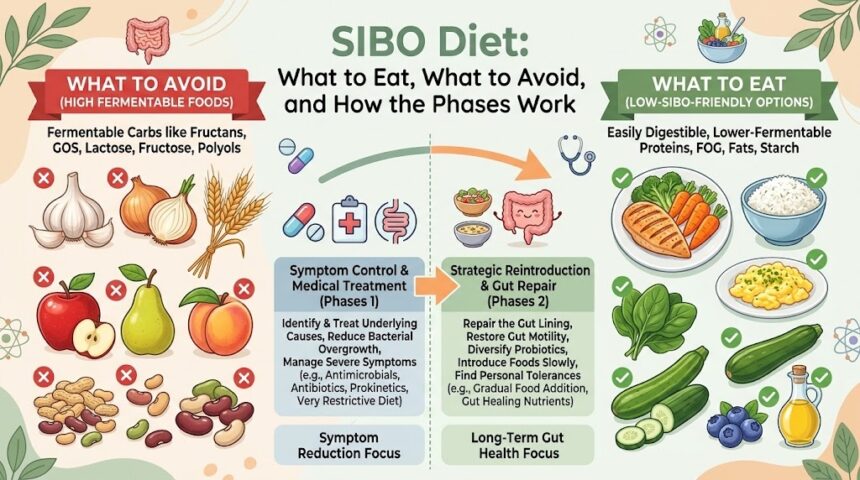
Developed by Dr. Nirala Jacobi, the bi-phasic diet has two stages: an initial phase that combines low-FODMAP and SCD-style restrictions to reduce bacterial fuel and calm inflammation, followed by a second phase focused on gradually rebuilding a more diverse diet once symptoms and antimicrobial treatment have made progress. It’s designed as a bridge back to regular eating rather than a long-term food list.
Foods to Limit on a SIBO Diet
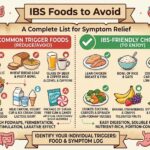
Regardless of which specific protocol you follow, certain categories of food tend to worsen SIBO symptoms for most people because they ferment quickly or feed bacterial overgrowth:
- Onion, garlic, and other high-fructan vegetables
- Wheat, rye, and other gluten-containing grains in large amounts
- Beans, lentils, and other legumes
- High-FODMAP fruits such as apples, pears, mango, and watermelon
- Dairy products containing lactose, unless lactose-free
- Sugar alcohols including sorbitol, mannitol, xylitol, and maltitol, common in sugar-free gum and candy
- Honey and high-fructose corn syrup
- Carbonated beverages, which add gas on top of what bacteria are already producing
- Excess alcohol, which can also irritate the gut lining
Foods That Are Usually Better Tolerated
Most SIBO diet approaches allow a reasonably wide range of foods, especially proteins, fats, and lower-FODMAP produce:
- Most meats, poultry, fish, and eggs, prepared without high-FODMAP sauces or marinades
- Firm tofu and tempeh in moderate portions
- Rice, oats, and gluten-free grains in tolerated amounts
- Low-FODMAP vegetables such as carrots, zucchini, spinach, cucumber, and bell peppers
- Low-FODMAP fruits in single servings, such as banana, orange, grapes, and strawberries
- Lactose-free dairy or hard, aged cheeses that are naturally low in lactose
- Olive oil and other cooking fats
- Herbs and mild spices, as tolerated individually
Sample Day of SIBO-Friendly Eating
This is one way to structure a day within a low-FODMAP-based SIBO diet — adjust based on your specific protocol and personal triggers.
- Breakfast: Scrambled eggs with spinach, a small serving of gluten-free toast
- Lunch: Grilled chicken over rice with roasted zucchini and carrots, olive oil dressing
- Snack: A handful of strawberries or a firm lactose-free cheese
- Dinner: Baked salmon, mashed potato without skin, sautéed green beans
- Throughout the day: Water or herbal tea spaced between meals, avoiding constant snacking to support the migrating motor complex between meals
Does SIBO Type Change the Diet?
SIBO is generally categorized by the gas that dominates on a breath test — hydrogen, methane (sometimes labeled intestinal methanogen overgrowth, or IMO), or a hydrogen sulfide pattern. While the core dietary principles overlap across types, some clinicians adjust fiber and specific food choices depending on which gas predominates, since methane-producing organisms respond somewhat differently to substrate than hydrogen-producing bacteria. This is a detail worth discussing with whoever is guiding your treatment rather than something to self-diagnose from symptoms alone, since breath testing is the only reliable way to identify which pattern you have.
Meal Spacing and the Migrating Motor Complex
The migrating motor complex is worth understanding in more detail, since it’s one of the more overlooked parts of a SIBO diet. Between meals, once the stomach has finished digesting, the small intestine produces a repeating wave of muscular contractions that sweeps residual food particles and bacteria toward the colon. This housekeeping process only activates during fasting periods — it switches off as soon as you eat or drink anything besides water. Constant grazing, frequent snacking, or sipping calorie-containing drinks throughout the day can prevent this wave from completing its cycle, which some clinicians believe contributes to bacterial buildup over time. This is why several SIBO diet approaches emphasize three to four hours between meals, with nothing but water in between, rather than focusing on food choice alone.
Diet Alone Usually Isn’t Enough
It’s worth being direct about this: dietary changes reduce symptoms for many people with SIBO, but they rarely resolve the underlying bacterial overgrowth by themselves. Most treatment protocols combine a temporary diet with antibiotics such as rifaximin, or herbal antimicrobials, prescribed and monitored by a clinician. Diet is the supporting piece — the daily-life tool that keeps symptoms manageable — while the medical treatment addresses the bacterial population directly. For a full look at how SIBO is diagnosed and treated medically, see our guide on SIBO symptoms, causes, and treatment.
How Long Should You Follow a SIBO Diet?
Most SIBO-specific eating patterns are meant to be temporary, generally lasting anywhere from a few weeks to a few months, depending on the approach and how treatment is progressing. Staying on a highly restrictive SIBO diet indefinitely isn’t the goal, and it isn’t without downsides — long-term restriction can reduce the diversity of your gut bacteria, create gaps in fiber and micronutrient intake, and make eating socially difficult. Ideally, food groups are reintroduced gradually once symptoms improve and any antimicrobial treatment has run its course, with the aim of eating the widest variety your gut can comfortably handle.
Common Mistakes People Make With a SIBO Diet
- Treating diet as a cure on its own, without addressing the underlying bacterial overgrowth through appropriate medical treatment
- Staying on the most restrictive phase far longer than intended, which can affect nutritional status and gut bacterial diversity
- Grazing throughout the day instead of spacing meals, which interferes with the migrating motor complex that helps clear bacteria between meals
- Reintroducing many foods at once after treatment, making it hard to identify which specific foods still cause symptoms
- Copying someone else’s exact SIBO diet without adjusting for personal tolerance, since triggers vary meaningfully between individuals
- Ignoring fiber and nutrient gaps that build up over weeks of restriction, especially in more intensive protocols like the elemental diet or SSD
Reintroducing Foods After Treatment
Once bacterial overgrowth has been addressed medically and symptoms have settled, foods are typically reintroduced one category at a time, similar to the reintroduction phase of a low-FODMAP diet. This step matters for two reasons: it helps confirm which foods you can comfortably tolerate long-term, and it supports rebuilding a more diverse diet, which is linked to a healthier gut microbiome overall. Reintroduction is usually slower and more cautious after SIBO treatment than after a standard low-FODMAP trial, since the gut may still be recovering.
When to See a Doctor
A SIBO diet should be started alongside a proper diagnosis rather than as a first response to unexplained bloating, since several other conditions produce similar symptoms. Seek medical care for unexplained weight loss, blood in the stool, fever, persistent vomiting, or symptoms that don’t improve with dietary changes and initial treatment — these warrant further evaluation rather than more restriction. Working with a doctor or registered dietitian, particularly for the more intensive protocols like the elemental diet, helps avoid unnecessary nutrient gaps.
Frequently Asked Questions
What is the best diet for SIBO?
There isn’t a single best diet for everyone — low-FODMAP is the most researched starting point, while the SIBO Specific Diet, elemental diet, and bi-phasic diet are used for people who need a more intensive approach. The right choice depends on symptom severity and clinical guidance.
Can diet alone cure SIBO?
Usually not. Diet reduces the fermentable fuel available to bacteria and can meaningfully calm symptoms, but most cases need medical treatment, such as antibiotics or herbal antimicrobials, to address the bacterial overgrowth itself.
How long does a SIBO diet take to work?
Many people notice some symptom improvement within one to two weeks of reducing fermentable carbohydrates, though this varies. Full treatment, combining diet with medical therapy, often takes several weeks to months depending on severity and response.
Is a SIBO diet the same as a low-FODMAP diet?
They overlap significantly, but a SIBO diet can also include meal spacing for the migrating motor complex, and in some cases more restrictive approaches like the SSD or elemental diet, which go beyond a standard low-FODMAP food list.
Can I follow a SIBO diet long-term?
It’s not recommended. Extended restriction can reduce gut bacterial diversity and create nutrition gaps. Most protocols are designed to be temporary, with foods reintroduced gradually as symptoms and treatment progress.
What foods make SIBO worse fastest?
High-fructan foods like onion and garlic, legumes, sugar alcohols, and carbonated drinks tend to trigger symptoms quickly for many people with SIBO, since they ferment rapidly in the small intestine.
Related Reading
- SIBO: symptoms, causes, and treatment
- Low-FODMAP diet guide: food list and IBS tips
- IBS vs SIBO: key differences, overlap, and how to tell them apart
- IBS diet plan: a step-by-step eating guide
- Best fiber foods for digestion
- Gut health supplements guide
Informational only — not a diagnosis or treatment plan. See a qualified clinician or registered dietitian before starting a SIBO-specific diet, especially the more restrictive protocols.