

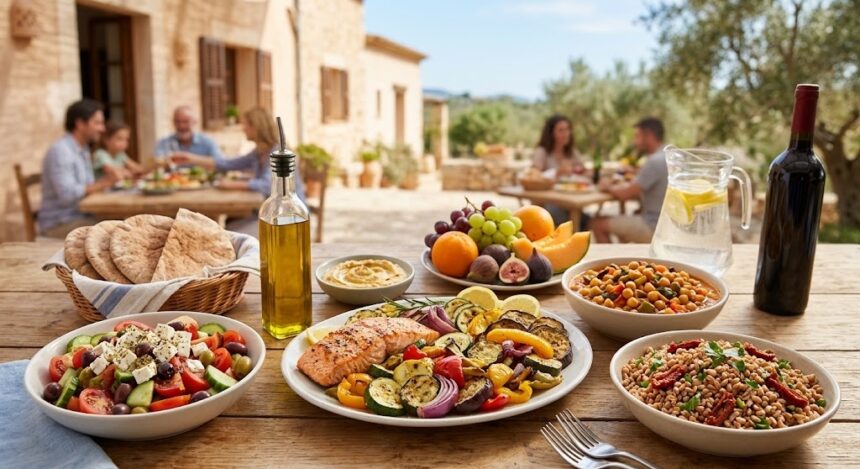
A Mediterranean diet meal plan centers on vegetables, fruits, whole grains, legumes, nuts, and olive oil as daily staples, with fish and seafood a few times a week, moderate poultry and dairy, and red meat and sweets kept occasional rather than routine. It’s one of the most researched eating patterns for cardiovascular health, and unlike many structured diets, it doesn’t rely on calorie counting or eliminating entire food groups, which is part of why it’s considered easier to sustain long-term.
This guide breaks down what a typical week looks like on a Mediterranean diet, a sample day of meals, the food pyramid structure behind it, and practical tips for getting started.
What Is the Mediterranean Diet?
The Mediterranean diet is based on the traditional eating patterns of countries bordering the Mediterranean Sea, particularly Greece and southern Italy, as they ate several decades ago before diets there became more Westernized. It emphasizes whole, minimally processed plant foods, healthy fats (primarily olive oil), moderate fish and seafood, and limited red meat, processed food, and added sugar. It’s associated in research with reduced risk of cardiovascular disease, type 2 diabetes, and certain cancers, and is regularly ranked among the top overall diets by nutrition experts.
The Mediterranean Diet Food Pyramid
The traditional Mediterranean diet pyramid organizes foods by how often they should be eaten, from a foundation of daily habits up to occasional items at the top.
- Daily: Vegetables, fruits, whole grains, olive oil, beans and legumes, nuts and seeds, herbs and spices, and water as the primary beverage
- Several times a week: Fish and seafood, poultry, eggs, and dairy (cheese and yogurt) in moderate amounts
- Weekly (less frequently): Red meat, limited to a few times a month rather than a daily staple
- Occasionally: Sweets and refined sugar, reserved for special occasions rather than routine eating
- Also included: Physical activity and shared meals are considered part of the traditional Mediterranean lifestyle, not just the food itself
Core Foods in a Mediterranean Diet Meal Plan
Vegetables and Fruits
Tomatoes, leafy greens, peppers, zucchini, eggplant, onions, and garlic, plus fresh fruit like oranges, grapes, figs, and melon, form the base of most meals, typically eaten raw, roasted, or lightly sautéed in olive oil.
Whole Grains
Whole wheat bread, bulgur, farro, brown rice, and whole grain pasta replace refined grains as the primary starch source.
Legumes
Chickpeas, lentils, and beans are used generously, often as the main protein source in a meal rather than a side dish.
Healthy Fats
Extra virgin olive oil is the primary fat used for cooking, dressing, and even dipping bread, replacing butter and other saturated fats in most preparations.
Fish and Seafood
Fatty fish like salmon, sardines, and mackerel are eaten a few times a week, providing omega-3 fatty acids alongside protein.
Nuts and Seeds
Almonds, walnuts, and pistachios are eaten regularly in modest portions, as a snack or added to meals.
Dairy
Yogurt and cheese, particularly feta and other traditional Mediterranean cheeses, are eaten in moderate daily-to-weekly amounts rather than large portions.
Herbs and Spices
Oregano, basil, rosemary, garlic, and lemon are used generously for flavor, reducing reliance on added salt.
Mediterranean Diet vs. Other Popular Diets
It’s useful to see how the Mediterranean diet compares to other well-known eating patterns, since the differences shape which one might suit a given goal or lifestyle best. Compared to keto, the Mediterranean diet includes significantly more carbohydrates from whole grains, fruit, and legumes, and doesn’t restrict carbs — its focus is on food quality and fat type rather than macronutrient ratios. Compared to a standard low-fat diet, it actually encourages a relatively high fat intake, but specifically from unsaturated sources like olive oil, nuts, and fish rather than restricting fat generally. Compared to a strict vegan diet, it includes fish, moderate dairy, and occasional poultry and eggs, making it more flexible for people who don’t want to eliminate all animal products. This flexibility is part of why it’s often recommended as a starting point for general health rather than a narrower, more restrictive pattern.
Sample One-Week Mediterranean Diet Meal Plan
This is a general framework rather than a rigid plan — portions and specific meals can be adjusted to personal taste and needs.
Monday
- Breakfast: Greek yogurt with honey, walnuts, and fresh berries
- Lunch: Chickpea and vegetable salad with olive oil and lemon dressing
- Dinner: Grilled salmon with roasted vegetables and a side of quinoa
Tuesday
- Breakfast: Whole grain toast with mashed avocado and a boiled egg
- Lunch: Lentil soup with a side salad
- Dinner: Grilled chicken with a Greek salad (tomato, cucumber, olives, feta)
Wednesday
- Breakfast: Oatmeal with sliced almonds, cinnamon, and fresh fruit
- Lunch: Whole grain pita with hummus, vegetables, and olives
- Dinner: Baked white fish with sautéed greens and farro
Thursday
- Breakfast: Greek yogurt parfait with granola and figs
- Lunch: Mediterranean-style vegetable and bean stew
- Dinner: Whole wheat pasta with tomato sauce, olive oil, and grilled shrimp
Friday
- Breakfast: Whole grain toast with olive oil, tomato, and a sprinkle of feta
- Lunch: Tabbouleh (bulgur salad) with grilled vegetables
- Dinner: Roasted chicken with a side of roasted potatoes and green beans
Weekend
Weekends often include a slightly more relaxed approach, sometimes a small portion of red meat, a shared family-style meal, or a simple dish like a vegetable and egg frittata, olives, and crusty bread with olive oil, reflecting the traditional emphasis on unhurried, shared eating.
Beverages on a Mediterranean Diet
Water is the primary beverage throughout the day. Moderate red wine with meals is a traditional part of the pattern in some Mediterranean cultures, though this is optional and not recommended for people who don’t already drink alcohol, are pregnant, or have a personal or family history of alcohol-related problems. Coffee and herbal teas are common, typically without large amounts of added sugar or cream.
Is the Mediterranean Diet Good for Weight Loss?
The Mediterranean diet isn’t primarily designed as a weight-loss diet, but it’s associated with healthy weight maintenance and, for many people, gradual weight loss when it replaces a more processed, calorie-dense eating pattern. Because it doesn’t require strict calorie counting or eliminate entire food groups, some people find it easier to sustain than more restrictive diets, and the emphasis on fiber, protein, and healthy fats supports natural satiety. That said, portion sizes still matter for weight management, even with generally healthy foods like olive oil and nuts, which are calorie-dense.
What Are the Health Benefits of the Mediterranean Diet?
The Mediterranean diet has one of the strongest bodies of research behind it among dietary patterns, with studies linking it to reduced risk of cardiovascular disease and heart attack, better blood sugar control and reduced risk of type 2 diabetes, support for healthy cognitive function and reduced risk of cognitive decline with age, and reduced markers of inflammation. It’s also associated with a lower risk of certain cancers in some studies, though research in this area is still developing.
Common Mistakes When Starting a Mediterranean Diet
- Treating it as a strict, rule-based diet rather than a flexible overall eating pattern
- Using too much olive oil without accounting for its calorie density if weight management is a goal
- Still relying heavily on refined grains and processed foods while just adding olive oil and fish occasionally
- Skipping legumes, which are one of the most important, protein- and fiber-rich staples of the pattern
- Treating red wine as a required component rather than an optional, cultural addition
- Not incorporating the broader lifestyle elements, like regular physical activity and unhurried, social meals, which are part of the traditional pattern’s benefits
How to Start a Mediterranean Diet
Begin by swapping butter for olive oil in most cooking and dressing, adding a serving of vegetables to every meal, choosing whole grains over refined versions, incorporating a legume-based meal a few times a week, and adding fish to your routine once or twice weekly if you don’t already eat it regularly. Small, sustainable swaps tend to work better long-term than trying to overhaul your entire diet in one step.
Frequently Asked Questions
What can I eat for breakfast on a Mediterranean diet?
Common Mediterranean breakfast options include Greek yogurt with fruit and nuts, whole grain toast with olive oil or avocado, oatmeal with fruit and nuts, or eggs with vegetables — generally simple, whole-food-based options rather than sugary cereals or pastries.
Is the Mediterranean diet expensive to follow?
It doesn’t have to be. Staples like beans, lentils, whole grains, seasonal vegetables, and canned fish (like sardines) are relatively affordable, and building meals around these core items rather than expensive specialty products keeps the diet accessible on most budgets.
Can I eat red meat on a Mediterranean diet?
Yes, in moderation — the traditional pattern includes red meat only a few times a month rather than as a daily staple, with fish, poultry, legumes, and plant proteins making up the bulk of protein intake instead.
Do I have to drink wine on a Mediterranean diet?
No, wine is an optional, cultural element of the traditional pattern in some regions, not a required component. The core health benefits come from the overall food pattern — vegetables, whole grains, legumes, olive oil, and fish — not from alcohol consumption.
How long does it take to see results from a Mediterranean diet?
Some benefits, like improved energy and digestion, can be noticed within a few weeks, while more significant markers like cholesterol, blood sugar, and cardiovascular risk factors typically show measurable improvement over several months of consistent adherence.
Is the Mediterranean diet suitable for vegetarians?
Yes, the Mediterranean diet is naturally adaptable for vegetarians, since it already emphasizes legumes, whole grains, vegetables, nuts, and dairy as core components — fish and poultry can simply be replaced with additional plant protein sources like beans, lentils, and tofu.
Can diabetics follow a Mediterranean diet?
Yes, the Mediterranean diet is commonly recommended for people with type 2 diabetes, since its emphasis on fiber, healthy fats, and minimally processed carbohydrates tends to support more stable blood sugar than a highly processed, refined-carbohydrate diet. Portion awareness for starchy foods like bread, pasta, and fruit still matters and is worth discussing with a doctor or dietitian for individualized guidance.
What snacks fit a Mediterranean diet?
Common Mediterranean-friendly snacks include a small handful of nuts, fresh fruit, Greek yogurt, hummus with vegetable sticks, olives, or a piece of whole grain bread with olive oil — generally whole-food based options rather than packaged, processed snack foods.
Related Reading
- Best fiber foods for digestion
- Anti-inflammatory foods list: diet plan and joint pain
- Best foods for gut health: probiotics and prebiotics
- How to read nutrition labels
Informational only — not medical advice. See a registered dietitian for a personalized eating plan, especially if managing a specific health condition.