

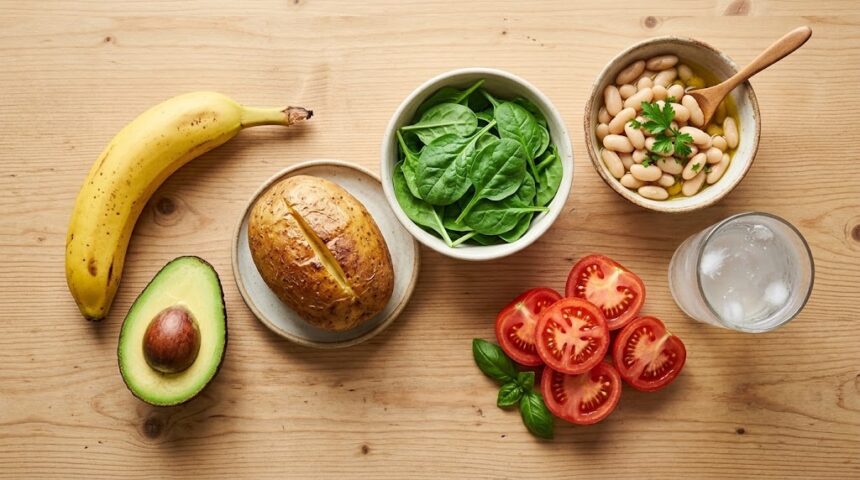
Potassium-rich foods include bananas, potatoes, spinach, avocados, beans, yogurt, salmon, and coconut water — all of which help support healthy blood pressure, muscle function, and fluid balance. Most adults need about 2,600-3,400 mg of potassium per day, though individual needs vary, and most people don’t consistently reach this amount through diet alone. Getting potassium from food rather than supplements is generally recommended for most people, since food sources come packaged with fiber and other nutrients, and excess potassium from supplements can be risky for people with kidney problems.
This guide covers the best food sources of potassium, how much you actually need, signs of low potassium, and who should be cautious about high-potassium foods.
Why Does the Body Need Potassium?
Potassium is an essential mineral and electrolyte that helps regulate fluid balance, supports proper muscle contraction (including the heart), helps transmit nerve signals, and plays a role in maintaining healthy blood pressure by helping the body manage sodium levels. Because the body doesn’t store large reserves of potassium, it needs to be replenished regularly through diet.
How Much Potassium Do You Need Per Day?
Most adults need approximately 2,600 mg per day for women and 3,400 mg per day for men, according to current recommendations, though these figures can vary by age, health status, and specific guidelines used. People with kidney disease, certain heart conditions, or those taking specific medications (such as ACE inhibitors, ARBs, or potassium-sparing diuretics) often need a different, sometimes lower, target and should follow guidance from their doctor rather than general population recommendations.
Best Potassium-Rich Foods
Fruits
- Bananas (one medium banana has about 420 mg)
- Avocado (one whole avocado has about 975 mg)
- Oranges and orange juice
- Dried apricots (a concentrated source per serving)
- Cantaloupe
- Coconut water
Vegetables
- Potatoes, especially with the skin (one medium potato has about 900 mg)
- Sweet potatoes
- Spinach and other leafy greens
- Tomatoes and tomato sauce or paste (concentrated when reduced)
- Butternut squash
- Beets
Legumes and Proteins
- White beans and kidney beans (among the richest plant sources)
- Lentils
- Edamame and soybeans
- Salmon and other fatty fish
- Chicken and turkey (moderate amounts)
Dairy
- Plain yogurt
- Milk
Other Sources
- Coconut water (naturally high and often used for hydration)
- Dried fruits generally (raisins, prunes)
- Nuts, particularly pistachios and almonds
Approximate Potassium Content by Food
Getting a general sense of scale helps put these foods in perspective, since “potassium-rich” can mean very different amounts depending on the food. White beans, at roughly 600 mg per half-cup, and potatoes with skin, at roughly 900 mg per medium potato, are among the more concentrated whole-food sources. Avocado, at roughly 975 mg per fruit, and dried apricots, at roughly 750 mg per half-cup, deliver a similarly large amount in a typical serving. Bananas, often assumed to be the top source, actually provide a more modest 420 mg per medium fruit — still a solid contribution, but well behind beans, potatoes, and avocado gram for gram. This is useful context if you’re deliberately trying to reach a specific daily potassium target rather than just eating generally healthy foods.
What Are the Symptoms of Low Potassium?
Low potassium (hypokalemia) can cause muscle weakness or cramps, fatigue, constipation, heart palpitations or an irregular heartbeat in more significant cases, and in severe cases, more serious muscle or heart complications. Mild dietary shortfalls in otherwise healthy people usually don’t cause dramatic symptoms, but ongoing low intake, excessive fluid loss (from vomiting, diarrhea, or certain diuretics), or an underlying medical condition can lead to clinically low levels that need medical attention.
Who Should Be Careful With High-Potassium Foods?
While potassium is essential for most people, those with chronic kidney disease, since impaired kidneys can’t clear excess potassium effectively, people taking potassium-sparing diuretics, ACE inhibitors, or ARBs, which can raise potassium levels, and people with certain heart conditions affecting potassium regulation should talk to their doctor about an appropriate potassium intake rather than assuming “more is better.” For most healthy people with normal kidney function, getting potassium from food is safe and beneficial, and it’s genuinely difficult to consume dangerously high levels from food alone.
Potassium and Blood Pressure
One of potassium’s most well-established roles is helping regulate blood pressure. It works partly by helping the kidneys excrete more sodium through urine and by easing tension in blood vessel walls, both of which can lower blood pressure. Diets naturally rich in potassium, such as the DASH (Dietary Approaches to Stop Hypertension) diet, are consistently associated with lower blood pressure in research, and increasing potassium intake alongside reducing sodium is one of the most evidence-backed dietary strategies for blood pressure management. This doesn’t mean potassium alone can replace prescribed blood pressure medication, but it’s a meaningful piece of an overall approach.
Potassium and Sodium: Why the Balance Matters
Potassium and sodium work as a pair in the body, and it’s really the balance between the two, not potassium alone, that matters most for blood pressure and fluid regulation. Modern diets, heavy in processed and packaged foods, tend to be high in sodium and comparatively low in potassium, which is the opposite of the ratio human physiology evolved around. Shifting the balance — reducing processed food and sodium intake while increasing whole, potassium-rich foods like fruits, vegetables, and legumes — tends to have a more meaningful effect on blood pressure than focusing on either mineral in isolation.
Potassium Needs During Exercise
Potassium is lost through sweat, along with sodium and other electrolytes, which is why intense or prolonged exercise, especially in hot conditions, can increase potassium needs. For most moderate exercisers, a normal, varied diet covers this increased need without requiring special supplementation. For endurance athletes or those exercising intensely in heat for extended periods, potassium-rich foods or drinks like coconut water, bananas, or diluted fruit juice can help support recovery alongside adequate sodium and fluid replacement.
Should You Take a Potassium Supplement Instead?
Getting potassium from food is generally preferred over supplements for most people. Whole foods provide potassium alongside fiber, antioxidants, and other nutrients that work together, and it’s difficult to significantly overdo potassium from food alone since the body regulates absorption reasonably well from dietary sources. High-dose potassium supplements, on the other hand, can cause dangerously elevated blood potassium levels (hyperkalemia) if taken inappropriately, particularly in people with reduced kidney function, and are generally only recommended under medical supervision for a diagnosed deficiency.
Does Cooking Affect Potassium Content?
Yes, potassium is water-soluble, meaning it can leach out of food during boiling or prolonged cooking in water. Steaming, roasting, or microwaving tends to preserve more potassium than boiling. For vegetables like potatoes, leaving the skin on and choosing methods like baking or roasting over boiling helps retain more of the mineral.
A Simple Way to Boost Potassium Intake
- Add a banana or a handful of dried apricots to breakfast
- Choose a baked or roasted potato with the skin on instead of peeling and boiling
- Include a serving of beans or lentils in lunch or dinner a few times a week
- Snack on plain yogurt with fruit
- Use tomato paste or sauce in cooking, since it’s a concentrated potassium source
- Drink coconut water as an alternative to sports drinks after exercise
Common Myths About Potassium
A few misconceptions about potassium are worth clearing up. Bananas are not actually the richest source, despite being the food most associated with potassium in popular culture — beans, potatoes, and avocado all contain more per serving. Potassium supplements are not automatically better or faster than food sources, and for most healthy people they’re unnecessary and carry more risk of overcorrection than dietary sources. Low potassium is not something you can reliably self-diagnose from symptoms alone, since fatigue and muscle cramps have many possible causes, and a blood test is the only way to confirm an actual deficiency. And more potassium is not always better — for people with kidney disease or on certain medications, excess potassium can be genuinely dangerous, which is why general dietary advice doesn’t apply universally.
When to See a Doctor
See a doctor if you’re experiencing symptoms like unexplained muscle weakness, cramping, heart palpitations, or persistent fatigue, since these could indicate a potassium imbalance that needs testing rather than simple dietary adjustment. Anyone with kidney disease, heart failure, or taking medications that affect potassium levels should have their intake and blood levels monitored by a healthcare provider rather than adjusting potassium intake on their own.
Frequently Asked Questions
What fruit has the most potassium?
Dried fruits like apricots and prunes are among the most concentrated sources per serving, though fresh options like avocado and banana are also excellent and more commonly eaten in larger portions.
Is banana the best source of potassium?
Bananas are a well-known and convenient source, but they’re not actually the highest — foods like white beans, potatoes with skin, avocado, and spinach all contain more potassium per serving than a typical banana.
How much potassium is too much in a day?
For healthy adults with normal kidney function, there isn’t an established upper limit from food, since the body regulates dietary potassium well. Excessive intake becomes a concern primarily through high-dose supplements or in people with impaired kidney function.
Can you get too much potassium from food alone?
It’s very uncommon for healthy people with normal kidney function to reach dangerous potassium levels from food alone, since whole foods release potassium more gradually and the body’s regulatory systems handle typical dietary amounts well.
What vegetables are highest in potassium?
Potatoes and sweet potatoes (especially with the skin), spinach, tomatoes, beets, and squash are among the vegetables highest in potassium.
Does a potassium deficiency cause weight gain?
No, low potassium isn’t directly linked to weight gain. It can cause fluid balance shifts and muscle-related symptoms, but weight gain isn’t a typical or direct sign of potassium deficiency.
Is coconut water really a good source of potassium?
Yes, coconut water naturally contains a meaningful amount of potassium — typically around 400-600 mg per cup, depending on the brand and ripeness of the coconut — along with other electrolytes, making it a reasonable natural alternative to some sports drinks, particularly for casual exercise or mild rehydration needs.
Do potassium levels affect heart health?
Yes, potassium plays a direct role in regulating heart rhythm, since it’s involved in the electrical signals that control heartbeat. Both very low and very high potassium levels can cause dangerous heart rhythm disturbances, which is why maintaining a normal range matters and why people with heart conditions are often monitored closely for potassium levels.
Related Reading
- Best fiber foods for digestion
- Anti-inflammatory foods list: diet plan and joint pain
- Root vegetables guide: nutrition, cooking, and cautions
Informational only — not medical advice. See a doctor before significantly changing your potassium intake if you have kidney disease, heart conditions, or take medications that affect potassium levels.