
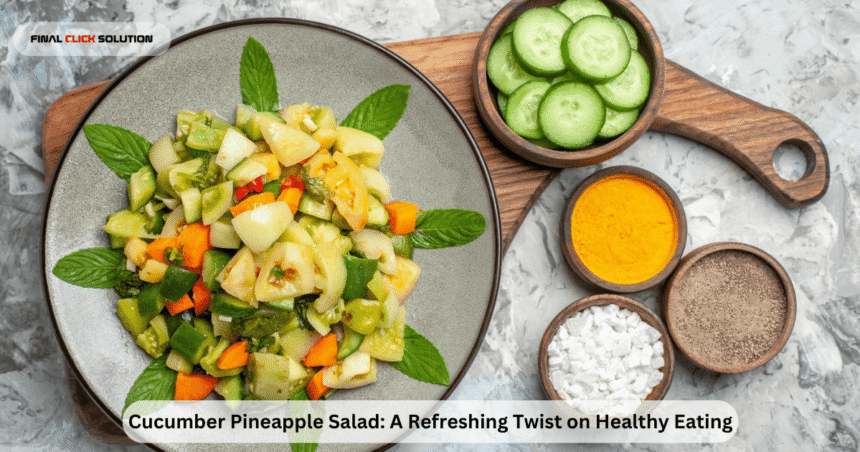
A cucumber pineapple salad is a cold fruit-and-vegetable bowl built on crisp cucumber, juicy pineapple, and a sharp dressing—usually lime, rice vinegar, or a light honey-acid mix. It is popular because both main ingredients are high in water, low in calories, and easy to prep without cooking. This guide covers a reliable recipe, approximate nutrition, food-safety steps that matter more than garnish, and who may need to tweak the bowl.
What makes this salad worth making
Cucumber brings crunch and almost no sugar. Pineapple brings sweetness, acidity, and vitamin C. Together they read as refreshing rather than heavy, which is why the combination shows up at cookouts and hot-weather dinners. The salad is not a detox or a medical treatment. It is a hydrating side that can replace a creamier salad or a sugary fruit cup. Flavor balance is the craft: too much pineapple tastes like dessert, too much onion overwhelms the fruit, and too little acid leaves cucumber watery.
Ingredient list for four side servings
Use ripe but firm fruit and cucumbers that feel heavy for their size. Soft pineapple and rubbery cucumber collapse once salt and acid draw out water.
- 2 large cucumbers (about 600–700 g), washed well
- 2 cups fresh pineapple chunks (about 300 g), core removed
- 1/4 small red onion, sliced paper-thin, or 2 tablespoons thinly sliced scallion
- 2 tablespoons rice vinegar or apple cider vinegar
- 1 tablespoon fresh lime juice
- 1 teaspoon honey or maple syrup, optional
- 1/4 teaspoon fine salt, plus more to taste
- Black pepper
- Optional heat: a pinch of chili flakes or minced jalapeño
- Optional herbs: mint, cilantro, or basil
- Optional add-ins: toasted sesame seeds, crushed peanuts, or a small handful of cherry tomatoes
Fresh pineapple tastes cleaner than canned fruit packed in syrup. If canned is what you have, drain it thoroughly and skip or reduce the honey. Canned pineapple in juice is preferable to heavy syrup.
Kitchen method that keeps the crunch
Wash cucumbers under running water and scrub the skin. Peeling is optional. Leaving some peel adds color and a little fiber; peeling can help if the skin is waxed or bitter. Slice into thin half-moons or small dice so each bite includes fruit and vegetable.
Cut pineapple into similar-sized pieces. Large cubes dump juice into the bowl and leave cucumber swimming. Small, even chunks coat more evenly with dressing.
If raw onion is harsh, soak the slices in cold water for 10 minutes, then drain and pat dry. That step lowers the bite without removing the savory note that keeps the salad from tasting like fruit salad.
Whisk vinegar, lime juice, optional honey, salt, and pepper. Toss vegetables and fruit with about two-thirds of the dressing. Taste. Add the rest only if the bowl still tastes flat. Overdressing is the fastest way to a watery leftover.
Chill 15–30 minutes if you can. Serve soon after that window. If you need to hold it longer, keep cucumber and pineapple separate from dressing until closer to serving time, especially for a buffet.
Vinegar version versus lime-honey version
A vinegar-forward dressing is sharper and usually lower in sugar. Rice vinegar is mild; apple cider vinegar is fruitier. White distilled vinegar works in a pinch if you use less and add lime. A lime-and-honey dressing leans tropical and can mask slightly underripe pineapple. If the fruit is already sweet, skip honey. Chili and mint pull the salad toward Southeast Asian flavors; cilantro and lime make it salsa-adjacent. A few drops of sesame oil change the profile entirely—keep it tiny so the bowl does not feel heavy.
Approximate nutrition, not a lab label
Numbers vary with cucumber size, pineapple ripeness, and whether you add honey, nuts, or cheese. A reasonable estimate for one of four side servings of the base recipe, without nuts or extra sweetener, is roughly 60–90 calories, 1–2 grams of protein, 0–1 gram of fat, 14–20 grams of carbohydrate, and 2–3 grams of fiber. Most of the volume is water.
Cucumber is about 95–96% water and contributes vitamin K, potassium, and a small amount of vitamin C. Pineapple is about 85–87% water and is a stronger source of vitamin C and manganese. Pineapple also contains bromelain, a group of proteolytic enzymes. Bromelain is often marketed as an anti-inflammatory supplement; in a salad serving, it is simply part of the fruit, not a therapeutic dose.
The salad can support hydration because water-rich foods count toward daily fluid intake. It does not replace drinking fluids when someone is already dehydrated, ill, or exercising hard in heat. For a broader look at water-rich produce, see our guide to top hydrating foods.
Sodium comes mostly from added salt and any bottled dressing shortcuts. If you are limiting sodium, season lightly and rely on lime, herbs, and chili for flavor. If you add salted peanuts or feta, count that sodium separately.
Food safety steps people skip
Produce can carry soil and microbes on the surface even when it looks clean. Rinse cucumbers and whole pineapple under running water before cutting. Do not wash produce with soap, detergent, or bleach. Scrub firm skins with a clean produce brush.
Use a clean cutting board and knife. If the same board just held raw chicken, meat, seafood, or eggs, wash it with hot soapy water first or switch boards. Cross-contamination is a more common picnic problem than “the dressing went bad.”
Cut pineapple and cucumber are perishable. Refrigerate the salad within 2 hours, or within 1 hour if it has been sitting above 90°F (32°C). A bowl left in sun on a deck is not “still fine because there’s vinegar in it.” Acid helps flavor and can slow some bacterial growth; it does not make room-temperature fruit salad shelf-stable.
Store leftovers in a covered container in the refrigerator and eat within 2–3 days. Discard the salad if it smells fermented, looks slimy, or has been left out too long. Liquid at the bottom is normal as salt and acid draw water from cucumber; that alone is not spoilage, but it is a sign the texture is declining.
If anyone at the table is pregnant, older, immunocompromised, or very young, be stricter about time and temperature. Homemade salads do not get the same process controls as commercially packaged refrigerated foods.
Who may need a modified bowl
Raw onion is a common trigger for people with irritable bowel symptoms. If onion is a problem, use scallion greens only, skip allium entirely, or add a few thin slices of bell pepper for savoriness. Pineapple’s acidity and fiber can bother some people during a flare. Our overview of IBS symptoms and triggers explains why the same salad can feel fine one week and uncomfortable the next.
People with reflux sometimes notice that acidic fruit, vinegar, chili, and large evening portions all aggravate burning. A smaller daytime serving with less vinegar and no chili is a practical test. If coffee already irritates your stomach, stacking an acidic salad immediately afterward may feel worse; see why coffee can hurt the stomach for related digestive context.
Anyone with a history of kidney stones should not treat pineapple, cucumber, or vinegar as stone therapy. Fluid intake, stone type, and clinician advice matter more than a single side dish. If stones are part of your history, read practical kidney-stone guidance and ask your clinician before making large diet swings.
Pineapple is sweet. One side serving is usually modest carbohydrate, but people using glucose monitoring should still count fruit as carbohydrate. Honey, dried fruit, juice-packed canned pineapple, and sweet chili sauces change the math quickly.
Allergy is uncommon but possible. Pineapple can cause oral itching in some people with pollen-food syndrome. Mouth tingling right after pineapple is sometimes enzyme-related irritation rather than allergy, but swelling, hives, wheezing, or trouble breathing is an emergency.
How to turn the salad into a fuller plate
As a side, it pairs well with grilled fish, chicken, tofu, or beans. As a light lunch, add protein that will not wilt the cucumber: leftover shrimp, drained tuna, baked tofu, or cottage cheese served on the side. Skip mayonnaise if you want the salad picnic-safer and brighter; creamy dressings spoil faster in heat. Avocado or salted nuts can sit on the plate separately so they stay appealing.
Mistakes that flatten flavor or raise risk
Overripe pineapple, pre-cut cucumber left uncovered for days, dressing added in the morning for an evening party, or a bowl riding in a hot car all matter more than mint versus cilantro. Water-rich food also does not replace fluids during heat illness. Review dehydration symptoms worth knowing if you rely on produce during hot weather or after stomach illness.
Related reading
- Hydrating foods for energy and fluid balance
- Dehydration symptoms to watch
- IBS triggers and relief basics
- Coffee-related stomach pain
- Kidney stone prevention and care notes
Frequently asked questions
Can I make cucumber pineapple salad the night before?
You can prep the cut fruit and cucumber separately and mix with dressing closer to serving. Fully dressed salad held overnight becomes watery and soft, though it is usually still safe if kept refrigerated and eaten within a couple of days.
Is canned pineapple acceptable?
Yes, if you drain it well and account for extra sweetness. Choose fruit packed in juice rather than heavy syrup when possible, and taste before adding honey.
Does vinegar make the salad safer at room temperature?
No. Vinegar improves flavor and acidity but does not replace refrigeration. Follow the same 2-hour (or 1-hour in high heat) leftover rule used for other cut produce.
Is this salad good for weight loss?
It is a low-calorie, high-volume side that can replace richer dishes. It does not cause weight loss on its own, and add-ins like honey, nuts, cheese, or fried toppings change the calorie load.
Disclaimer
This article is general food and nutrition information, not medical advice or a personalized meal plan. People with allergies, digestive disease, kidney stone history, diabetes, pregnancy, or immune compromise should adapt recipes with a clinician or registered dietitian when needed.