
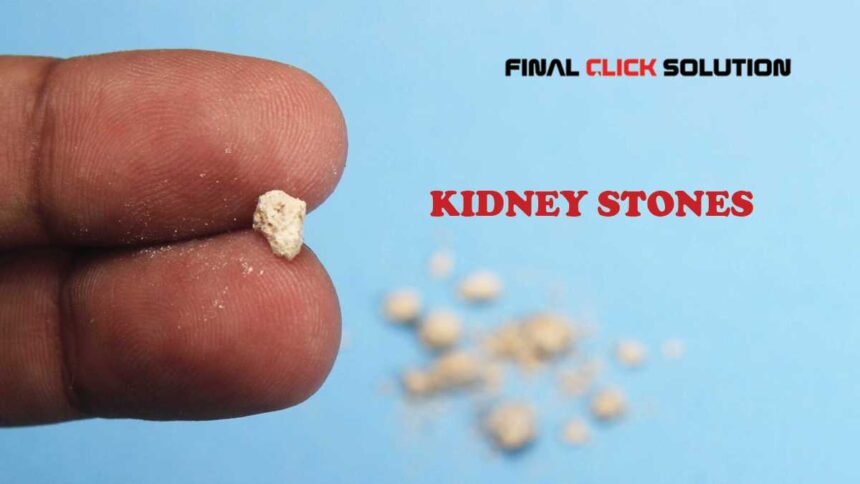
Kidney stones are hard mineral deposits that form in the kidneys and can trigger sudden, severe flank, side, or groin pain when they move into the ureter. Many small stones pass with fluids, clinician-guided pain relief, and follow-up; fever, vomiting, or one working kidney needs urgent care, not a home “flush.”
A stone is not a muscle cramp or a stomach bug, even when nausea is intense. Pain often comes in waves as the ureter contracts. Blood in the urine may be obvious or visible only on a dipstick. Some stones cause almost no pain until they start to travel. Similar symptoms can come from infection, appendicitis, gallbladder disease, ovarian problems, or muscle strain, so this page cannot diagnose your pain.
How a kidney stone forms
Urine normally keeps calcium, oxalate, uric acid, phosphate, and other solutes dissolved. When urine volume falls or those solutes rise, crystals can form and grow in the kidney. Trouble begins when a fragment enters the narrow ureter and blocks flow. That stretch plus ureter spasm produces colic. Stagnant urine also raises infection risk, and prolonged obstruction can injure kidney tissue. Size is only one factor: a small stone in a tight ureter can hurt more than a larger stone still sitting in the kidney.
If you catch a stone or fragments after a procedure, ask the clinic to send them for analysis. A 24-hour urine collection after the acute episode often shows whether the main problem is low volume, high calcium, high oxalate, high uric acid, low citrate, or a mix. Prevention that ignores chemistry is mostly folklore.
Calcium oxalate and calcium phosphate stones
Calcium oxalate stones are the most common type in many adult populations. High urine oxalate, high urine calcium, low urine citrate, and low urine volume all raise risk. Calcium phosphate stones are more likely when urine is persistently alkaline and may appear with renal tubular acidosis or certain infections. Cutting all dietary calcium is usually the wrong move; very low calcium intake can increase oxalate absorption from the gut.
Uric acid, struvite, and cystine stones
Uric acid stones form in acidic, concentrated urine and are more common with gout, metabolic syndrome, high purine intake, or chronic diarrhea that loses bicarbonate. They may not show well on a plain X-ray. Struvite stones are infection-related, often linked to urea-splitting bacteria, and can grow quickly into a branched “staghorn” shape. Cystine stones are uncommon and usually reflect an inherited transport disorder; they tend to start younger and recur without specialist prevention.
Symptoms that suggest a stone is moving
The textbook picture is abrupt, severe pain in the flank or side that radiates toward the lower abdomen, groin, or genitals. People often cannot find a comfortable position. Nausea and vomiting are common because the kidney and gut share nerve pathways. Urinary urgency, frequency, or burning can appear if the stone sits near the bladder.
Pink, red, or cola-colored urine is a clue, but clear-looking urine does not rule a stone out. Some people only notice microscopic blood after testing. Fever is not a normal part of uncomplicated colic. Chills, shaking, or feeling systemically unwell with urinary blockage is a medical emergency because infection behind an obstruction can progress rapidly.
Pain that stays only in the upper abdomen, pain that is worse after fatty meals, or pain with diarrhea and bloating points more toward digestive causes. Compare that pattern with guides on IBS symptoms, triggers, and relief and stomach pain after coffee if your main problem is meal-related rather than colicky flank pain. Still seek care if you cannot tell the difference—clinicians sort this with exam and testing, not blog checklists.
Who is more likely to form stones
Risk rises with prior stones, a first-degree relative with stones, hot climates, jobs that limit bathroom access, bariatric surgery, inflammatory bowel disease, recurrent urinary infections, and some metabolic conditions. Medicines such as topiramate, certain diuretics, high-dose vitamin C, and some HIV or transplant drugs can shift urine chemistry. Review the full list with a clinician rather than stopping a prescribed drug on your own. High sodium, large loads of animal protein, sugar-sweetened drinks, and frequent low urine volume matter more than blaming a single oxalate food.
People who sweat heavily, travel, or work outdoors often under-drink without noticing. Dark urine, infrequent urination, dry mouth, dizziness, and headache overlap with the picture in our overview of dehydration symptoms. Chronic low volume is one of the most modifiable stone risks, and it is also one of the easiest to miss during a busy week.
What to do during a suspected stone episode
If pain is severe, new, or paired with vomiting, fever, pregnancy, a solitary kidney, a transplant, or known kidney disease, go to urgent or emergency care. Imaging and urine testing decide whether the problem is a stone, an infection, or something else. Do not wait for an over-the-counter “stone cleanse” to declare itself a success.
When a clinician has already confirmed an uncomplicated small stone and sent you home to try passing it, follow their pain and fluid plan exactly. Strain urine only if they asked you to, so the fragment can be analyzed. Keep a simple log: pain scores, vomiting, urine color, temperature, and any new chills. That log is more useful than guessing millimeter size from how you feel.
Heat on the flank, rest in a position that feels least painful, and prescribed or pharmacist-advised analgesics are typical supports. Alpha-blockers are sometimes used for selected ureteral stones; they are a prescription decision, not a universal requirement. Avoid megadoses of lemon juice, apple cider vinegar, soda, or herbal “dissolvers.” Acidic drinks can upset the stomach, and some herbs interact with medicines or kidney function.
- Seek urgent evaluation for fever, uncontrolled pain, repeated vomiting, or little to no urine output.
- Take pain medicine only as directed on the label or by the treating clinician.
- Drink fluids steadily if you are not vomiting and no one has restricted your intake; sip rather than chug if nausea is present.
- Strain urine when instructed and save any fragment in a clean container.
- Return sooner than the planned follow-up if symptoms worsen or a new fever appears.
Prevention after the first stone
The most consistent prevention step for most stone formers is higher urine volume. Many urology teams aim for about 2.5 liters of urine output a day, which usually means still more fluid intake after sweat and stool losses. Water is the default. Food sources of fluid—broths, fruit, yogurt, and other options in our guide to hydrating foods for energy and recovery—help when plain water is hard to finish. Spread fluids through the day; overnight concentration is a common window for crystal growth.
Sodium reduction often lowers urine calcium more effectively than extreme calcium restriction. Pair calcium-containing foods with oxalate-rich meals\u2014including some of the beets and other roots covered in our root vegetables guide\u2014instead of taking calcium supplements unless a clinician recommends them. If testing shows high uric acid or very acidic urine, options may include potassium citrate, dietary protein changes, or other prescription prevention. Weight management, gout treatment, and stopping unnecessary high-dose vitamin C can matter in the right person. Recurrence is still common, so follow-up labs or imaging are sometimes scheduled after a complicated episode.
Hospital and clinic treatments you may be offered
Shock wave lithotripsy uses external energy to break some stones into passable fragments. Ureteroscopy uses a thin scope through the bladder to laser or basket a stone, often with a temporary stent afterward. Larger kidney stones may need percutaneous surgery. Infection with obstruction may require urgent drainage before definitive removal. Stents can cause urgency, blood-tinged urine, and flank discomfort; ask how long yours should stay and which symptoms mean it may be blocked or infected.
Cost and coverage shape real-world decisions. Imaging, emergency visits, and procedures can be expensive even when clinically necessary. If you are sorting benefits, deductibles, or network rules, read our primer on essential health insurance facts before a scheduled surgery so billing surprises do not delay care.
When kidney stone pain is an emergency
Go to emergency care for fever or rigors with flank pain, inability to keep down fluids, uncontrolled pain, confusion, fainting, pregnancy with suspected stone, a single functioning kidney, a transplant kidney, or known significant kidney disease. Anuria—producing almost no urine—needs immediate assessment. Chest pain, sudden severe abdominal pain unlike prior stones, or pain with a pulsatile abdominal mass is not “just another stone” until proven otherwise.
People with diabetes, immune suppression, or recent urinary instrumentation should have a lower threshold for same-day care. Children with suspected stones need pediatric evaluation rather than adult home protocols. Older adults may present with less classic pain and more confusion or weakness.
Frequently asked questions
Can drinking a lot of water force a large stone out?
Extra fluid helps some small stones move and protects the kidney, but it cannot reliably push a large or impacted stone through a narrow ureter. Forced chugging during vomiting can worsen dehydration. Imaging and clinical exam decide whether observation, medicine, or a procedure is safer.
Do lemon juice or apple cider vinegar dissolve kidney stones?
No reliable evidence shows that kitchen acids dissolve an established calcium stone overnight. Citrate can be useful as a prescribed or diet-based prevention strategy for some chemistries after testing. Vinegar and juice megadoses can irritate the stomach and are not a substitute for medical care.
How long can I wait for a stone to pass at home?
Only after a clinician has judged the stone size, location, kidney function, and infection risk. Many small distal ureteral stones pass within days to a few weeks, but timelines vary. Worsening pain, fever, or vomiting shortens that window immediately.
Should I stop eating calcium-rich foods after a calcium stone?
Usually no. Normal dietary calcium with meals can bind oxalate in the gut and lower stone risk for many people. Very high-dose calcium supplements are a different question and should be reviewed with the clinician who knows your labs and bone health needs.
This article is general health information, not a diagnosis or treatment plan. Kidney stone symptoms can overlap with other emergencies. Seek in-person care for severe pain, fever, vomiting, pregnancy, or reduced urine output.