

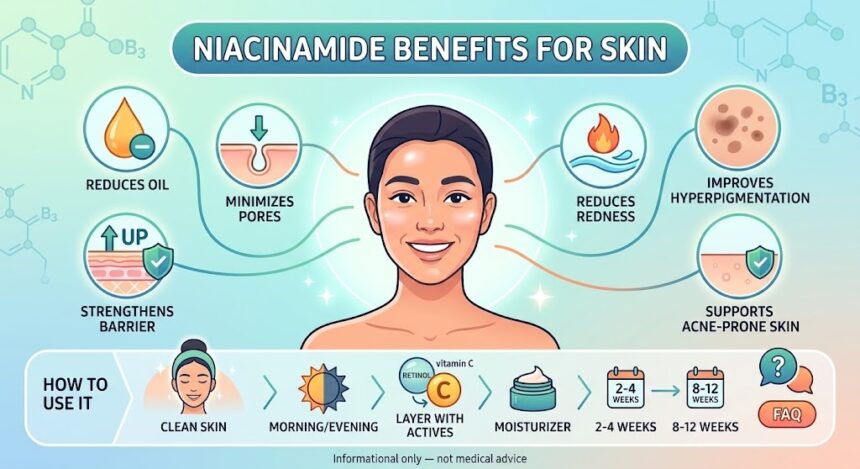
Niacinamide (vitamin B3) benefits for skin include reduced oil production, a stronger skin barrier, fewer visible pores, reduced redness and inflammation, and improved hyperpigmentation, making it one of the most versatile and well-tolerated active ingredients in skincare. It’s effective at concentrations between 2-10%, works well for nearly all skin types including sensitive skin, and is commonly combined with other actives like vitamin C, retinol, and hyaluronic acid without significant compatibility issues, despite some outdated claims to the contrary.
This guide covers what niacinamide actually does, the right concentration to use, how it compares to other popular actives, and how long it takes to see results.
What Is Niacinamide and How Does It Work?
Niacinamide is the amide form of vitamin B3 (nicotinamide), a water-soluble vitamin that plays a role in cellular energy production and repair processes throughout the body, including the skin. Applied topically, it supports the skin barrier by boosting production of ceramides, ingredients that hold skin cells together and retain moisture, regulates oil (sebum) production, helping balance an overactive sebaceous gland, and has anti-inflammatory properties that help calm redness and irritation. This combination of barrier support, oil regulation, and anti-inflammatory action explains why niacinamide is recommended across such a wide range of skin concerns and types.
What Are the Specific Benefits of Niacinamide for Skin?
Reduces Oil Production and Shine
Niacinamide has been shown in clinical studies to reduce sebum (oil) production over consistent use, making it a popular ingredient for oily and combination skin, without the excessive drying that can come from stronger oil-control ingredients.
Minimizes the Appearance of Pores
By regulating oil production and supporting overall skin texture, niacinamide can make pores appear smaller and less noticeable over time, though it doesn’t physically shrink pore size, which is largely determined by genetics.
Strengthens the Skin Barrier
Niacinamide boosts the skin’s natural production of ceramides and fatty acids, key components of the skin barrier that help retain moisture and protect against irritants, making it particularly useful for compromised or sensitive skin.
Reduces Redness and Inflammation
Its anti-inflammatory properties make niacinamide a common recommendation for rosacea-prone skin and general redness, often included in products specifically formulated for sensitive or reactive skin.
Improves Hyperpigmentation and Uneven Tone
Niacinamide has been shown to reduce the transfer of pigment (melanin) to skin cells, helping fade dark spots and even out overall tone with consistent use, though its effect is generally considered more gradual than more potent brightening ingredients like hydroquinone.
Supports Acne-Prone Skin
Through its combination of oil regulation and anti-inflammatory effects, niacinamide can help reduce acne-related redness and the frequency of breakouts for some people, though it’s generally considered a supportive ingredient rather than a primary acne treatment on its own.
Improves Skin Elasticity and Fine Lines
Some research suggests niacinamide may support collagen production and improve skin elasticity with long-term use, contributing to a smoother, more even skin texture over time.
What Concentration of Niacinamide Is Most Effective?
Most clinical research supporting niacinamide’s benefits uses concentrations between 2-5%, which is effective for oil control, barrier support, and mild brightening with minimal irritation risk. Higher concentrations, up to 10%, are used in some products and may offer slightly stronger effects for oil control and hyperpigmentation, but also carry a somewhat higher risk of mild irritation, redness, or a temporary flushing sensation in some users, particularly with sensitive skin. There’s no strong evidence that concentrations above 10% provide meaningfully better results, and starting at a lower concentration (around 5%) is a reasonable approach for most people, especially those new to the ingredient.
Is Niacinamide Suitable for All Skin Types?
Niacinamide is one of the few active ingredients broadly recommended across nearly every skin type. Oily and acne-prone skin benefits from its oil-regulating and anti-inflammatory effects. Dry skin benefits from its barrier-strengthening properties, which help the skin retain moisture more effectively. Sensitive and rosacea-prone skin generally tolerates niacinamide well due to its gentle, anti-inflammatory nature, making it one of the few actives often recommended even during active flares, with a dermatologist’s guidance. Mature skin may benefit from its potential support for collagen and elasticity alongside its brightening effects on age-related pigmentation. This broad tolerability is a major reason niacinamide has become a staple ingredient across so many different product lines and routines.
How to Use Niacinamide Correctly
- Apply to clean skin, either morning or evening, since niacinamide is stable in light and doesn’t require the same careful timing considerations as some other actives like vitamin C
- Can be layered with most other active ingredients, including vitamin C, retinol, and hyaluronic acid, without significant compatibility concerns
- Start with a lower concentration (around 5%) if you have sensitive skin, and monitor for any redness or flushing during the first few uses
- Follow with a moisturizer to help lock in hydration, particularly if using alongside other active ingredients that can be drying
- Use consistently, since niacinamide’s oil-regulating and barrier-supporting benefits build gradually with regular application rather than appearing after a single use
- Consider pairing with zinc, since some formulations combine niacinamide with zinc PCA specifically for enhanced oil control in acne-prone or oily skin
Does Niacinamide Interact Badly With Vitamin C?
This is one of the most persistent skincare myths, based on outdated research from decades ago using unstable formulations and conditions unlikely to occur in modern, well-formulated products. Current evidence and formulation science indicate that niacinamide and vitamin C can be used together safely and effectively for most people, and many modern products intentionally combine both ingredients. Some people report mild, temporary flushing when combining high concentrations of both for the first time, but this isn’t considered a sign of a harmful chemical reaction, and it typically resolves as skin adjusts.
Niacinamide vs. Other Popular Skincare Actives
Compared to retinol, niacinamide is significantly gentler and better tolerated, making it a good option for sensitive skin or for use alongside retinol to offset some of retinol’s potential dryness and irritation, though retinol has stronger, more established evidence for deeper anti-aging effects like fine lines and collagen stimulation. Compared to vitamin C, niacinamide is gentler and more universally tolerated, while vitamin C offers stronger antioxidant protection and more potent brightening effects; many routines use both together for complementary benefits. Compared to salicylic acid, niacinamide addresses oil production and inflammation through a different mechanism than salicylic acid’s exfoliating action within pores, and the two are often combined for acne-prone or oily skin, addressing the concern from multiple angles.
How Long Does It Take to See Results From Niacinamide?
Most people notice initial improvements in oiliness and skin texture within 2-4 weeks of consistent daily use. More significant improvements in hyperpigmentation, pore appearance, and overall skin tone typically take 8-12 weeks of regular application to become clearly noticeable, consistent with the general pattern seen with most topical active ingredients that work gradually rather than immediately.
Who Should Be Cautious With Niacinamide?
Niacinamide is one of the gentlest and most broadly tolerated active ingredients, but a small percentage of people experience mild irritation, redness, or a temporary flushing sensation, particularly at higher concentrations (above 5%) or when first introducing the ingredient. If irritation occurs, reducing concentration, application frequency, or switching to a different product formulation usually resolves the issue. As with any new skincare product, patch testing on a small area before full-face application is a reasonable precaution, especially for those with a history of sensitive or reactive skin.
Frequently Asked Questions
What does niacinamide actually do for skin?
Niacinamide reduces oil production, strengthens the skin barrier, minimizes the appearance of pores, calms redness and inflammation, and helps fade hyperpigmentation, making it one of the more versatile active ingredients for a wide range of skin types and concerns.
Can I use niacinamide with vitamin C?
Yes, despite older, now outdated claims that the two ingredients are incompatible, current research and formulation science confirm niacinamide and vitamin C can be used together safely and effectively in the same routine.
Is niacinamide good for acne-prone skin?
Yes, niacinamide’s combination of oil regulation and anti-inflammatory properties makes it a helpful supportive ingredient for acne-prone skin, though it’s generally used alongside, rather than instead of, more targeted acne treatments like salicylic acid or benzoyl peroxide for active breakouts.
What percentage of niacinamide should I use?
Most research supports 2-5% niacinamide as effective and well tolerated for most people, with some products using up to 10% for potentially stronger effects, though higher concentrations also carry a slightly increased risk of mild irritation.
Can niacinamide reduce pore size permanently?
Not permanently — niacinamide can make pores appear smaller by regulating oil production and improving overall skin texture, but it doesn’t change the underlying pore size, which is primarily determined by genetics.
Is niacinamide safe to use every day?
Yes, niacinamide is generally considered safe for daily use, morning and evening, for most skin types, including sensitive skin, and its benefits build with consistent, ongoing use.
Can niacinamide help with dark circles under the eyes?
Niacinamide is sometimes included in eye creams for its brightening and barrier-supporting properties, and some limited research suggests it may modestly improve the appearance of certain types of dark circles, particularly those related to thin skin or minor pigmentation, though it’s less effective for dark circles caused by visible blood vessels or deep-set eye structure.
Does niacinamide expire or lose effectiveness over time?
Yes, like most skincare actives, niacinamide products have a shelf life and can lose potency over time, especially once opened and exposed to air. Niacinamide is relatively stable compared to some other actives like vitamin C, but checking expiration dates and storing products away from excessive heat or direct sunlight helps preserve effectiveness.
Related Reading
- Vitamin C serum benefits: what it actually does for your skin
- Acne causes and treatment: clear skin guide
- Melasma treatment: causes, options, and why it keeps coming back
- Red light therapy for skin
Informational only — not medical advice. See a dermatologist if you have a diagnosed skin condition or experience persistent irritation from active skincare ingredients.