
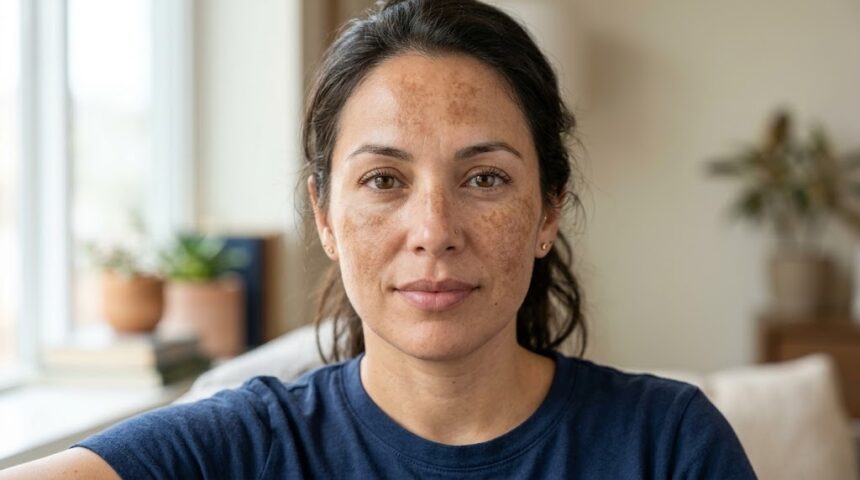
Melasma is a common skin condition that causes brown or grayish-brown patches, usually on the face, most often on the cheeks, forehead, nose, and upper lip. It’s driven mainly by hormonal factors and sun exposure, is far more common in women, and tends to be chronic and prone to recurrence even after successful treatment. Treatment typically combines diligent sun protection with topical lightening agents like hydroquinone, and in some cases procedures like chemical peels or laser therapy, though results take months and maintenance is usually ongoing.
This guide covers what causes melasma, which treatments actually work, how long it takes to see improvement, and why sun protection matters more for melasma than almost any other skin condition.
What Is Melasma?
Melasma is a chronic pigmentation disorder in which the skin produces excess melanin, resulting in flat, brown, tan, or grayish-brown patches, usually symmetrical on both sides of the face. It’s sometimes called the “mask of pregnancy” (chloasma) when it occurs during pregnancy, though it also occurs outside of pregnancy, including in men, though far less commonly. Melasma is not harmful or dangerous, but it can be persistent and emotionally frustrating, since it often resists treatment more than other forms of hyperpigmentation.
What Causes Melasma?
Melasma results from an interaction between genetic susceptibility, hormonal influences, and ultraviolet (UV) and visible light exposure, which together trigger pigment-producing cells (melanocytes) to overproduce melanin in a patchy pattern. Key contributing factors include:
- Sun exposure: UV light is one of the strongest triggers and worsens existing melasma, which is why sun protection is central to both treatment and prevention.
- Hormonal changes: Pregnancy, birth control pills, and hormone replacement therapy are all strongly linked to melasma, which is why it’s so much more common in women.
- Genetics: A family history of melasma significantly increases the likelihood of developing it, and it’s more common in people with medium-to-darker skin tones.
- Heat: Some research suggests that heat exposure, not just UV light, may also contribute to melasma, which is one reason it can be more difficult to control in hot climates.
- Certain medications and skincare: Some medications and cosmetic products can trigger or worsen melasma in susceptible individuals.
Who Gets Melasma?
Melasma affects women far more often than men, accounting for the vast majority of cases, and is more common during the reproductive years, particularly during pregnancy, when it’s often called the “mask of pregnancy.” It’s more common in people with medium-to-darker skin tones (Fitzpatrick skin types III-VI) and in people living in areas with intense sun exposure. A family history of melasma also raises individual risk significantly.
How to Treat Melasma
Melasma is treatable but notoriously stubborn, and most effective approaches combine several strategies rather than relying on one single product or procedure.
Sun Protection (The Non-Negotiable Foundation)
Sun protection isn’t just a supporting step for melasma — it’s the foundation that determines whether any other treatment will work. Broad-spectrum sunscreen with SPF 30 or higher, reapplied every two hours during sun exposure, is essential, and because melasma can also be triggered by visible light (not just UV), tinted mineral sunscreens containing iron oxide offer additional protection that plain chemical or mineral sunscreens don’t provide. Wide-brimmed hats and seeking shade during peak sun hours add further protection. Without consistent, rigorous sun protection, other melasma treatments tend to underperform or the pigmentation returns quickly after initial improvement.
Topical Treatments
- Hydroquinone, applied at 2-4% concentration, is considered the gold-standard topical treatment and works by inhibiting melanin production, typically used for a limited period (often a few months) rather than indefinitely due to potential skin irritation with prolonged use.
- Tretinoin (a retinoid) is often combined with hydroquinone to speed up skin cell turnover and enhance penetration of other treatments.
- Azelaic acid is a gentler alternative that can help with mild-to-moderate melasma, often used for sensitive skin or when hydroquinone isn’t tolerated.
- Kojic acid, tranexamic acid (topical), vitamin C, and niacinamide are additional ingredients sometimes included in melasma-focused regimens, generally with more modest effects on their own compared to hydroquinone.
- Combination creams, containing a mix of hydroquinone, tretinoin, and a mild corticosteroid (sometimes called a “triple combination cream”), are considered particularly effective for many people and are typically prescription-only.
Procedures
- Chemical peels, using agents like glycolic or salicylic acid, can help lighten melasma, particularly when combined with topical treatment, though they need to be approached cautiously since aggressive peels can occasionally worsen melasma in some individuals.
- Laser and light-based treatments can help in some cases but carry a real risk of worsening melasma if not performed carefully, since heat and certain wavelengths can trigger more pigment production; this makes provider experience with melasma specifically important.
- Microneedling combined with topical treatments is used in some protocols, though evidence and outcomes vary.
Oral Treatments
Oral tranexamic acid has growing evidence as an effective add-on treatment for moderate-to-severe melasma that hasn’t responded adequately to topical treatment alone, though it requires medical supervision due to potential clotting-related risks and isn’t appropriate for everyone.
Types of Melasma
Melasma is sometimes classified by which skin layer the pigment sits in, which can affect how well it responds to treatment. Epidermal melasma involves pigment in the outer skin layer and tends to respond better to topical treatments, since they can reach the pigment more directly. Dermal melasma involves pigment deeper in the skin and tends to be more resistant to topical treatment alone, often requiring a longer, more combined treatment approach. Mixed melasma involves both layers and is quite common, meaning many people see partial but not complete improvement with topical treatment, since the deeper component responds more slowly. A dermatologist can sometimes estimate which type is present using a special light examination (a Wood’s lamp), which helps set realistic expectations for how much and how quickly a given treatment plan is likely to help.
How Long Does Melasma Treatment Take to Work?
Visible improvement with topical treatment typically takes 8-12 weeks of consistent, correct use, and more significant improvement can take several months longer. Melasma is generally a slow-to-treat condition compared to other forms of hyperpigmentation, and expecting a fast fix often leads to frustration or premature abandonment of an otherwise working treatment plan. Combining treatments (for example, hydroquinone plus tretinoin plus rigorous sun protection) tends to produce faster and more complete results than any single approach alone.
Does Melasma Go Away on Its Own?
Melasma that develops during pregnancy sometimes fades on its own within several months to a year after delivery as hormone levels normalize, though it doesn’t always resolve completely. Melasma triggered by birth control or hormone therapy may improve if the medication is stopped, under a doctor’s guidance. Melasma unrelated to a specific hormonal event, however, tends to be more persistent and is less likely to resolve without active treatment and consistent sun protection.
Why Does Melasma Keep Coming Back?
Melasma has a strong tendency to recur, even after successful treatment, which is one of its most frustrating features. The main reasons include inconsistent or insufficient sun protection, since even brief unprotected sun exposure can reactivate pigment production, ongoing hormonal influences, such as continued use of birth control, heat exposure, which can contribute independently of UV light, and the underlying genetic and melanocyte sensitivity that doesn’t change even when current pigmentation clears. Because of this, most dermatologists frame melasma management as an ongoing process rather than a one-time cure, with maintenance sun protection and sometimes intermittent treatment needed indefinitely.
Melasma vs. Other Types of Hyperpigmentation
Melasma typically appears as larger, symmetrical, blotchy patches on both sides of the face, especially the cheeks, forehead, and upper lip, and is strongly linked to hormones and sun exposure. Post-inflammatory hyperpigmentation, by contrast, develops at the site of a previous injury or inflammation, such as a healed acne spot, and doesn’t follow the same symmetrical facial pattern. Sunspots (solar lentigines) tend to be smaller, more defined, individual spots rather than larger blotchy patches, and are caused by cumulative sun damage rather than the hormonal component seen in melasma. Since these conditions sometimes overlap or coexist, a dermatologist’s evaluation is the most reliable way to confirm which type, or combination, you’re dealing with.
When to See a Dermatologist
While mild melasma can sometimes be managed with over-the-counter lightening products and diligent sun protection, it’s worth seeing a dermatologist if over-the-counter treatments haven’t helped after several months of consistent use, the pigmentation is extensive, dark, or significantly affecting your confidence, you’re pregnant or planning pregnancy and want a treatment plan that’s safe for that stage, since some treatments, including hydroquinone and oral tranexamic acid, aren’t recommended during pregnancy, or you’re unsure whether what you’re seeing is melasma or another type of pigmentation, since the treatment approach differs.
Frequently Asked Questions
What is the best treatment for melasma?
There’s no single best treatment for everyone — hydroquinone combined with tretinoin and rigorous daily sun protection is generally considered the most effective topical approach, while more resistant cases may add oral tranexamic acid or carefully selected procedures under dermatologist guidance.
Can melasma be cured permanently?
Not reliably. Melasma can be significantly lightened and controlled with treatment, but it has a strong tendency to recur, especially with sun exposure or hormonal changes, so most people need ongoing maintenance rather than a one-time permanent cure.
Does melasma go away after pregnancy?
It often fades partially or fully within several months to a year after delivery as hormones normalize, though it doesn’t always resolve completely on its own, and some people need active treatment to see full improvement.
Why is sunscreen so important for melasma?
UV and visible light are among the strongest triggers for melasma, and even brief unprotected sun exposure can reactivate or worsen pigmentation, which is why consistent, broad-spectrum sun protection, including tinted sunscreen, is considered essential rather than optional for melasma treatment to work.
Can men get melasma?
Yes, though it’s far less common in men than in women. When it does occur in men, the same triggers — sun exposure, genetics, and in some cases hormonal factors — apply, and treatment approaches are similar.
Is melasma the same as sunspots?
No. Melasma typically causes larger, symmetrical, blotchy patches linked to hormones and sun exposure, while sunspots (solar lentigines) are smaller, well-defined spots caused by cumulative sun damage without the same hormonal link.
Can makeup cover melasma effectively?
Yes, color-correcting concealers (often peach or orange-based to counteract brown pigmentation) followed by a matching foundation can effectively camouflage melasma for day-to-day purposes, and this doesn’t interfere with ongoing treatment as long as products are removed gently and sunscreen is still applied underneath.
Is melasma a sign of a hormonal imbalance or other health problem?
Melasma itself isn’t a marker of a broader hormonal imbalance or underlying illness for most people — it reflects how sensitive an individual’s melanocytes are to normal hormonal fluctuations and UV exposure, largely determined by genetics. It’s a cosmetic pigmentation condition rather than a sign of a hormonal disorder in the vast majority of cases.
Related Reading
- Dry skin causes and remedies: home care guide
- Acne causes and treatment: clear skin guide
- Seborrheic dermatitis: causes, symptoms, and treatment
Informational only — not a diagnosis or treatment plan. See a dermatologist for a proper evaluation, especially if you’re pregnant, planning pregnancy, or considering prescription-strength treatment.