
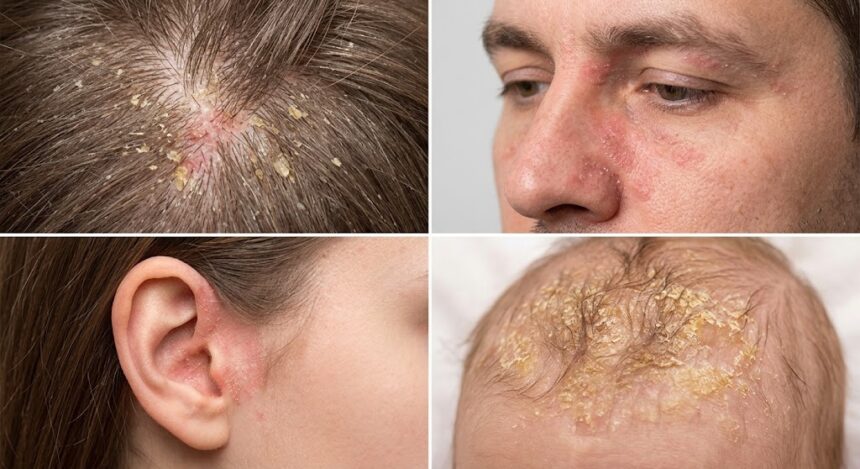
Seborrheic dermatitis is a common, chronic skin condition that causes flaky, scaly, sometimes reddish patches, mostly in areas with a lot of oil-producing (sebaceous) glands — the scalp, face, and chest. In infants it’s known as cradle cap. It isn’t caused by poor hygiene, isn’t contagious, and isn’t the same as dry skin, even though the flaking can look similar. It’s also easily confused with dandruff, psoriasis, and eczema, which look similar but need different treatment approaches. This guide explains what causes seborrheic dermatitis, how to recognize it, and the treatments that actually help manage it.
What Is Seborrheic Dermatitis?
Seborrheic dermatitis is an inflammatory skin condition that tends to be chronic, meaning it flares up and settles down over time rather than resolving permanently. It most commonly appears on the scalp (where it’s often called dandruff in mild cases), eyebrows, sides of the nose, ears, eyelids, and chest — anywhere skin has a high concentration of sebaceous glands. It’s one of the more common skin conditions seen by dermatologists, affecting a meaningful percentage of adults at some point, with peaks in infancy, during puberty, and in adulthood.
What Causes Seborrheic Dermatitis?
The exact cause isn’t fully understood, but research points to a combination of factors working together rather than a single trigger:
- Malassezia yeast: This yeast lives naturally on everyone’s skin, but in seborrheic dermatitis it appears to trigger an inflammatory response, possibly by breaking down skin oils into irritating byproducts.
- Excess oil production: Areas rich in sebaceous glands are more prone to flares, which is part of why the condition is called “seborrheic” — related to sebum, the skin’s natural oil.
- Individual immune response: Not everyone with Malassezia on their skin develops seborrheic dermatitis, suggesting that how a person’s immune system responds to the yeast plays a role.
- Skin barrier factors: A compromised skin barrier may make the skin more reactive to yeast byproducts and environmental triggers.
- Genetics: A family history of seborrheic dermatitis, psoriasis, or other inflammatory skin conditions appears to increase risk.
Certain factors are known to trigger or worsen flares rather than cause the condition outright: cold, dry weather, stress, fatigue, hormonal changes, certain medications, and underlying conditions such as Parkinson’s disease or HIV, which are both associated with a higher incidence of seborrheic dermatitis.
Symptoms of Seborrheic Dermatitis
Symptoms vary somewhat by location and severity, but common signs include:
- Flaky, white or yellowish scales on the scalp, often mistaken for simple dandruff
- Greasy-looking, red or discolored patches on the face, especially around the nose, eyebrows, and hairline
- Itching, which can range from mild to significant
- Flaking or scaling on the eyelids (seborrheic blepharitis), sometimes with redness
- Patches on the chest, upper back, or in skin folds in more extensive cases
- In infants, thick, yellowish, crusty patches on the scalp known as cradle cap, which is usually harmless and often resolves on its own within months
Symptoms often worsen in cold, dry seasons and during periods of stress or illness, then improve in warmer, more humid conditions — though this pattern isn’t universal.
Seborrheic Dermatitis vs Dandruff vs Psoriasis vs Eczema
These conditions get confused often because they can look similar, but the distinctions matter for treatment:
- Dandruff is often considered a milder form of seborrheic dermatitis limited to the scalp, without the redness and inflammation seen in more significant cases.
- Psoriasis produces thicker, more clearly defined silvery-white scales and can appear on the scalp, elbows, and knees; it tends to be more sharply demarcated than seborrheic dermatitis’s typically greasier, less defined patches.
- Eczema (atopic dermatitis) usually causes drier, more intensely itchy patches and is more associated with a personal or family history of allergies and asthma, whereas seborrheic dermatitis is tied more specifically to oil-producing areas and yeast overgrowth.
A dermatologist can distinguish between these based on appearance, location, and sometimes a skin scraping or biopsy in unclear cases, since overlapping symptoms make self-diagnosis unreliable.
How Seborrheic Dermatitis Is Diagnosed
Diagnosis is usually clinical, meaning a healthcare provider identifies it based on the appearance and distribution of the rash rather than lab testing. In cases where the diagnosis is unclear or doesn’t respond to typical treatment, a doctor may perform a skin scraping or biopsy to rule out psoriasis, eczema, or fungal infections that can mimic seborrheic dermatitis.
Where Seborrheic Dermatitis Commonly Appears
Because the condition tracks with oil gland density, certain areas are affected far more often than others, and recognizing the pattern helps distinguish it from other rashes.
- Scalp: The most commonly affected area, ranging from mild flaking to thick, adherent scale with visible redness underneath.
- Face: Typically the sides of the nose, eyebrows, and the creases between the nose and mouth (nasolabial folds), often appearing greasy rather than dry.
- Ears: Inside the ear canal and behind the ears, sometimes causing discomfort or mild hearing changes if scale builds up.
- Eyelids: Known as seborrheic blepharitis, causing flaking along the lash line, redness, and sometimes a gritty sensation.
- Chest and upper back: More common in adults, often appearing as ring-shaped or patchy scaling in the central chest.
- Skin folds: In more extensive cases, the armpits, groin, and under the breasts can be affected, particularly in people with obesity or reduced mobility.
Risk Factors Beyond the Basics
Certain groups are more likely to develop seborrheic dermatitis or experience more severe, harder-to-control cases. Neurological conditions such as Parkinson’s disease and stroke are associated with higher rates, possibly related to changes in oil gland activity and skin surface chemistry. Immunocompromised individuals, including those with HIV, tend to develop more extensive and treatment-resistant seborrheic dermatitis. Certain medications, including some used for psychiatric conditions, and heavy alcohol use have also been linked to a higher likelihood of flares. None of these associations mean everyone with seborrheic dermatitis has an underlying condition — for most people it’s simply a common, standalone skin issue — but a doctor may consider them if the condition is unusually severe or resistant to treatment.
Seborrheic Dermatitis on Different Skin Tones
The appearance of seborrheic dermatitis can vary depending on skin tone. On lighter skin, it typically presents as pink or red patches with yellowish, greasy scale. On darker skin tones, the redness is often less visible, and the condition may instead show up as lighter (hypopigmented) or darker (hyperpigmented) patches, sometimes with a more ashy or gray appearance. This difference in presentation is one reason seborrheic dermatitis can be under-recognized or misdiagnosed in people with darker skin, making it worth specifically mentioning the flaking and itching pattern to a healthcare provider even if the redness typical of textbook images isn’t obvious.
Treatment Options for Seborrheic Dermatitis
Treatment focuses on reducing yeast overgrowth, calming inflammation, and managing flaking — most cases respond well to consistent treatment, though flares can recur.
Medicated Shampoos (for Scalp Involvement)
Over-the-counter shampoos containing ketoconazole, selenium sulfide, zinc pyrithione, salicylic acid, or coal tar are typically the first-line treatment for scalp seborrheic dermatitis. These work by reducing yeast levels, slowing skin cell turnover, or loosening scale, depending on the active ingredient. They’re generally used several times a week during flares, then less often for maintenance once symptoms improve.
Topical Antifungals
Prescription or over-the-counter antifungal creams, such as ketoconazole or ciclopirox, are commonly used on the face, chest, and other affected areas, targeting the Malassezia yeast thought to drive the inflammation.
Topical Corticosteroids
Low-potency steroid creams or solutions can quickly calm redness and itching during flares. Because prolonged use on the face can cause skin thinning and other side effects, these are typically used for short periods rather than continuously.
Calcineurin Inhibitors
Non-steroid options like tacrolimus or pimecrolimus are sometimes prescribed for facial seborrheic dermatitis, particularly for longer-term management where repeated steroid use isn’t ideal, such as around the eyes.
Gentle Skincare Adjustments
Using a mild, non-irritating cleanser, avoiding harsh scrubbing, and moisturizing appropriately can support the skin barrier during treatment. Over-exfoliating or using heavily fragranced products can worsen irritation and prolong flares.
Managing Cradle Cap in Infants
For infants, gentle brushing with a soft brush after softening scales with a bit of baby oil, followed by mild shampoo, is usually enough. Cradle cap typically resolves on its own within the first several months of life and rarely needs medical treatment unless it becomes inflamed or spreads.
How Long Does Treatment Take to Work?
Most people notice improvement in redness and flaking within two to four weeks of consistent treatment, though full resolution of a flare can take longer depending on severity. Because seborrheic dermatitis is a chronic, relapsing condition, many people need to continue a lower-frequency maintenance routine — such as using a medicated shampoo once a week — even after symptoms clear, to prevent flares from returning.
Lifestyle Factors That Help Manage Flares
- Managing stress, since flares often correlate with high-stress periods
- Keeping affected areas clean without over-washing or over-scrubbing, which can irritate the skin further
- Using fragrance-free, non-comedogenic skincare and hair products
- Being mindful of seasonal changes, since cold, dry air tends to worsen symptoms for many people
- Getting adequate sleep, which supports overall immune and skin barrier function
Common Mistakes People Make
- Assuming it’s just dry skin and using heavy moisturizers alone, without addressing the yeast and inflammation component
- Stopping treatment as soon as symptoms clear, rather than transitioning to a maintenance routine, which often leads to a quick flare-up
- Over-washing or scrubbing the scalp or face aggressively, which can worsen irritation
- Using harsh, drying products meant for oily skin, which can damage the skin barrier and worsen the underlying issue
- Not distinguishing it from psoriasis or eczema, leading to using the wrong type of treatment
- Picking or scratching flaky patches, which increases the risk of secondary infection and prolongs healing
When to See a Doctor
See a dermatologist if over-the-counter treatments haven’t improved symptoms after several weeks, if the rash is spreading or becoming more inflamed, if it’s significantly affecting quality of life, or if you’re unsure whether what you’re seeing is actually seborrheic dermatitis rather than another condition. Sudden, widespread, or unusually severe seborrheic dermatitis can sometimes be associated with an underlying health condition and is worth discussing with a doctor.
Frequently Asked Questions
Is seborrheic dermatitis contagious?
No. It’s not caused by an infection you can pass to others — the yeast involved lives naturally on everyone’s skin, and the condition results from how an individual’s skin and immune system respond to it.
Can seborrheic dermatitis be cured permanently?
It’s typically a chronic condition that’s managed rather than cured. Most people can control flares well with the right treatment and a maintenance routine, but it can recur, especially during stress or seasonal changes.
Is seborrheic dermatitis the same as dandruff?
They’re related — dandruff is often considered a milder form of seborrheic dermatitis limited to scalp flaking without significant redness or inflammation.
What triggers seborrheic dermatitis flares?
Common triggers include cold, dry weather, stress, fatigue, hormonal changes, certain medications, and in some cases, underlying health conditions. Triggers vary between individuals.
Does diet affect seborrheic dermatitis?
Diet isn’t considered a primary cause, though some people report flares correlating with alcohol intake or certain foods. Evidence for specific dietary interventions is limited compared to topical treatment.
Can stress alone cause a flare-up?
Stress doesn’t cause seborrheic dermatitis on its own, but it’s one of the most consistently reported triggers for flares in people who already have the condition, likely through its broader effects on immune function and inflammation.
Does seborrheic dermatitis cause hair loss?
It doesn’t typically cause permanent hair loss, but persistent inflammation and scratching can lead to temporary shedding in affected areas, which usually improves once the condition is controlled.
Related Reading
- Dry skin causes and remedies: home care guide
- Psoriasis vs eczema: key differences and how to tell them apart
- Scalp psoriasis treatment: causes, symptoms, and how to manage flares
- Gut-skin connection: how digestion affects your skin
- Acne causes and treatment: clear skin guide
Informational only — not a diagnosis or treatment plan. See a dermatologist for persistent, spreading, or unclear skin symptoms.