

Psoriasis and eczema are both chronic inflammatory skin conditions that cause red, itchy, irritated patches, but they have different underlying causes and need different treatment. Psoriasis is an autoimmune condition where the immune system speeds up skin cell production, causing thick, well-defined, silvery-scaled plaques, most often on the elbows, knees, and scalp. Eczema (atopic dermatitis) is primarily linked to a weakened skin barrier and allergic-type immune response, causing ill-defined, intensely itchy, sometimes oozing patches, often in the creases of elbows and knees. Since both can appear as red, itchy patches, telling them apart usually requires looking at the texture, location, and pattern of the rash together.
This guide breaks down the key differences, how each condition is diagnosed and treated, and when it’s worth seeing a dermatologist to get a clear answer.
What Is Psoriasis?
Psoriasis is a chronic autoimmune condition in which the immune system mistakenly speeds up the skin cell life cycle, causing cells to build up on the surface faster than they can shed. This creates thick, raised plaques covered in silvery-white scale, most commonly on the elbows, knees, scalp, and lower back. It’s a lifelong condition that tends to flare and improve in cycles, often triggered by stress, skin injury, infection, or certain medications.
What Is Eczema?
Eczema, most commonly referring to atopic dermatitis, is a chronic condition linked to a combination of a genetically weaker skin barrier and an overactive immune response to environmental triggers. This allows irritants, allergens, and moisture loss to affect the skin more easily, leading to inflammation, intense itching, and sometimes oozing or crusting during flares. It often begins in childhood, frequently appears alongside other allergic conditions like asthma or hay fever, and commonly affects the creases of the elbows, knees, wrists, and neck.
Psoriasis vs. Eczema: Key Differences
Appearance
Psoriasis plaques tend to be thick, well-defined, and raised, with a silvery or white scale on top, and the border between affected and unaffected skin is usually sharp and distinct. Eczema patches tend to have less defined, blurrier edges, look more inflamed and sometimes weepy or crusted during flares, and often appear thinner and more variably textured than psoriasis plaques.
Itch Level
Both conditions itch, but eczema is generally more intensely itchy, often significantly disrupting sleep, while psoriasis itching, though present in many cases, is on average somewhat less severe, though this varies a lot between individuals.
Location on the Body
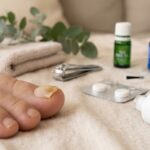
Psoriasis most commonly affects the elbows, knees, scalp, lower back, and nails (which may show pitting or thickening). Eczema most commonly affects the creases of the elbows and knees (the flexural surfaces), the wrists, neck, and in infants, the face and scalp.
Age of Onset
Eczema very often starts in early childhood, sometimes in infancy, and may improve or resolve by adulthood, though it can persist or return. Psoriasis more commonly first appears in the teens to early adulthood, or later in adulthood, and tends to be lifelong once it develops.
Underlying Cause
Psoriasis is primarily an autoimmune condition — the immune system attacks healthy skin cells, accelerating their turnover. Eczema is primarily a skin barrier and allergic-type immune condition, where the skin’s protective barrier is weaker, allowing irritants and allergens to penetrate more easily and trigger inflammation.
Associated Conditions
Psoriasis is linked to psoriatic arthritis, which affects the joints in up to about 30% of people with psoriasis, along with a higher risk of cardiovascular disease and metabolic syndrome. Eczema is more closely linked to other allergic conditions — asthma, hay fever (allergic rhinitis), and food allergies — sometimes referred to together as the “atopic march.”
Types of Eczema and Psoriasis Worth Knowing
Neither condition is one single, uniform disease — there are several recognized subtypes, and knowing which type you’re dealing with affects treatment.
- Common types of eczema include atopic dermatitis (the most common, often starting in childhood), contact dermatitis (triggered by direct contact with an irritant or allergen), and dyshidrotic eczema (causing small, intensely itchy blisters, typically on the hands and feet).
- Common types of psoriasis include plaque psoriasis (the most common, causing the classic raised, scaly patches), guttate psoriasis (small, drop-shaped spots, sometimes triggered by a strep infection), inverse psoriasis (smooth, red patches in skin folds, without the typical scale), and pustular psoriasis (less common, causing white pustules surrounded by red skin).
Because treatment can vary by subtype — for example, contact dermatitis responds best to identifying and avoiding the specific trigger, while guttate psoriasis may resolve after treating an underlying strep infection — a dermatologist’s input on the specific subtype often shapes the treatment plan more than the general “eczema vs psoriasis” distinction alone.
Can You Have Both Psoriasis and Eczema?
Yes, though it’s less common than having just one. Having one of these conditions doesn’t protect against developing the other, and some people experience overlapping symptoms that make self-diagnosis particularly difficult. When both are present, or when symptoms don’t clearly match the typical pattern of either condition, a dermatologist’s evaluation, sometimes including a skin biopsy, is the most reliable way to sort out what’s actually happening.
Diet, Stress, and Triggers
Both conditions can flare in response to external and internal triggers, though the specific triggers often differ. Psoriasis flares are commonly linked to stress, skin injury (a phenomenon called the Koebner response, where new plaques form at sites of trauma), infections such as strep throat, certain medications, cold weather, and alcohol. Eczema flares are more commonly linked to specific irritants and allergens — harsh soaps, certain fabrics like wool, fragrances, dust mites, pet dander, sweating, and in some cases specific foods, particularly in children with more severe atopic dermatitis. Identifying your personal trigger pattern, often through a symptom diary, is useful for both conditions, though the process looks somewhat different depending on which one you have.
How Are Psoriasis and Eczema Diagnosed?
Both are primarily diagnosed through a physical examination by a dermatologist, who looks at the appearance, distribution, and pattern of the rash, combined with your personal and family medical history. In unclear cases, a skin biopsy — removing a small sample of affected skin for microscopic examination — can help confirm the diagnosis, since the two conditions look different under a microscope even when they appear similar on the skin’s surface.
How Are They Treated Differently?
Psoriasis Treatment
- Topical corticosteroids and vitamin D analogues to reduce inflammation and slow skin cell turnover
- Phototherapy (controlled UV light exposure) for moderate cases
- Systemic medications, including biologics that target specific parts of the immune system, for moderate-to-severe psoriasis
- Treating any associated joint symptoms (psoriatic arthritis) as part of a broader treatment plan
Eczema Treatment
- Regular, generous use of fragrance-free moisturizers to repair and support the skin barrier
- Topical corticosteroids or topical calcineurin inhibitors during flares to reduce inflammation
- Identifying and avoiding personal triggers, such as certain fabrics, soaps, or allergens
- Antihistamines in some cases to help manage itching, particularly at night
- Biologic or systemic treatment for more severe, treatment-resistant cases
While both conditions may use topical steroids during flares, the broader treatment strategy differs meaningfully — eczema management centers heavily on barrier repair and trigger avoidance, while psoriasis management often centers on modulating the overactive immune response driving the rapid skin cell turnover.
Is Psoriasis or Eczema Contagious?
Neither condition is contagious. Both are related to internal immune and genetic factors rather than an infection, so they cannot be spread through skin contact, sharing towels, or any other form of contact.
Living With a Chronic Skin Condition
Both psoriasis and eczema are typically chronic, meaning the goal of treatment is usually long-term management and reducing flare frequency and severity rather than a one-time cure. This distinction matters for expectations: a treatment plan that controls symptoms well is a success, even if the condition never fully “goes away.” Many people find that consistent daily habits — regular moisturizing, sun-safe skin care, stress management, and sticking with a treatment plan even between flares — make a bigger difference over time than reacting only when a flare is already underway. Support groups and patient organizations focused specifically on psoriasis or eczema can also be a useful resource for practical day-to-day coping strategies beyond what a short doctor’s visit can cover.
When to See a Dermatologist
It’s worth seeing a dermatologist if you’re not sure which condition you have, since the treatments differ, the rash is spreading, painful, or significantly affecting your quality of life or sleep, over-the-counter moisturizers and hydrocortisone haven’t meaningfully helped after a couple of weeks, you notice joint pain or stiffness alongside a scaly rash, which could suggest psoriatic arthritis, or the rash is oozing, crusting, or shows signs of infection, such as increasing warmth, redness, or pus.
Frequently Asked Questions
What is the main difference between psoriasis and eczema?
Psoriasis is an autoimmune condition causing thick, well-defined, scaly plaques, most often on the elbows, knees, and scalp, while eczema is linked to a weaker skin barrier and allergic-type immune response, causing intensely itchy, less well-defined patches, often in the skin creases.
Which is itchier, psoriasis or eczema?
Eczema is generally itchier on average and often disrupts sleep more, though psoriasis can also itch significantly, and itch intensity varies a lot from person to person with either condition.
Can eczema turn into psoriasis?
No, one condition doesn’t turn into the other, since they involve different underlying immune mechanisms. However, it is possible, though less common, to have both conditions at the same time.
Is psoriasis worse than eczema?
Neither is inherently “worse” — severity varies widely within each condition. Psoriasis carries a notable risk of joint involvement (psoriatic arthritis) and certain cardiovascular risks, while eczema can be more disruptive to daily comfort and sleep due to intense itching, particularly in moderate-to-severe cases.
How can I tell if my rash is psoriasis or eczema at home?
Look at the texture and location: well-defined, thick, silvery-scaled patches on the elbows, knees, or scalp suggest psoriasis, while poorly defined, intensely itchy patches in the creases of elbows or knees, especially with a personal or family history of allergies, suggest eczema. A dermatologist can confirm what home observation can only suggest.
Do psoriasis and eczema run in families?
Yes, both have a genetic component and tend to run in families, though having a family history doesn’t guarantee either condition will develop, and environmental triggers play a role too.
Can adults develop eczema for the first time?
Yes, although eczema often starts in childhood, it can first appear in adulthood, sometimes called adult-onset atopic dermatitis. It may also reappear in adults who had it as children and later outgrew it, particularly during periods of high stress or exposure to new irritants.
Does weather affect psoriasis and eczema differently?
Cold, dry weather tends to worsen both conditions by reducing skin moisture and barrier function, though psoriasis is also notably influenced by sunlight, since moderate UV exposure can improve psoriasis plaques for many people, which is part of why phototherapy is a recognized treatment. Eczema doesn’t have the same well-established sunlight benefit and is more consistently driven by dryness and irritant exposure.
Related Reading
- Seborrheic dermatitis: causes, symptoms, and treatment
- Dry skin causes and remedies: home care guide
- Gut-skin connection: how digestion affects your skin
Informational only — not a diagnosis. See a dermatologist for a proper evaluation, especially if you’re unsure which condition you have or symptoms aren’t improving with basic care.