
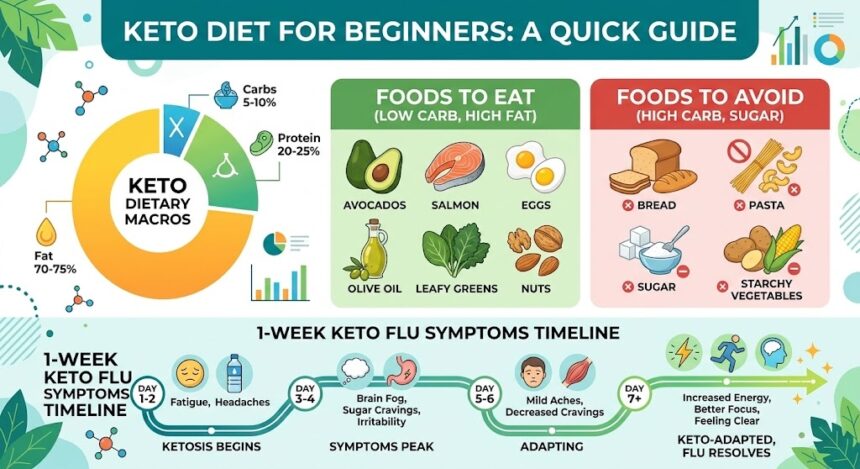
The keto diet is a very low-carb, high-fat eating pattern designed to shift the body into ketosis, a metabolic state where it burns fat for fuel instead of carbohydrates. For beginners, this typically means limiting carbohydrates to about 20-50 grams per day, getting roughly 70-75% of calories from fat, 20-25% from protein, and only 5-10% from carbs, with most people reaching ketosis within 2-4 days of consistent adherence, though the initial adjustment period (“keto flu”) can bring temporary fatigue and irritability during the first week.
This guide covers exactly how to start keto, what to eat and avoid, how to know if you’re in ketosis, and what to realistically expect in the first few weeks.
What Is the Keto Diet?
The ketogenic diet drastically reduces carbohydrate intake and replaces it with fat, forcing the body to shift its primary fuel source. Normally, the body uses glucose from carbohydrates for energy. When carbs are restricted enough, the liver begins converting fat into molecules called ketones, which the body and brain can use for fuel instead — a metabolic state called ketosis. The diet was originally developed in the 1920s as a treatment for epilepsy and has since become widely used for weight loss and, in some cases, blood sugar management.
How Many Carbs Can You Eat on Keto?
Most keto guidelines recommend limiting net carbs (total carbs minus fiber) to about 20-50 grams per day, though the exact number varies based on individual factors like activity level, metabolic health, and how strict a version of keto you’re following. Some people need to stay closer to 20 grams to maintain ketosis, while others, particularly those who are more physically active, may stay in ketosis at 40-50 grams. Tracking carbs closely, at least initially, is the most reliable way to find your personal threshold.
Keto Diet Macronutrient Breakdown
A standard keto diet typically targets:
- Fat: 70-75% of total daily calories
- Protein: 20-25% of total daily calories
- Carbohydrates: 5-10% of total daily calories (roughly 20-50 grams)
This is a significant shift from a typical diet, which usually derives closer to 45-65% of calories from carbohydrates, making the adjustment period a real factor to plan for rather than something to dismiss.
Foods to Eat on Keto
Fats and Oils
Olive oil, coconut oil, butter, ghee, and avocado oil form the calorie foundation of the diet.
Protein
Meat, poultry, fish, eggs, and full-fat dairy provide protein without significant carbs, though very high protein intake can theoretically interfere with ketosis in some people, since excess protein can be converted to glucose.
Low-Carb Vegetables
Leafy greens, broccoli, cauliflower, zucchini, peppers, and asparagus provide fiber and nutrients with minimal carb impact.
Nuts and Seeds
Almonds, walnuts, chia seeds, and flaxseeds offer healthy fats and fiber, though portions need to be measured since carbs can add up quickly.
Full-Fat Dairy
Cheese, heavy cream, and full-fat yogurt (unsweetened) fit within keto’s fat-focused macronutrient targets.
Avocado
A keto staple, offering healthy fat, fiber, and very few net carbs relative to its size.
Foods to Avoid on Keto
- Grains and grain-based products: Bread, pasta, rice, oats, and cereal are all too high in carbohydrates for standard keto.
- Sugar and sweets: Candy, desserts, and sugary drinks contain concentrated carbs that quickly exceed daily limits.
- Most fruits: Bananas, apples, grapes, and other higher-sugar fruits are generally limited; berries in small portions are the most keto-compatible option.
- Starchy vegetables: Potatoes, corn, and peas are significantly higher in carbs than the leafy and cruciferous vegetables emphasized on keto.
- Legumes: Beans, lentils, and chickpeas, while nutritious, are too high in carbohydrates for most keto meal plans.
- Most alcohol: Beer and sweet cocktails are particularly high in carbs; some dry wines and spirits in moderation are more commonly tolerated on keto, though alcohol can also slow ketosis and fat metabolism generally.
Types of Keto Diets
Beginners often encounter several keto variations, and it helps to know which one a given resource is referring to. Standard ketogenic diet (SKD) is the most common approach and the one described throughout this guide — consistently low-carb, high-fat, moderate-protein every day. Cyclical ketogenic diet (CKD) involves periods of strict keto interspersed with higher-carb refeed days, sometimes used by athletes to support performance while retaining some benefits of ketosis. Targeted ketogenic diet (TKD) allows small amounts of carbs specifically around workouts, aiming to support exercise performance while remaining in ketosis most of the time. High-protein ketogenic diet adjusts the standard ratio to include more protein and slightly less fat, sometimes preferred by people focused on muscle retention or strength training. For most beginners, the standard ketogenic diet is the simplest and most researched starting point before considering these more specialized variations.
Sample One-Day Keto Meal Plan
- Breakfast: Scrambled eggs cooked in butter with spinach and avocado
- Lunch: Grilled chicken salad with olive oil dressing, cheese, and mixed greens
- Snack: A small handful of macadamia nuts or a piece of cheese
- Dinner: Baked salmon with roasted broccoli in olive oil and a side of cauliflower rice
- Beverages: Water, unsweetened coffee or tea, sparkling water
What Is “Keto Flu” and How Long Does It Last?
Keto flu refers to a cluster of temporary symptoms — fatigue, headache, irritability, nausea, and difficulty concentrating — that many people experience during the first several days to a week of starting keto, as the body adjusts to using fat and ketones instead of glucose for fuel. It’s largely attributed to electrolyte shifts (particularly sodium, potassium, and magnesium loss as the body excretes more water early in the diet) rather than the ketosis process itself. Symptoms typically resolve within about a week, and can often be reduced by increasing salt intake, staying well hydrated, and ensuring adequate electrolyte intake during the initial transition.
How Do You Know If You’re in Ketosis?
Common signs of ketosis include noticeable initial weight loss (partly water weight in the first week), reduced appetite, mental clarity or a change in energy pattern once past the initial adjustment, and a distinct, sometimes fruity or metallic breath odor caused by acetone, one of the ketone byproducts. For more precise confirmation, ketone testing strips (urine), blood ketone meters, or breath ketone analyzers can measure ketone levels directly, with blood testing generally considered the most accurate of the at-home options.
Is Keto Good for Weight Loss?
Keto can be effective for weight loss, particularly in the short to medium term, partly due to reduced appetite from higher fat and protein intake, and partly due to the significant reduction in easy-to-overeat processed carbohydrate foods. Research comparing keto to other diets for long-term weight loss generally shows similar results to other calorie-controlled approaches once studies extend beyond about a year, suggesting keto’s advantage may be more about appetite control and simplicity for some people than a unique metabolic effect on fat loss itself.
Common Mistakes Beginners Make on Keto
- Not tracking carbs closely enough, especially from hidden sources like sauces, dressings, and processed “low-carb” products
- Eating too much protein, which can convert to glucose and slow or prevent ketosis in sensitive individuals
- Not replacing lost electrolytes, worsening keto flu symptoms unnecessarily
- Focusing only on carb restriction while ignoring fat quality, relying heavily on processed meats and low-quality oils
- Expecting to stay in ketosis while still consuming “sneaky” carbs from things like flavored coffee creamers, certain condiments, or alcohol mixers
- Giving up during the first week due to keto flu, without recognizing it as a temporary and manageable adjustment phase
Who Should Be Cautious With Keto?
People with type 1 diabetes should not attempt keto without close medical supervision, due to a risk of diabetic ketoacidosis, a dangerous condition distinct from nutritional ketosis. People with kidney disease should consult a doctor first, since keto’s higher protein content can be a concern for compromised kidney function. People with a history of disordered eating should approach any restrictive diet cautiously and ideally with professional guidance, given the highly structured, restrictive nature of keto. Pregnant or breastfeeding women should discuss any significant dietary changes, including keto, with their doctor before starting.
Frequently Asked Questions
How long does it take to get into ketosis?
Most people reach ketosis within 2-4 days of consistently limiting carbs to 20-50 grams per day, though this can take longer for some individuals depending on prior diet, activity level, and metabolic factors.
What can I eat on keto for breakfast?
Common keto breakfast options include eggs cooked in butter or oil, avocado, full-fat yogurt with a small amount of berries and nuts, or a low-carb smoothie made with unsweetened almond milk and nut butter.
Is keto safe long-term?
Long-term safety data is more limited than for some other diets, and some healthcare providers recommend cycling on and off strict keto rather than following it indefinitely, particularly given questions about long-term effects on cholesterol and micronutrient intake for some people. Medical supervision is advisable for extended keto use.
Why do I feel so tired starting keto?
This is commonly called “keto flu” and results primarily from electrolyte shifts and the body’s adjustment to using fat and ketones for fuel instead of glucose. It typically resolves within about a week and can often be eased with increased salt and electrolyte intake.
Can I drink alcohol on keto?
Some dry wines and spirits in moderation are more compatible with keto than beer or sugary cocktails, though alcohol in general can slow ketosis and fat burning temporarily, so it’s generally used sparingly rather than regularly on a strict keto plan.
Do I need to count calories on keto, or just carbs?
While carb restriction is the defining feature of keto, calories still matter for weight loss, since consuming significantly more calories than you burn, even from keto-friendly high-fat foods, can prevent weight loss despite being in ketosis.
How much weight can I expect to lose on keto in the first month?
Many people see noticeable weight loss in the first one to two weeks, partly from water weight as glycogen stores deplete, followed by more gradual fat loss afterward, often ranging from 1-2 pounds per week for many people once past the initial water-weight drop, though individual results vary considerably based on starting weight, calorie intake, and activity level.
Can vegetarians or vegans do keto?
Yes, though it requires more careful planning, since many typical keto protein sources (meat, eggs, dairy) are excluded. Vegetarian keto can rely on eggs, dairy, and plant fats along with lower-carb plant proteins like tofu and tempeh, while vegan keto is more restrictive still, depending heavily on plant fats, nuts, seeds, and lower-carb vegetables to meet macronutrient targets.
Related Reading
- Mediterranean diet meal plan: a full week of meals and how to start
- Best diet for high cholesterol
- Magnesium rich foods
- Potassium rich foods
Informational only — not medical advice. See a doctor before starting keto if you have diabetes, kidney disease, or any chronic health condition, or are pregnant or breastfeeding.