

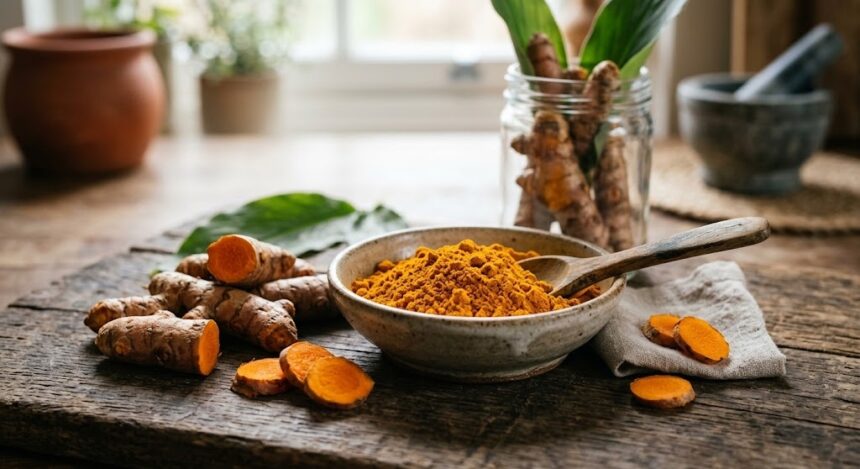
Turmeric health benefits are primarily attributed to curcumin, its main active compound, with the strongest research support for reducing inflammation and joint pain, particularly in osteoarthritis, where some studies show effects comparable to over-the-counter pain relievers. The major limitation is absorption — curcumin is poorly absorbed on its own, which is why effective doses in research typically use curcumin paired with piperine (black pepper extract) or a specialized bioavailable formulation, since plain turmeric powder or occasional culinary use likely provides far less curcumin than the amounts studied clinically.
This guide covers what turmeric and curcumin are actually proven to help with, why absorption is such a critical factor, effective doses, and who should be cautious about turmeric supplements.
What Is Turmeric and Curcumin?
Turmeric is a bright yellow-orange spice from the Curcuma longa plant’s root, widely used in South Asian and Middle Eastern cooking. Its health effects are attributed mainly to curcumin, a compound making up only about 2-5% of turmeric powder by weight, meaning typical culinary use provides a relatively small dose of the active compound compared to concentrated supplements or extracts used in most clinical research.
Does Turmeric Really Reduce Inflammation and Joint Pain?
Yes, this is turmeric’s best-supported benefit. Multiple clinical trials, particularly for osteoarthritis, have found that curcumin supplementation, taken consistently over several weeks, produces meaningful reductions in joint pain and stiffness, with some studies showing effects comparable to standard over-the-counter anti-inflammatory medications like ibuprofen, though generally with fewer digestive side effects. This makes curcumin one of the more evidence-backed natural options specifically for joint-related inflammation, though it works gradually rather than providing immediate pain relief the way medication typically does.
What Other Benefits Does Turmeric Have?
Antioxidant Effects
Curcumin has demonstrated antioxidant activity in research, helping neutralize free radicals and potentially reducing oxidative stress markers with regular, adequately dosed supplementation.
Digestive Comfort
Some research and traditional use support turmeric for mild digestive discomfort and bloating, though evidence is less robust than its inflammation research, and significant digestive conditions need proper medical evaluation rather than turmeric alone.
Skin Health
Turmeric’s anti-inflammatory and antioxidant properties have led to interest in both oral and topical use for skin conditions, with some preliminary evidence for conditions involving inflammation, though this research is less developed than turmeric’s joint pain evidence.
Mood and Cognitive Function
Some studies have explored curcumin’s potential effects on mood and cognitive function, with modest, preliminary evidence suggesting possible benefit as a complementary approach, though this isn’t established well enough to be considered a primary treatment for mood or cognitive conditions.
Cardiovascular Markers
Some research suggests curcumin may modestly improve certain cardiovascular risk markers, including endothelial function (blood vessel health), though evidence here is less extensive than for joint inflammation specifically.
Why Absorption Is Turmeric’s Biggest Limitation
Curcumin is poorly absorbed when consumed alone, largely metabolized and eliminated by the body before it can have a significant systemic effect. This is the single most important practical consideration for anyone seeking turmeric’s researched benefits: plain turmeric powder sprinkled on food, while flavorful and containing some beneficial compounds, delivers a fraction of the curcumin dose used in clinical trials showing meaningful results. This absorption problem is why most positive clinical research uses curcumin combined with piperine (black pepper extract), which can increase curcumin absorption significantly, or specialized formulations like liposomal curcumin or curcumin bound to phospholipids, which use different delivery mechanisms to improve how much reaches the bloodstream.
Turmeric and Blood Sugar
Some preliminary research suggests curcumin may modestly improve insulin sensitivity and certain blood sugar markers, potentially through its anti-inflammatory effects on metabolic tissue, though this evidence is less developed than turmeric’s joint-pain research. Curcumin isn’t established as a treatment for diabetes or prediabetes and shouldn’t replace prescribed medication or dietary management, but some clinicians consider it a reasonable, low-risk complementary addition for people already managing blood sugar through standard approaches, ideally discussed with a doctor given curcumin’s potential to have an additive effect with diabetes medication.
Turmeric vs. Curcumin: What’s the Difference?
These terms are often used interchangeably in marketing, but they’re not the same thing, and understanding the distinction matters for evaluating a product. Turmeric refers to the whole spice — the dried, ground root containing curcumin along with fiber, other plant compounds, and only a small percentage (2-5%) of curcumin by weight. Curcumin is the specific active compound within turmeric responsible for most of its researched anti-inflammatory and antioxidant effects. A product labeled “turmeric powder” or “turmeric extract” without a specified curcumin percentage may deliver a much smaller and less predictable active dose than a product labeled with a standardized curcumin content, such as “curcumin extract standardized to 95% curcuminoids.” Checking for this specific labeling is one of the most useful ways to judge whether a supplement is likely to deliver a research-relevant dose.
How Much Turmeric or Curcumin Should You Take?
Clinical trials showing benefit for joint pain and inflammation typically use standardized curcumin extracts providing 500-1,000mg of curcumin per day, often combined with piperine or a bioavailability-enhancing formulation, taken consistently for at least 4-8 weeks before assessing effect. This is a substantially higher and more concentrated dose than typical culinary turmeric use provides, which is why supplements are generally necessary to replicate the specific benefits shown in research, rather than relying on turmeric as a cooking spice alone.
Turmeric Supplements: What to Look For
Look for curcumin content specifically listed on the label, not just total turmeric extract weight, since curcumin percentage varies between products. Choose formulations combined with piperine (black pepper extract) or another bioavailability enhancer, such as a phospholipid or nanoparticle delivery system, since plain curcumin extract without an absorption enhancer is significantly less effective. Check for third-party testing or quality certification, since supplement quality and actual curcumin content can vary meaningfully between brands.
Who Should Be Cautious With Turmeric Supplements?
People taking blood-thinning medications, since curcumin has mild antiplatelet properties that could increase bleeding risk in combination. People with gallstones or bile duct obstruction, since turmeric can stimulate bile production and potentially worsen these conditions. People scheduled for surgery, since the blood-thinning effect means turmeric supplements are often recommended to be stopped a week or two beforehand. People taking certain medications metabolized by the liver, since curcumin, especially combined with piperine, can affect how some drugs are processed. Culinary turmeric in typical cooking amounts is very unlikely to cause issues for these groups, but concentrated supplement doses warrant medical guidance.
Frequently Asked Questions
Does turmeric really work for joint pain?
Yes, this is turmeric’s most well-supported benefit, with multiple clinical trials showing curcumin supplementation, taken at adequately absorbed doses, produces meaningful reductions in joint pain and stiffness, particularly in osteoarthritis.
Why do I need black pepper with turmeric?
Black pepper contains piperine, a compound shown in research to significantly increase curcumin absorption, since curcumin alone is poorly absorbed by the body; this is why most effective turmeric supplements combine the two rather than using curcumin extract alone.
How much turmeric should I take daily for inflammation?
Clinical studies showing benefit for inflammation and joint pain generally use 500-1,000mg of curcumin daily, combined with an absorption enhancer like piperine, taken consistently for several weeks — significantly more concentrated than typical culinary turmeric use.
Can turmeric replace ibuprofen or other anti-inflammatory medication?
Some research shows comparable effects for joint pain specifically, with potentially fewer digestive side effects, but turmeric works gradually rather than providing fast relief, and it shouldn’t replace prescribed medication without discussing the switch with a doctor, particularly for more significant pain or inflammation.
Is turmeric safe to take every day?
For most healthy people, turmeric and curcumin supplements are considered safe for regular use at standard doses, though people on blood thinners, with gallbladder issues, or scheduled for surgery should check with a doctor first.
Does turmeric tea have the same benefits as supplements?
Turmeric tea provides a much lower, less concentrated dose of curcumin than standardized supplements, so while it can be a pleasant, mildly beneficial addition to a diet, it’s unlikely to replicate the more significant effects seen in clinical research using concentrated, absorption-enhanced curcumin extracts.
Can turmeric stain teeth or cause any cosmetic side effects?
Turmeric’s strong yellow-orange pigment can temporarily stain teeth, tongue, and even skin with regular use, particularly from concentrated pastes or high-dose supplements, though this staining is generally temporary and resolves once use stops or with normal oral hygiene; it’s a cosmetic effect rather than a health concern.
Is turmeric good for skin when applied topically?
Turmeric is used topically in some traditional practices and has plausible anti-inflammatory and antioxidant properties that could theoretically support skin health, but it can also cause yellow staining and, in some people, skin irritation or an allergic reaction, so patch testing before wider use is reasonable, and it shouldn’t replace established skincare treatments for diagnosed conditions.
Related Reading
- Ginger health benefits: what the research actually shows
- Anti-inflammatory foods list: diet plan and joint pain
- Foods high in antioxidants
- Garlic health benefits: what the research actually shows
Informational only — not medical advice. See a doctor before taking turmeric or curcumin supplements if you’re on blood thinners, have gallbladder issues, or take other medications.