
The best diet for high cholesterol emphasizes soluble fiber, unsaturated fats from sources like olive oil and nuts, and fatty fish, while limiting saturated fat, trans fat, and excess refined carbohydrates. Research consistently shows this pattern, closely resembling a Mediterranean or DASH-style diet, can lower LDL (“bad”) cholesterol by 10-15% within weeks to a few months, with some specific strategies like adding soluble fiber or plant sterols producing measurable results in as little as 4-6 weeks.
This guide covers exactly which foods lower cholesterol, which to limit, a sample day of eating, and how diet compares to medication for managing cholesterol.
How Does Diet Affect Cholesterol?
Cholesterol in the blood comes from two sources: what the liver produces and what’s absorbed from food. Diet affects cholesterol primarily by influencing how much the liver produces and how efficiently the body clears LDL cholesterol from the bloodstream. Saturated and trans fats tend to raise LDL cholesterol, while soluble fiber, unsaturated fats, and certain plant compounds can lower LDL and, in some cases, raise protective HDL (“good”) cholesterol. This is why dietary changes are considered a first-line approach for managing mildly to moderately elevated cholesterol, often before or alongside medication.
Best Foods to Lower Cholesterol
Soluble Fiber
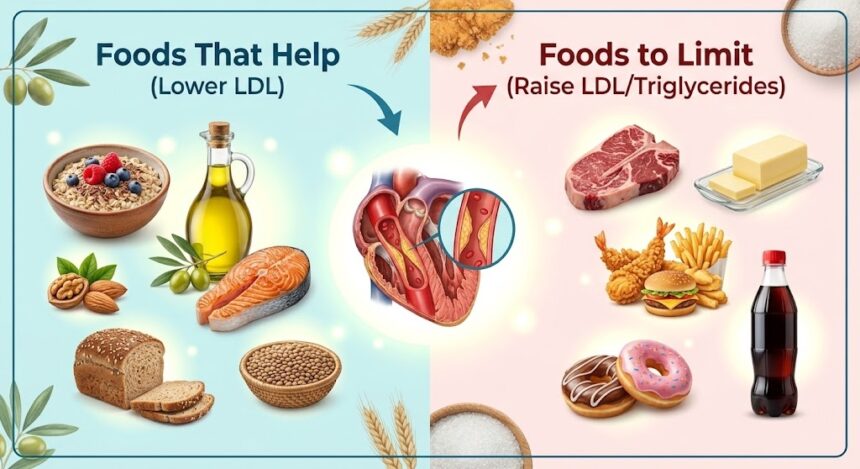
Oats, barley, beans, lentils, apples, and citrus fruits contain soluble fiber, which binds to cholesterol in the digestive tract and helps remove it from the body before it’s absorbed. Studies suggest 5-10 grams of soluble fiber daily, achievable through diet, can lower LDL cholesterol by about 5%, with higher intakes showing additional benefit.
Unsaturated Fats
Olive oil, avocados, and nuts (particularly walnuts and almonds) are rich in monounsaturated and polyunsaturated fats, which can help lower LDL cholesterol when they replace saturated fat in the diet, rather than simply being added on top of an already high-fat diet.
Fatty Fish
Salmon, mackerel, sardines, and other fatty fish provide omega-3 fatty acids, which primarily help lower triglycerides and support overall cardiovascular health, with a more modest direct effect on LDL cholesterol specifically.
Plant Sterols and Stanols
Found naturally in small amounts in vegetable oils, nuts, and seeds, and added to certain fortified foods like some margarines and orange juices, plant sterols and stanols block cholesterol absorption in the gut. Consuming about 2 grams per day, typically through fortified foods, has been shown to lower LDL cholesterol by roughly 6-10%.
Legumes
Beans, lentils, and chickpeas are rich in soluble fiber and plant protein, and regularly replacing some animal protein with legumes is associated with improved cholesterol profiles in research.
Nuts
A modest daily handful of nuts (about an ounce) is associated with improved LDL cholesterol and overall cardiovascular risk in multiple studies, likely due to their combination of unsaturated fat, fiber, and plant compounds.
Foods to Limit for High Cholesterol
Saturated Fat
Found in fatty cuts of red meat, butter, full-fat dairy, and many baked goods, saturated fat is one of the most consistently identified dietary drivers of elevated LDL cholesterol. Most guidelines recommend limiting saturated fat to less than 6-10% of total daily calories for people actively managing high cholesterol.
Trans Fat
Found in some fried foods, baked goods, and products containing partially hydrogenated oils, trans fat both raises LDL and lowers protective HDL cholesterol, making it one of the most harmful fat types for cardiovascular health. Trans fats have been banned or significantly restricted in many countries’ food supplies, but checking ingredient labels for “partially hydrogenated oil” remains a reasonable precaution.
Refined Carbohydrates and Added Sugar
While not cholesterol in the traditional sense, excess refined carbohydrates and added sugar can worsen triglycerides and overall lipid profiles, and are increasingly recognized as a meaningful contributor to unfavorable cholesterol patterns, particularly low HDL and high triglycerides.
Excess Alcohol
Moderate alcohol intake has a complicated relationship with cholesterol, but excessive intake reliably raises triglycerides and can negatively affect overall cardiovascular risk, regardless of any modest HDL-related associations sometimes cited with light drinking.
Understanding LDL, HDL, and Triglycerides
Diet advice for “cholesterol” is really addressing several distinct blood markers that behave somewhat differently. LDL cholesterol, often called “bad” cholesterol, is the primary target of most dietary cholesterol advice, since elevated LDL is most directly linked to plaque buildup in arteries and cardiovascular risk. HDL cholesterol, often called “good” cholesterol, helps transport cholesterol away from arteries back to the liver, and higher levels are generally considered protective, though HDL has proven harder to meaningfully raise through diet alone compared to lowering LDL. Triglycerides, a different type of blood fat, are particularly responsive to refined carbohydrate and added sugar intake, as well as alcohol, meaning someone can have excellent LDL numbers but still have elevated triglycerides if their diet is high in refined carbs, sugar, or alcohol. Understanding which specific marker is elevated on your lipid panel helps target dietary changes more precisely rather than applying generic advice.
Sample One-Day Cholesterol-Friendly Meal Plan
- Breakfast: Oatmeal topped with sliced apple, walnuts, and a drizzle of honey
- Lunch: Lentil soup with a side salad dressed in olive oil and lemon
- Snack: A small handful of almonds and a piece of fruit
- Dinner: Grilled salmon with steamed vegetables and a side of quinoa
- Evening Snack: Plain yogurt with berries
This structure emphasizes soluble fiber, unsaturated fats, and fatty fish at multiple points throughout the day, while naturally limiting saturated fat and refined carbohydrates.
Does the Mediterranean Diet Lower Cholesterol?
Yes, the Mediterranean diet, which emphasizes many of the same foods discussed here — olive oil, fish, legumes, whole grains, and limited red meat — has strong research support for improving cholesterol profiles and reducing cardiovascular risk overall. It’s frequently recommended by cardiologists and dietitians as a practical, sustainable framework for cholesterol management rather than a narrow list of individual foods to eat or avoid. For a full breakdown of what a week on this pattern looks like, see our Mediterranean diet meal plan.
How Long Does It Take for Diet to Lower Cholesterol?
Some dietary changes, particularly increasing soluble fiber and plant sterol intake, can produce measurable LDL reductions within 4-6 weeks. More comprehensive dietary shifts, like adopting a full Mediterranean-style eating pattern, typically show meaningful improvement in cholesterol panels within 6-12 weeks of consistent adherence, though individual results vary based on starting cholesterol levels, genetics, and how closely the diet is followed. Cholesterol is usually rechecked via blood test after about 6-12 weeks of dietary change to assess actual impact.
Can Diet Alone Lower Cholesterol Enough, or Is Medication Needed?
This depends heavily on individual factors, including how high cholesterol is, genetic factors (some people have a genetic condition called familial hypercholesterolemia that responds poorly to diet alone), and overall cardiovascular risk. For mildly elevated cholesterol, dietary and lifestyle changes are often tried first and can be sufficient for some people. For significantly elevated cholesterol or higher overall cardiovascular risk, medication (commonly statins) is often recommended alongside dietary changes, not as a replacement for them, since diet and medication work through different, complementary mechanisms. This is a decision that should be made with a doctor based on a full risk assessment, not diet alone.
Common Mistakes When Trying to Lower Cholesterol Through Diet
- Focusing only on avoiding dietary cholesterol (like eggs) while ignoring saturated fat, which has a more significant impact on blood cholesterol for most people
- Replacing saturated fat with refined carbohydrates and added sugar instead of unsaturated fats, which can worsen triglycerides and overall lipid patterns
- Expecting results without checking labels for hidden saturated and trans fat in packaged and restaurant foods
- Not incorporating enough soluble fiber specifically, since general “eating healthy” doesn’t always mean hitting an effective fiber target
- Stopping prescribed cholesterol medication based on dietary improvement without medical guidance
When to See a Doctor
See a doctor for a cholesterol panel if you haven’t had one recently, particularly if you have a family history of heart disease or high cholesterol, and follow up with your doctor before making major changes to any prescribed cholesterol medication based on dietary changes. Significant or persistent elevated cholesterol, especially with other risk factors like high blood pressure, diabetes, or smoking, generally needs a broader risk assessment and treatment plan beyond diet alone.
Frequently Asked Questions
What foods lower cholesterol the fastest?
Foods high in soluble fiber, like oats and beans, and foods containing plant sterols, such as fortified margarines, have shown measurable LDL reductions within 4-6 weeks in clinical research, making them among the faster-acting dietary interventions.
Are eggs bad for high cholesterol?
Current research suggests dietary cholesterol from eggs has a smaller effect on blood cholesterol for most people than previously believed, and saturated fat intake overall matters more. Most healthy people can include eggs in a cholesterol-conscious diet, though individual response can vary, and people with diabetes or existing heart disease may be advised to moderate intake.
Is the keto diet good for high cholesterol?
Evidence is mixed and highly individual. Some people see improved triglycerides and HDL on keto, but others experience a significant rise in LDL cholesterol, sometimes substantially, making it a diet that should be monitored closely with blood work if attempted by someone with existing high cholesterol.
Can you lower cholesterol without medication?
For some people with mildly elevated cholesterol, diet and lifestyle changes alone can bring levels into a healthier range. For others, particularly those with significantly elevated cholesterol or additional cardiovascular risk factors, medication alongside diet is often necessary for adequate control.
How much soluble fiber do I need to lower cholesterol?
Research generally supports 5-10 grams of soluble fiber per day for a measurable cholesterol-lowering effect, achievable through foods like oats, beans, lentils, and fruits such as apples and citrus.
Does coffee affect cholesterol?
Unfiltered coffee (like French press or Turkish coffee) contains compounds called diterpenes that can modestly raise LDL cholesterol, while filtered coffee removes most of these compounds and has a negligible effect on cholesterol for most people.
Does exercise help lower cholesterol alongside diet?
Yes, regular aerobic exercise is one of the most effective non-dietary strategies for improving cholesterol, particularly for raising HDL and lowering triglycerides, and combining exercise with dietary changes generally produces better results than either approach alone.
Can high cholesterol be genetic even with a healthy diet?
Yes, a condition called familial hypercholesterolemia causes significantly elevated cholesterol due to genetics, largely independent of diet, and people with this condition typically need medication alongside dietary changes, since diet alone usually isn’t sufficient to bring their levels into a healthy range.
Related Reading
- Mediterranean diet meal plan: a full week of meals and how to start
- DASH diet for high blood pressure
- Best fiber foods for digestion
- Foods high in antioxidants
Informational only — not medical advice. See a doctor for a cholesterol panel and personalized guidance, especially before adjusting any prescribed cholesterol medication.