
That tight, swollen feeling in your belly after a meal — or sometimes for no obvious reason at all — is one of the most common digestive complaints. Bloating usually isn’t dangerous, but it can still disrupt your day, your clothes, and your comfort. This guide covers what actually causes bloating, which remedies work, which foods tend to trigger it, and when the symptom is worth mentioning to a doctor.
What Is Bloating?
Bloating is the sensation of fullness, tightness, or pressure in the abdomen, often (but not always) paired with visible swelling. It happens when gas, fluid, or undigested food builds up in the stomach or intestines faster than your body can move it along. Occasional bloating after a big meal is normal. Bloating that shows up several times a week, lasts for hours, or comes with pain deserves a closer look at the cause.
Common Causes of Bloating
1. Swallowed Air
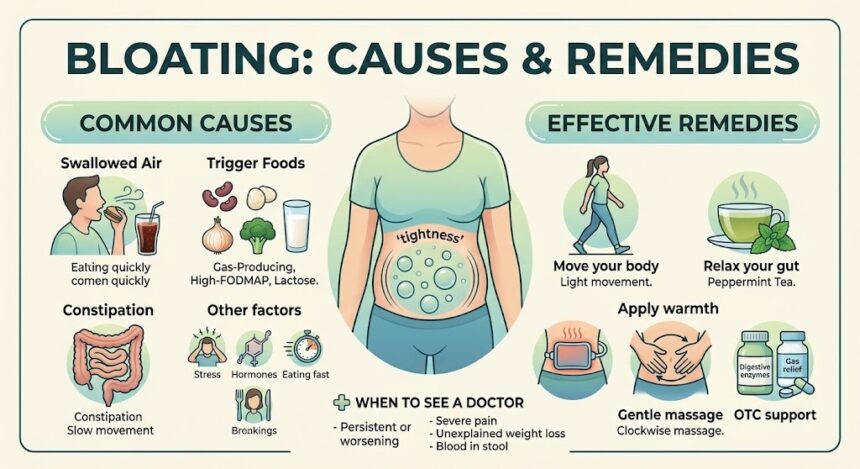
Eating too fast, talking while you eat, chewing gum, drinking through a straw, and sipping carbonated drinks all push extra air into your digestive tract. That air has to go somewhere, and it often shows up as bloating or burping within the hour.
2. Gas-Producing and High-FODMAP Foods
Certain carbohydrates resist digestion in the small intestine and travel to the colon, where gut bacteria ferment them and release gas as a byproduct. Beans, lentils, onions, garlic, cruciferous vegetables (broccoli, cabbage, cauliflower), wheat, and sugar alcohols found in “sugar-free” products are common culprits. If this sounds familiar, our Low FODMAP Diet Guide breaks down exactly which foods tend to cause the most trouble.
3. Constipation
The longer stool sits in the colon, the more time bacteria have to ferment what’s left behind, and the more gas and bloating build up. Chronic constipation is one of the most under-recognized bloating triggers. If this is a recurring issue, see our full Constipation Relief guide.
4. Food Intolerances
Lactose intolerance and non-celiac gluten sensitivity are two of the most common hidden causes of regular bloating. If dairy or bread-heavy meals reliably leave you uncomfortable, an intolerance — not a random digestive quirk — may be behind it.
5. Eating Too Much, Too Fast
Large meals stretch the stomach and slow gastric emptying, and eating quickly means you swallow more air along with your food. Both raise the odds of feeling bloated afterward.
6. IBS and Other Digestive Conditions
For people with irritable bowel syndrome, bloating is often a core symptom rather than an occasional nuisance. Conditions like SIBO (small intestinal bacterial overgrowth) and inflammatory bowel disease can also cause persistent bloating. If bloating comes with abdominal pain and irregular bowel habits, read our guide on IBS symptoms, triggers, and relief.
7. Hormonal Fluctuations
Many women notice bloating rises in the days before their period, driven by shifts in estrogen and progesterone that affect water retention and gut motility.
Fast Bloating Remedies That Actually Help
- Go for a short walk. Light movement helps gas move through the digestive tract faster than sitting or lying down.
- Try peppermint tea. Peppermint relaxes the muscles of the gut, which can ease trapped gas and cramping.
- Apply gentle warmth. A warm compress or heating pad on the abdomen can relax tense muscles and take the edge off discomfort.
- Try a gentle abdominal massage. Massaging in a clockwise direction, following the path of the colon, can help move trapped gas along.
- Loosen tight clothing. It sounds obvious, but tight waistbands add pressure exactly where you don’t want it.
- Consider over-the-counter options. Simethicone-based products can help break up gas bubbles for some people, and digestive enzyme or lactase supplements can help if a specific food intolerance is the trigger. Check with a pharmacist if you’re unsure which is appropriate for you.
Long-Term Ways to Prevent Bloating
- Slow down at meals. Eating slowly and chewing thoroughly reduces swallowed air and gives your stomach time to signal fullness.
- Eat smaller, more frequent meals instead of a few large ones.
- Track your triggers. Keep a simple food-and-symptom log for two to three weeks. Patterns usually show up faster than people expect.
- Add fiber gradually. Fiber is essential for regular digestion, but increasing intake too quickly can itself cause bloating. Build up slowly and drink enough water alongside it.
- Cut back on carbonated drinks and sugar alcohols (sorbitol, xylitol, mannitol) found in many “diet” and “sugar-free” products.
- Support a balanced gut microbiome. Fermented foods and, in some cases, probiotics can help — our Probiotics vs Prebiotics vs Postbiotics guide explains how each one supports digestion.
- Manage stress. The gut and nervous system are closely linked, and stress can slow digestion and heighten sensitivity to normal amounts of gas.
Foods That Commonly Trigger Bloating
Not everyone reacts to the same foods, but these are the most frequently reported triggers:
- Beans and lentils
- Onions and garlic
- Broccoli, cabbage, cauliflower, and Brussels sprouts
- Wheat and other gluten-containing grains (for sensitive individuals)
- Dairy products (for those with lactose intolerance)
- Carbonated drinks
- Sugar-free gum and candy containing sugar alcohols
- Fried and heavily processed foods
You don’t need to eliminate all of these permanently. Cooking beans and cruciferous vegetables thoroughly, soaking onions or garlic before eating them raw, and choosing smaller portions of known trigger foods can significantly cut down on symptoms without sacrificing nutrition.
When to See a Doctor
Occasional bloating after a heavy meal isn’t usually a concern. Talk to a healthcare professional if bloating is:
- Persistent or worsening over several weeks
- Accompanied by unexplained weight loss
- Paired with severe abdominal pain, vomiting, or blood in the stool
- Associated with a noticeable change in bowel habits that doesn’t resolve
- New and unusual for you, especially after age 50
These symptoms don’t automatically mean something serious, but they’re worth ruling out with a proper evaluation rather than managing at home indefinitely.
Frequently Asked Questions
Why am I bloated every day even when I eat healthy?
Daily bloating despite a healthy diet often points to a specific trigger rather than diet quality overall — common causes include a food intolerance, an imbalanced gut microbiome, chronic constipation, or an underlying condition like IBS or SIBO. A short elimination process or a conversation with a doctor can help narrow it down.
What relieves bloating fastest?
A short walk, peppermint tea, and gentle abdominal massage tend to bring the quickest relief for gas-related bloating. Warmth applied to the abdomen also helps relax tense muscles.
Can drinking water reduce bloating?
Yes. Adequate hydration supports regular bowel movements and helps fiber move through the digestive tract, both of which reduce bloating linked to constipation.
Is bloating a sign of a serious condition?
Usually not. Most bloating is linked to diet, eating habits, or temporary digestive changes. Persistent bloating with pain, weight loss, or changes in bowel habits should be checked by a doctor to rule out other causes.
The Bottom Line
Bloating is uncomfortable but, in most cases, manageable once you identify what’s behind it. Start with the basics — eating slower, tracking trigger foods, staying active, and managing constipation — and layer in targeted remedies like peppermint tea or a short walk when it strikes. If bloating is frequent, painful, or paired with other warning signs, it’s worth getting checked rather than living with it long-term.