

Everyone’s bathroom schedule looks a little different, but when bowel movements become infrequent, hard, or difficult to pass, it can throw off your whole day. Constipation relief usually starts with a few well-supported lifestyle and dietary changes — and for most people, it doesn’t require medication. This guide covers what counts as constipation, what typically causes it, natural remedies backed by reasonable evidence, and when it’s time to see a doctor.
What Counts as Constipation?
Bowel habits vary a lot between individuals — some people go a few times a day, others a few times a week, and both can be normal. Generally, constipation is defined as having fewer than three bowel movements per week, along with stools that are hard, dry, and difficult or painful to pass. Other common signs include straining, a feeling of incomplete emptying, or a sense that something is blocking your rectum. When these symptoms last 12 weeks or more, it’s typically classified as chronic constipation.
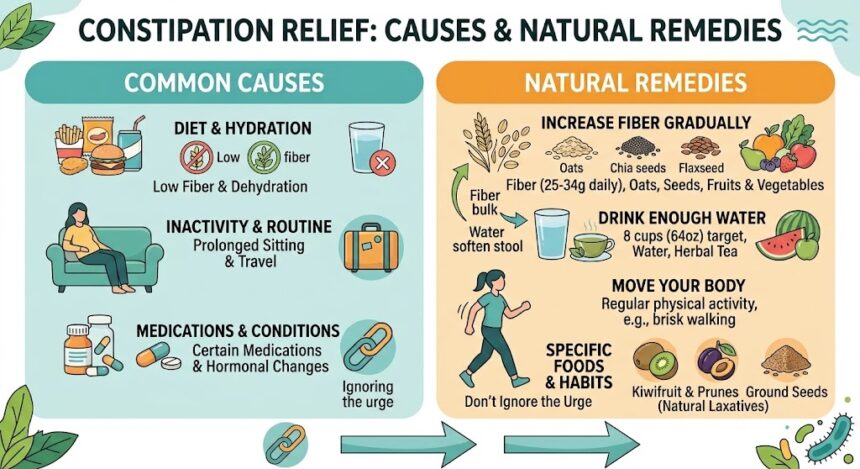
Common Causes of Constipation
Constipation usually results from one or more overlapping factors:
- Low fiber intake: Diets heavy in processed foods and low in fruits, vegetables, and whole grains slow things down. Most people fall well short of the recommended daily fiber intake.
- Dehydration: Without enough fluid, your colon absorbs more water from stool, making it harder and more difficult to pass.
- Sedentary habits: Physical activity helps stimulate normal gut motility; long periods of inactivity can slow it down.
- Ignoring the urge to go: Regularly holding in bowel movements — because of a busy schedule or limited bathroom access while traveling — can worsen constipation over time.
- Medications: Opioids, some antidepressants, iron supplements, and certain blood pressure medications commonly cause constipation as a side effect.
- Hormonal changes: Pregnancy and hypothyroidism are both associated with slower bowel movements.
- Underlying digestive conditions: Constipation is a common feature of IBS, and can also occur alongside other conditions.
- Routine or travel disruptions: Changes in schedule, sleep, or environment can throw off regularity, even without any other cause.
For many people, especially those with ongoing symptoms, no single clear cause is identified — this is sometimes called chronic idiopathic constipation.
Natural Remedies for Constipation Relief
Increase Fiber Gradually
Fiber adds bulk and softness to stool, making it easier to pass. Most adults benefit from working toward roughly 25–34 grams of fiber daily, though surveys suggest only a small percentage of people actually reach that amount. Good sources include oats, chia seeds, ground flaxseed, beans, fruits with skin on, and vegetables. Increase intake gradually rather than all at once — a sudden jump can cause bloating and gas, particularly if you’re not used to a high-fiber diet.
Drink Enough Water
Aim for consistent fluid intake throughout the day — a common general target is around 8 cups (64 ounces), though needs vary by body size and activity level. Water, herbal tea, and water-rich foods all count toward this. Adding fiber without enough fluid can actually make constipation worse, since fiber needs water to do its job effectively.
Move Your Body
Physical activity helps stimulate the muscles of your digestive tract. Even a brisk 30-minute walk most days can meaningfully improve bowel regularity. If you’re mostly sedentary, short walks after meals are a simple, low-effort way to start.
Try Specific Constipation-Friendly Foods
Some foods have more direct evidence behind them for easing constipation:
- Kiwifruit: Clinical research has found kiwifruit notably effective for chronic constipation, likely due to a combination of fiber and natural enzymes.
- Prunes and dates: Both contain natural sugar alcohols (like sorbitol) that draw water into the intestine and have a mild laxative effect.
- Chia seeds and ground flaxseed: High in fiber and can be easily added to oatmeal, smoothies, or yogurt.
- Warm liquids: Warm water, tea, or broth can help relax the digestive tract and add moisture to stool.
- Fermented foods: Foods with live probiotic cultures, like yogurt and sauerkraut, have shown some benefit for stool consistency and frequency in research. See our guide on probiotics vs prebiotics vs postbiotics for more on how these work.
Don’t Ignore the Urge
When you feel the urge to have a bowel movement, try to use the bathroom soon rather than delaying. Regularly holding it in can cause stool to sit longer, harden further, and make future bowel movements more difficult.
Consider a Fiber Supplement If Diet Isn’t Enough
If dietary changes alone aren’t providing relief, over-the-counter fiber supplements — like psyllium, methylcellulose, or plant-based prebiotic fiber — can help bulk and soften stool. These are generally well tolerated, though mild cramping is possible when starting out.
Foods and Habits That Can Worsen Constipation
- Diets heavy in ultra-processed foods and low in fiber
- Excess alcohol, which contributes to dehydration
- Sugar alcohols in some “sugar-free” products can affect people differently — helpful in small amounts for some, disruptive in large amounts for others
- Sudden, large increases in fiber supplements without adequate water intake
- Prolonged inactivity or extended periods of sitting
Over-the-Counter Laxatives: What to Know
If lifestyle changes aren’t providing enough relief, over-the-counter laxatives are an option, but they’re best used thoughtfully:
- Bulk-forming laxatives (like psyllium) work similarly to fiber supplements and are generally the gentlest option.
- Osmotic laxatives (like polyethylene glycol) draw water into the intestine to soften stool.
- Stimulant laxatives (like senna) trigger intestinal contractions and tend to work faster, but aren’t intended for frequent, long-term use.
Laxatives can interfere with how your body absorbs other medications, and overuse — particularly of stimulant laxatives — can potentially affect your bowel’s natural function over time. If you find yourself relying on laxatives regularly, it’s worth discussing with a doctor rather than continuing indefinitely on your own.
When to See a Doctor
Occasional constipation is common and usually resolves with the remedies above. See a doctor if you experience:
- Constipation lasting more than three weeks despite lifestyle changes
- Rectal bleeding or blood in your stool
- Severe abdominal pain
- Unexplained weight loss
- Inability to pass gas, or vomiting alongside constipation
- A sudden, significant change in your normal bowel habits, especially if you’re over 50
These symptoms can occasionally point to something more significant that needs proper evaluation, so they shouldn’t be managed with home remedies alone. A doctor can also check whether an underlying condition like IBS or a medication side effect is contributing to ongoing symptoms.
Frequently Asked Questions
How much fiber do I need for constipation relief?
Most adults benefit from around 25–34 grams of fiber daily, increased gradually along with adequate water intake. Most people currently consume far less than this amount.
Can dehydration alone cause constipation?
Yes. Even mild, regular dehydration can lead to harder stool, since your colon pulls extra water from stool when your body’s overall fluid levels are low.
Are probiotics helpful for constipation?
Some research suggests certain probiotic strains can improve stool frequency and consistency, though effects vary by strain and individual. They’re a reasonable complementary approach alongside fiber and hydration, not a standalone fix.
How long can I safely use laxatives?
Occasional use of over-the-counter laxatives is generally considered safe, but regular, long-term use — especially of stimulant laxatives — is best discussed with a doctor, since it can affect your bowel’s natural function and mask an underlying issue.
Is constipation a sign of something serious?
Most constipation is related to diet, hydration, and activity level rather than a serious underlying condition. That said, new or worsening constipation accompanied by red-flag symptoms like bleeding, unexplained weight loss, or severe pain warrants medical evaluation.
Final Thoughts
For most people, constipation responds well to a combination of more fiber, more water, more movement, and not delaying bathroom trips when the urge hits. These changes take a little consistency to show results, but they address the root causes for the majority of cases. If symptoms persist despite reasonable effort, or if you notice any warning signs, a doctor visit is a more productive next step than escalating home remedies indefinitely.