
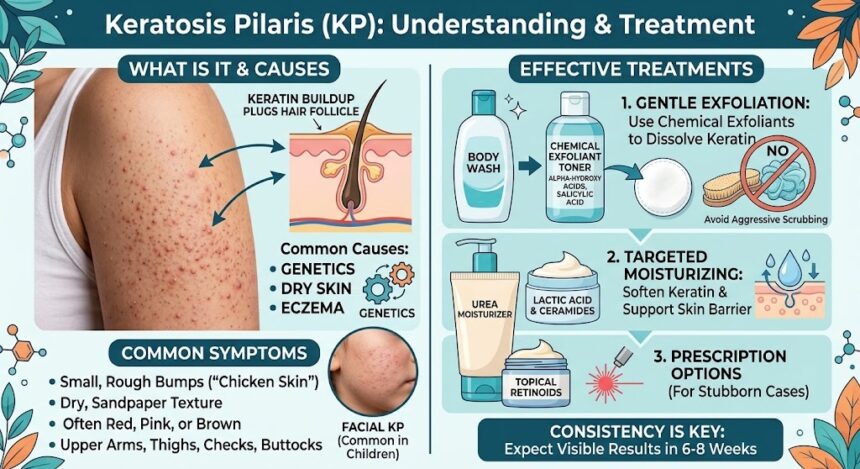
Keratosis pilaris is a common, harmless skin condition that causes small, rough bumps — often described as looking like permanent goosebumps or “chicken skin” — usually on the upper arms, thighs, cheeks, or buttocks. It happens when keratin, a protein that protects skin, builds up and plugs hair follicles. It affects an estimated 40-50% of adults and up to 50-80% of adolescents at some point, is not contagious, and isn’t a sign of poor hygiene.
This guide covers what causes keratosis pilaris, how to tell it apart from acne or other bumps, which treatments actually help, and what to realistically expect in terms of it going away.
What Is Keratosis Pilaris?
Keratosis pilaris (sometimes shortened to “KP”) is a benign, extremely common skin condition where small, rough, skin-colored, red, or brown bumps form on the skin, usually in patches. Each bump is a hair follicle plugged with a buildup of keratin, the same tough protein that makes up the outer layer of skin, hair, and nails. The condition is sometimes nicknamed “chicken skin” because of its bumpy, plucked-poultry-skin texture.
KP is not an infection, it is not contagious, and it doesn’t indicate anything is wrong internally. It’s considered a variation of normal skin, similar to how some people have naturally drier or oilier skin than others.
What Causes Keratosis Pilaris?
Keratosis pilaris happens when keratin builds up and forms a hard plug that blocks the opening of a hair follicle, creating the characteristic small bump. Why this keratin buildup happens isn’t fully understood, but several factors are consistently linked to it:
- Genetics: KP often runs in families, and having a parent with it significantly raises the likelihood of developing it.
- Dry skin: KP is frequently worse in winter and in dry climates, and better in humid weather, since dry skin makes keratin buildup more likely.
- Associated skin conditions: KP is more common in people with eczema (atopic dermatitis), ichthyosis vulgaris, and general dry skin conditions.
- Age: It’s most common and often most visible in adolescents and tends to improve gradually with age, though it can persist into adulthood.
- Hormonal changes: Some people notice it becomes more prominent during puberty, pregnancy, or times of hormonal shift.
What Does Keratosis Pilaris Look Like?
KP typically appears as small, rough, sandpaper-like bumps, usually skin-colored, but sometimes red, pink, or brownish depending on skin tone. The bumps cluster in patches rather than appearing as isolated spots, most commonly on the:
- Upper arms (the most common location)
- Thighs
- Cheeks (more common in children)
- Buttocks
- Less commonly, the forearms or upper back
The surrounding skin is often dry, and the area may look slightly red or irritated, especially after shaving or friction from clothing.
Is Keratosis Pilaris the Same as Acne?
No. Although both involve clogged follicles, keratosis pilaris and acne are different conditions with different causes. Acne involves oil (sebum), bacteria, and inflammation, and often produces true pimples — whiteheads, blackheads, or inflamed pustules. Keratosis pilaris involves a dry keratin plug rather than oil and bacteria, feels rough and sandpaper-like rather than producing pus-filled bumps, and doesn’t respond to standard acne treatments in the same way. The two conditions can occasionally occur in the same person but require different approaches.
Is Keratosis Pilaris Caused by a Vitamin Deficiency?
There’s no strong evidence that keratosis pilaris is caused by a specific vitamin deficiency. It has occasionally been discussed in connection with vitamin A, since vitamin A plays a role in skin cell turnover, but current evidence doesn’t support vitamin deficiency as a primary cause for most people. KP is now understood mainly as a genetic and skin-barrier-related condition rather than a nutritional one. If you suspect an actual deficiency is affecting your skin more broadly, that’s worth discussing with a doctor rather than self-treating with high-dose supplements.
Is Keratosis Pilaris Caused by Gluten or Diet?
There’s no solid scientific evidence linking keratosis pilaris to gluten specifically. Anecdotal reports connecting KP improvement to gluten-free diets exist online, but controlled research supporting this link is lacking, and KP is primarily explained by genetics and skin barrier factors rather than diet. General skin-supportive habits — adequate hydration, a varied diet, and managing any diagnosed food sensitivities — support overall skin health, but eliminating gluten specifically isn’t an evidence-based treatment for KP unless you have a separate diagnosed gluten-related condition.
How to Get Rid of Keratosis Pilaris
There’s no permanent cure for keratosis pilaris, but consistent treatment can significantly reduce its appearance and texture for most people. The most effective approach combines gentle exfoliation with targeted moisturizing, used consistently over weeks to months rather than expecting a fast fix.
Exfoliation
Regular, gentle exfoliation helps clear the keratin plugs blocking hair follicles. Two main approaches work:
- Chemical exfoliants: Products containing alpha-hydroxy acids (lactic acid, glycolic acid) or salicylic acid (a beta-hydroxy acid) help dissolve the keratin buildup and are generally considered more effective and gentler than physical scrubbing for KP specifically.
- Physical exfoliation: A soft washcloth or gentle body scrub can help, but aggressive scrubbing can irritate the skin and worsen redness, so gentler is better.
Moisturizing
Since dry skin worsens KP, consistent moisturizing is essential, not optional. The most effective moisturizers for KP typically contain:
- Urea, which softens keratin and hydrates
- Lactic acid, which both exfoliates and moisturizes
- Ammonium lactate, a common prescription-strength option
- Ceramides, which support the skin’s natural barrier
Applying moisturizer immediately after showering, while skin is still damp, helps lock in hydration more effectively than applying to fully dry skin.
Prescription Options
For more stubborn or inflamed KP, a dermatologist may recommend:
- Topical retinoids, which speed up skin cell turnover and can reduce plugging over time, though they can also cause initial dryness or irritation
- Stronger prescription-strength lactic acid or urea creams
- In select cases, laser treatment for redness or texture that hasn’t responded to topical treatment
What Doesn’t Help (and Can Make It Worse)
- Aggressive scrubbing or loofahs, which can irritate skin and worsen redness without clearing the underlying plugs any faster
- Popping or picking at the bumps, which can cause irritation, scarring, or infection without actually resolving the KP
- Very hot showers, which strip natural oils and can worsen dryness
- Skipping moisturizer after exfoliating, which leaves skin more prone to irritation
Does Keratosis Pilaris Go Away on Its Own?
For many people, keratosis pilaris gradually improves with age and may become far less noticeable by their 30s, though the exact timeline varies widely between individuals. It isn’t guaranteed to disappear completely, and some adults have mild KP indefinitely. Consistent skincare tends to speed up and improve the degree of visible improvement, even if it doesn’t eliminate the underlying tendency, since the genetic predisposition to KP doesn’t fully go away.
Keratosis Pilaris on Different Body Areas
Keratosis Pilaris on Arms
The most common presentation — rough, small bumps on the back of the upper arms, sometimes extending to the forearms. Regular moisturizing and gentle exfoliation are usually the first line of treatment here.
Keratosis Pilaris on Thighs
Common and often more visible due to friction from tight clothing. The same exfoliation and moisturizing approach applies, and looser clothing can reduce friction-related irritation.
Keratosis Pilaris on Face (Cheeks)
More common in young children, where it can appear as rough, sometimes red patches on the cheeks. Because facial skin is more sensitive, gentler exfoliants and fragrance-free moisturizers are recommended, and a pediatrician or dermatologist should guide treatment in children.
Keratosis Pilaris on Buttocks
Common but less visible; the same core treatment principles apply, though breathable fabric and reduced friction from tight clothing can help.
Keratosis Pilaris vs. Folliculitis
These two conditions are commonly confused because both cause small bumps around hair follicles, but they have different causes and need different treatment. Keratosis pilaris is caused by a keratin plug and feels dry and rough, tends to appear in symmetrical patches on both arms or both thighs, and isn’t typically tender to the touch. Folliculitis is caused by an infected or inflamed hair follicle, often from bacteria, and tends to look more like small pimples or pustules, can be tender, itchy, or warm to the touch, and may appear more randomly rather than in a symmetrical pattern. If bumps are painful, filled with visible pus, or spreading quickly, folliculitis is more likely than KP, and it’s worth having a doctor confirm which condition you’re dealing with, since folliculitis sometimes needs an antibacterial or antifungal treatment rather than exfoliation.
Common Myths About Keratosis Pilaris
A few misconceptions about KP are worth addressing directly, since they can lead people toward treatments that don’t help or that make symptoms worse. It is not caused by poor hygiene, and no amount of extra washing or scrubbing will resolve it — in fact, over-washing or harsh scrubbing tends to worsen irritation. It is not a food allergy or intolerance for most people, despite anecdotal claims linking it to specific foods. It is not the same as acne, and acne treatments like benzoyl peroxide aren’t typically effective for KP since the underlying mechanism is different. And it is not something you did wrong or could have prevented — the genetic and skin-barrier factors behind KP aren’t within someone’s control.
A Simple KP Skincare Routine
For most people, a consistent routine matters more than any single “miracle” product:
- Use a gentle, fragrance-free cleanser rather than harsh soap, which can strip moisture and worsen dryness
- Exfoliate 2-3 times per week with a chemical exfoliant (lactic, glycolic, or salicylic acid), not daily, to avoid irritation
- Moisturize daily with a urea- or lactic-acid-based cream, applied to damp skin right after showering
- Avoid long, very hot showers, which dry out skin
- Give it time — most people need 6-8 weeks of consistent use before seeing a clear improvement in texture
When to See a Dermatologist
Most keratosis pilaris doesn’t require medical treatment, but it’s worth seeing a dermatologist if the bumps become significantly inflamed, painful, or infected-looking, over-the-counter exfoliants and moisturizers haven’t helped after 2-3 months of consistent use, the bumps are affecting your confidence or daily life significantly, or you’re unsure whether what you’re seeing is actually keratosis pilaris rather than another condition, such as folliculitis or acne, which can look similar but need different treatment.
Frequently Asked Questions
What is the fastest way to get rid of keratosis pilaris?
There’s no truly fast fix, but consistent use of a chemical exfoliant (lactic or salicylic acid) combined with a urea-based moisturizer, applied daily, typically shows visible improvement within 6-8 weeks. Prescription-strength options from a dermatologist can speed this up for stubborn cases.
Can you pop keratosis pilaris bumps?
No, popping or picking at KP bumps doesn’t clear the underlying keratin plug and can cause irritation, scarring, or infection. Exfoliation and moisturizing are the effective ways to reduce the bumps, not manual extraction.
Is keratosis pilaris genetic?
Yes, keratosis pilaris often runs in families, and having a parent with the condition significantly increases the likelihood of developing it. It’s considered a largely genetic, inherited variation in how skin forms keratin plugs around hair follicles.
Does moisturizer help keratosis pilaris?
Yes, consistent moisturizing, especially with ingredients like urea, lactic acid, or ceramides, is one of the most effective parts of managing KP, since dry skin makes the keratin plugs more pronounced and visible.
Is keratosis pilaris contagious?
No, keratosis pilaris is not contagious. It cannot be spread through skin contact, sharing towels, or any other form of contact, since it’s a genetic and skin-barrier-related condition, not an infection.
Does keratosis pilaris ever fully go away?
For many people it fades noticeably with age, particularly by their 30s, but it doesn’t always disappear completely, and some adults have mild KP throughout their life. Consistent treatment improves its appearance even when the underlying tendency remains.
What deficiency causes keratosis pilaris?
Current evidence doesn’t support a specific vitamin or nutrient deficiency as the cause of keratosis pilaris for most people. It’s primarily linked to genetics and skin barrier function rather than diet or nutritional status.
Is keratosis pilaris the same as chicken skin?
Yes, “chicken skin” is simply a common nickname for keratosis pilaris, describing the small, rough, bumpy texture it gives the skin, which resembles a plucked chicken’s skin.
Related Reading
- Dry skin causes and remedies: home care guide
- Acne causes and treatment: clear skin guide
- Seborrheic dermatitis: causes, symptoms, and treatment
- Gut-skin connection: how digestion affects your skin
Informational only — not a diagnosis. See a dermatologist for a proper evaluation, especially if bumps are painful, inflamed, or not improving with consistent home treatment.