
Athlete’s foot (tinea pedis) is a common fungal skin infection that causes itching, burning, redness, and peeling, most often between the toes. It’s treated with an over-the-counter antifungal cream, spray, or powder applied consistently for two to four weeks, even after symptoms improve, since stopping early is the most common reason it comes back. It’s caused by fungi that thrive in warm, moist environments like locker rooms, showers, and sweaty shoes, and it’s contagious through direct contact or contaminated surfaces.
This guide covers what causes athlete’s foot, how to treat it effectively, how long it takes to clear up, how to tell it apart from other foot conditions, and how to stop it from coming back once it’s cleared.
What Is Athlete’s Foot?
Athlete’s foot is a fungal infection of the skin on the feet, caused by dermatophytes — a group of fungi that feed on keratin, the protein found in skin, hair, and nails. Despite the name, it isn’t limited to athletes; anyone whose feet are regularly warm, damp, or enclosed in shoes for long periods is at risk. It’s one of the most common fungal skin infections worldwide, and mild cases are very common.
What Causes Athlete’s Foot?
Athlete’s foot is caused by direct contact with dermatophyte fungi, which thrive and spread in warm, moist environments. Common exposure sources include:
- Walking barefoot in public showers, locker rooms, gyms, or pool areas
- Sharing shoes, socks, or towels with someone who has an active infection
- Wearing damp, sweaty socks or non-breathable shoes for extended periods
- Having consistently sweaty feet (hyperhidrosis), which creates an ideal environment for fungal growth
- A cut or crack in the skin, which gives fungi an easier entry point
What Are the Symptoms of Athlete’s Foot?
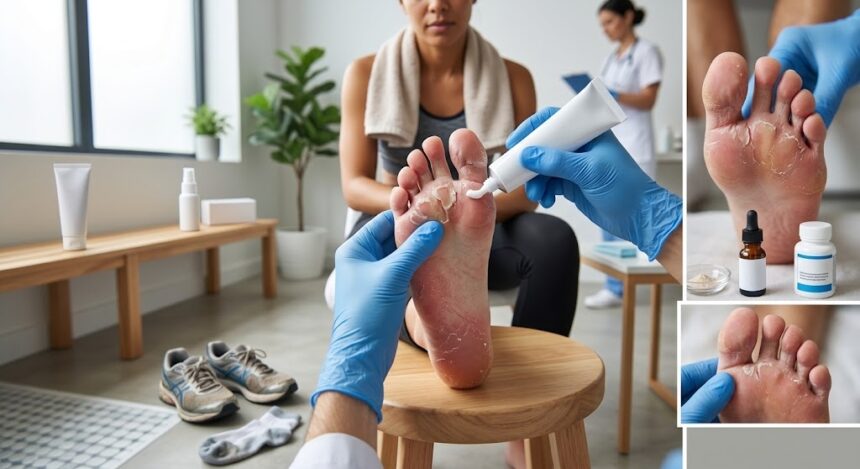
The most common symptoms include itching, burning, or stinging, especially between the toes, and cracked, peeling, or flaking skin, often starting between the fourth and fifth toes. Additional symptoms can include redness and inflammation, a persistent, sometimes strong odor, small fluid-filled blisters in some cases, and dry, scaly skin on the soles or sides of the feet in a moccasin-like pattern. Symptoms can range from mild itchiness to painful cracking and blistering, depending on severity and how long the infection has been present.
Is Athlete’s Foot Contagious?
Yes. Athlete’s foot spreads through direct skin contact and through contact with contaminated surfaces such as shower floors, locker room mats, shared towels, and shoes. The fungus can survive on surfaces for a period of time, which is why communal wet areas — gyms, pools, and locker rooms — are common transmission points. It can also spread to other parts of your own body, including the hands and nails, if you touch the infected area and then touch elsewhere without washing your hands.
How to Treat Athlete’s Foot
Most mild-to-moderate cases of athlete’s foot respond well to over-the-counter antifungal treatment, applied consistently.
Over-the-Counter Antifungal Treatments
The most common and effective active ingredients include:
- Terbinafine, often considered one of the fastest-acting options
- Clotrimazole
- Miconazole
- Tolnaftate
These come as creams, sprays, gels, or powders, and should be applied to clean, dry feet as directed on the packaging — typically once or twice daily for two to four weeks. Continuing treatment for the full recommended duration, even after the itching and redness disappear, is essential, since the fungus can still be present under the skin surface after visible symptoms clear.
Keeping Feet Clean and Dry
Alongside antifungal treatment, keeping the feet dry supports faster healing, since fungus thrives in moisture. Dry thoroughly between the toes after washing or showering, change socks daily, or more often if feet sweat heavily, and alternate shoes to let them fully dry out between wears.
When Prescription Treatment Is Needed
If over-the-counter treatment hasn’t improved symptoms after two to four weeks, or the infection is severe, widespread, or affecting the toenails, a doctor may prescribe a stronger topical antifungal, an oral antifungal medication for more resistant or extensive infections, or a topical steroid combined with antifungal treatment if there’s significant inflammation, used cautiously and only under medical guidance.
How Long Does Athlete’s Foot Take to Clear Up?
With consistent over-the-counter treatment, most mild cases improve within one to two weeks and fully clear within two to four weeks. More stubborn or severe infections, or those involving the toenails, can take significantly longer — sometimes several months, particularly if the nails are involved, since nail infections are slower to treat than skin infections. Stopping treatment as soon as symptoms improve, rather than completing the full course, is one of the most common reasons athlete’s foot returns shortly after seeming to clear up.
Types of Athlete’s Foot
Athlete’s foot doesn’t always look the same, and recognizing which pattern you have can help set expectations for treatment.
- Interdigital (toe web) type: The most common form, causing itching, cracking, and peeling between the toes, especially the fourth and fifth toes. Usually responds well to standard topical antifungal treatment.
- Moccasin type: Causes chronic dryness, scaling, and thickening across the sole and sides of the foot, in a pattern resembling a moccasin shoe. This type can be more stubborn and sometimes needs longer treatment or a combination of topical and oral antifungals.
- Vesicular type: Causes sudden, itchy fluid-filled blisters, often on the sole. This form can sometimes involve a secondary bacterial infection and may need medical evaluation if blisters are widespread or painful.
Do Home Remedies Work for Athlete’s Foot?
Some home remedies are commonly suggested online, but their evidence varies considerably. Tea tree oil has some limited evidence supporting antifungal activity, but it’s inconsistent and generally weaker than standard antifungal medication, and it can irritate sensitive skin at higher concentrations. Baking soda foot soaks may help with odor and moisture but aren’t a substitute for antifungal treatment. Garlic and other kitchen remedies lack meaningful clinical evidence for treating active fungal infections. In general, over-the-counter antifungal medication remains the most reliably effective option, and home remedies are best thought of as optional additions rather than replacements.
How to Prevent Athlete’s Foot From Coming Back
- Wear sandals or flip-flops in public showers, locker rooms, and pool areas
- Dry your feet thoroughly, especially between the toes, after washing or swimming
- Choose moisture-wicking socks and change them daily, or more often if your feet sweat
- Alternate between at least two pairs of shoes so each pair can fully dry out
- Use an antifungal powder or spray in shoes if you’re prone to recurrent infections
- Avoid sharing shoes, socks, or towels with others
- Wash socks and bath mats in hot water regularly
Who Is Most at Risk for Athlete’s Foot?
Certain habits and circumstances raise the likelihood of developing athlete’s foot. People who frequently use communal showers, locker rooms, or pools, such as athletes, gym members, and swimmers, are at higher risk given repeated exposure to damp shared surfaces. People with naturally sweaty feet or who wear closed, non-breathable shoes for long stretches create a warmer, moister environment that fungi prefer. People with diabetes or a weakened immune system are more prone to fungal infections generally and to complications from them, making prompt treatment more important. People who’ve had athlete’s foot before are also more likely to get it again, since the skin barrier in previously infected areas can remain slightly more vulnerable.
Can Athlete’s Foot Spread to Other Body Parts?
Yes. Touching the infected area and then touching other body parts, especially the hands or groin, can spread the fungus, sometimes causing a related infection called tinea cruris (jock itch) or a hand infection called tinea manuum. It can also spread to the toenails, causing a fungal nail infection that’s typically more stubborn to treat than a skin infection. Washing your hands after touching affected skin and avoiding scratching helps limit this spread.
Athlete’s Foot vs. Dry Skin: How to Tell the Difference
Dry skin on the feet and athlete’s foot can look similar, but a few distinguishing signs help separate them. Athlete’s foot typically involves itching or burning, especially between the toes, an odor, and skin that peels in a moist or macerated (softened, whitish) way between the toes. Dry skin, without a fungal component, tends to affect the heels and soles more broadly, doesn’t usually itch as intensely, and lacks the between-the-toe moisture and odor pattern typical of fungal infection. If over-the-counter moisturizer alone isn’t improving persistent peeling or itching, it’s worth trying an antifungal treatment or seeing a doctor to confirm which condition you’re dealing with.
When to See a Doctor
See a doctor if symptoms don’t improve after two to four weeks of consistent over-the-counter antifungal treatment, the infection is spreading, very painful, or produces significant swelling, you have diabetes or a compromised immune system, since foot infections carry higher risk of complications in these cases, there are signs of a bacterial infection on top of the fungal one, such as increasing redness, warmth, swelling, or pus, or the toenails appear thickened, discolored, or crumbly, suggesting a fungal nail infection that needs different treatment.
Frequently Asked Questions
What kills athlete’s foot fastest?
Consistent daily use of an over-the-counter antifungal containing terbinafine tends to clear mild athlete’s foot fastest, often within one to two weeks, though the full course should still be completed to prevent recurrence.
Can athlete’s foot go away on its own without treatment?
It’s unlikely to fully resolve without antifungal treatment, and mild cases can persist or worsen, especially if feet stay warm and moist. Treatment is inexpensive, accessible, and significantly speeds recovery compared to waiting it out.
Is athlete’s foot the same as toenail fungus?
No, though they’re related and caused by similar fungi. Athlete’s foot affects the skin, while toenail fungus (onychomycosis) affects the nail itself and typically requires longer, sometimes different treatment.
How do you know if you have athlete’s foot or just dry feet?
Athlete’s foot usually involves itching or burning, a distinct odor, and moist, whitish peeling specifically between the toes, while plain dry skin tends to affect the broader sole and heel without the same itch-odor pattern.
Can you get athlete’s foot from someone else?
Yes, athlete’s foot is contagious and spreads through direct skin contact or contact with contaminated surfaces like shower floors, shared towels, or shoes.
Does apple cider vinegar cure athlete’s foot?
There’s no strong clinical evidence that apple cider vinegar reliably cures athlete’s foot, and it can irritate already-inflamed skin. Over-the-counter antifungal treatments have far stronger evidence behind them.
Why does my athlete’s foot keep coming back?
Recurrence is usually caused by stopping treatment as soon as symptoms improve rather than completing the full recommended course, not re-treating shoes and socks that still harbor fungal spores, or ongoing exposure to warm, damp environments without preventive habits like breathable shoes and thorough drying between the toes.
Related Reading
- Dry skin causes and remedies: home care guide
- Keratosis pilaris treatment
- Nail fungus treatment: causes, symptoms, and how long it takes to clear
Informational only — not a diagnosis. See a doctor if symptoms don’t improve with treatment, you have diabetes, or you notice signs of a spreading infection.