
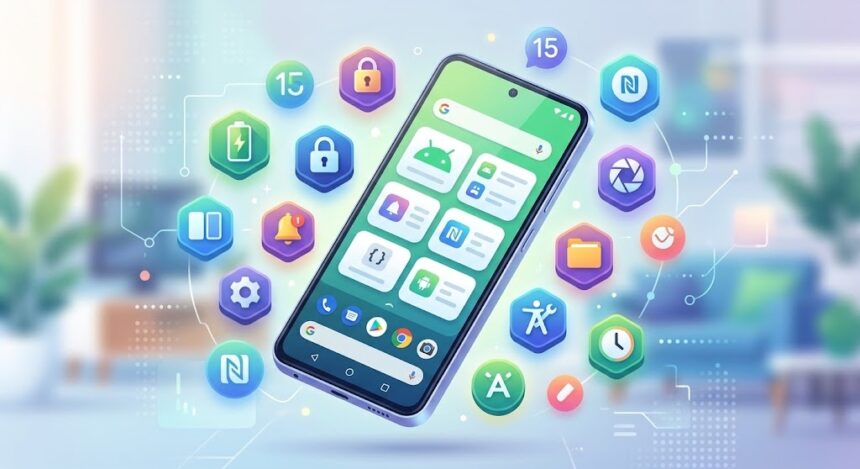
Android phone tips can turn an ordinary phone into a faster, safer and more useful device, and most of them are already built into your settings. Many people use only a fraction of what their phone can do. This guide covers 15 useful Android features, including Android hidden features, Android battery saving tips, Android privacy settings and ways to speed up your Android phone, with simple steps for each.
Quick Answer: What Are the Best Android Phone Tips?
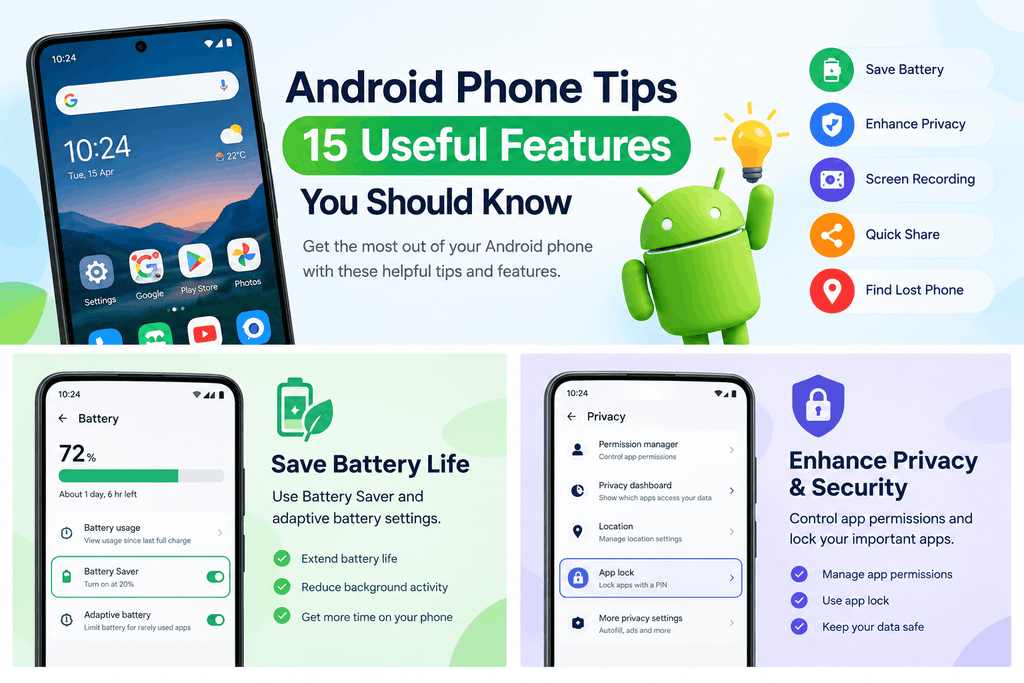
The most useful Android phone tips are: customize Quick Settings, use Circle to Search, turn on Adaptive Battery, review the Privacy Dashboard, use Private Space for sensitive apps, enable Find Hub to locate a lost phone, switch to passkeys, and clear unused apps and cache regularly. Menu names vary slightly between Google Pixel, Samsung, Xiaomi, OnePlus and other brands, but the features below exist on most modern Android phones.
Table of Contents
- Customize Quick Settings
- Use Circle to Search
- Share Files with Quick Share
- Save Battery with Adaptive Battery and Battery Saver
- Check the Privacy Dashboard
- Hide Apps in Private Space
- Pin a Screen Before Handing Over Your Phone
- Use Split Screen and Multitasking
- Recover Deleted Notifications
- Turn On Live Caption
- Record Your Screen
- Locate a Lost Phone with Find Hub
- Build Healthy Habits with Digital Wellbeing
- Switch to Passkeys and Password Manager
- Clean Storage and Speed Up Your Phone
1. Customize Quick Settings
Swipe down twice from the top of the screen to open Quick Settings. Tap the pencil or edit icon to add, remove and reorder tiles such as Wi-Fi, Bluetooth, flashlight, screen recorder, QR scanner and battery saver. Put the toggles you use daily in the first row so they are one swipe away.
2. Use Circle to Search
Circle to Search lets you search anything on your screen without switching apps. Press and hold the home button or navigation bar, then circle, highlight or tap an image, word or product. Google shows results instantly. It is useful for identifying products, translating text, finding a song or looking up a landmark in a photo. It is available on supported Pixel, Samsung Galaxy and other recent Android devices.
3. Share Files with Quick Share
Quick Share is Android’s built-in way to send photos, videos, documents and apps to nearby phones, tablets and compatible computers. Open a file, tap Share, choose Quick Share and select the nearby device. It works without mobile data, and it is much faster than sending large files through messaging apps that compress them.
4. Save Battery with Adaptive Battery and Battery Saver
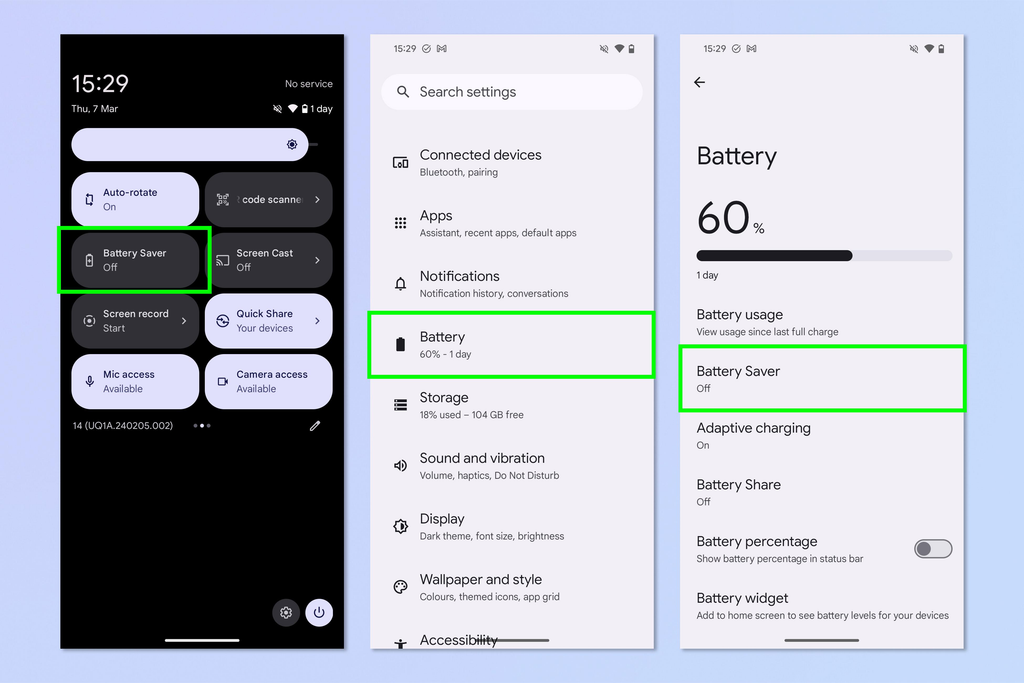
Battery life is one of the top reasons people search for Android phone tips. These Android battery saving tips make the biggest difference:
- Adaptive Battery: learns which apps you rarely open and limits their background activity. Find it under Settings > Battery.
- Battery Saver: reduces background activity and performance when your charge is low. Set it to turn on automatically at a percentage you choose.
- Dark mode: saves power on phones with OLED or AMOLED screens.
- Adaptive brightness and a shorter screen timeout: the display is usually the biggest battery drain.
- Charging limit: many phones let you cap charging at 80% or 85% to protect long-term battery health.
5. Check the Privacy Dashboard
Among the most important Android privacy settings is the Privacy Dashboard, found under Settings > Privacy. It shows which apps accessed your location, camera and microphone in the last 24 hours. If a simple flashlight or wallpaper app used your location, remove its permission or uninstall it. Also set sensitive permissions to “Only while using the app” or “Ask every time.”
6. Hide Apps in Private Space
On Android 15 and newer, Private Space creates a separate, locked area for apps you want to keep out of sight, such as banking, health or dating apps. Go to Settings > Security & privacy > Private Space. Apps inside stay hidden from the app drawer, notifications and recent apps when the space is locked. Some manufacturers offer similar tools, such as Secure Folder on Samsung phones. To lock individual chats inside the app, see our guide to WhatsApp privacy settings.
7. Pin a Screen Before Handing Over Your Phone
Screen pinning locks your phone to one app. Turn it on in Settings > Security (or Advanced settings), open Overview, tap the app icon and choose Pin. Someone borrowing your phone, or a child watching a video, cannot leave the app without your PIN or pattern.
8. Use Split Screen and Multitasking
Open the Recents screen, tap an app icon and choose Split screen to run two apps at once. This helps when you watch a video while chatting, or copy details from a webpage into notes. Many phones also support floating windows, and foldables and tablets offer even more multitasking options.
9. Recover Deleted Notifications
Swiped away a notification by mistake? Turn on Notification History in Settings > Notifications. It keeps a log of notifications from the past 24 hours, so you can read a message that was deleted or dismissed.
10. Turn On Live Caption
Live Caption automatically adds captions to videos, podcasts, calls and voice messages, even offline on many devices. Press a volume button and tap the Live Caption icon below the volume slider. It is helpful in noisy places, quiet offices and for anyone who is deaf or hard of hearing.
11. Record Your Screen
Android has a built-in screen recorder. Add Screen Record to Quick Settings, tap it, choose whether to record audio and touches, and start. It is ideal for creating tutorials, saving a video call you have permission to record, or showing a tech problem to a friend or support team.
12. Locate a Lost Phone with Find Hub
Find Hub (formerly Find My Device) can show your phone on a map, ring it at full volume, lock it or erase it remotely. Make sure it is enabled in Settings > Google > Find Hub (or Find My Device on older versions) while your phone is still with you. You can then locate it from another device or from the Find Hub website using the same Google account.
13. Build Healthy Habits with Digital Wellbeing
Digital Wellbeing, under Settings, shows screen time and which apps you open most. You can set app timers, schedule Bedtime mode to dim the screen and silence alerts, and use Focus mode to pause distracting apps when you need to concentrate.
14. Switch to Passkeys and Password Manager
Passkeys let you sign in with your fingerprint, face or screen lock instead of a password. They are harder to steal or phish because there is no password to type. Google Password Manager can also create strong passwords, autofill them and warn you about leaked or reused ones. Check it under Settings > Passwords, passkeys & accounts. If you prefer a dedicated tool, see our list of useful Android apps, which includes the Bitwarden password manager.
15. Clean Storage and Speed Up Your Phone
If you want to speed up your Android phone, start with these steps:
- Uninstall apps you no longer use, and check Settings > Storage for large files.
- Clear the cache of apps that have grown large, such as browsers and social media.
- Restart your phone at least once a week to clear temporary memory problems.
- Keep Android and apps updated for security fixes and performance improvements. Our technology tutorials show how to update your operating system and apps step by step.
- Optionally, enable Developer options and set window, transition and animator scales to 0.5x for a snappier feel.
Frequently Asked Questions About Android Phone Tips
What are the best hidden features on Android?
Popular Android hidden features include Circle to Search, Private Space, Notification History, Live Caption, screen pinning, Quick Share and the built-in screen recorder. Most are found in Settings or in the Quick Settings panel.
How can I make my Android battery last longer?
Turn on Adaptive Battery, use dark mode, lower screen brightness and timeout, limit background activity for unused apps, and set a charging limit if your phone supports it. Battery Saver can extend life further when you are low on charge.
How do I speed up a slow Android phone?
Free up storage, uninstall unused apps, clear heavy app caches, restart regularly, install system updates and reduce animation scale in Developer options. If it is still slow, follow our tech troubleshooting guide, back up your data and consider a factory reset.
How do I improve privacy on my Android phone?
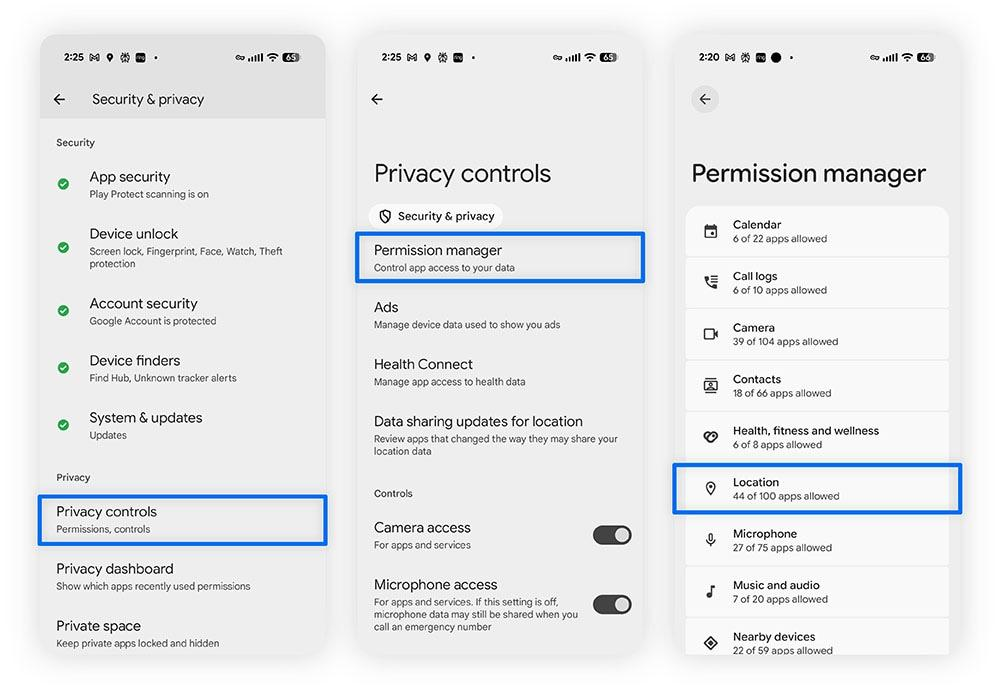
Review the Privacy Dashboard, restrict location, camera and microphone permissions, use a strong screen lock, enable passkeys, and keep apps in Private Space or Secure Folder if you share your phone. For your social apps, see our guide to Instagram privacy settings.
How do I find a lost Android phone?
Use Find Hub (Find My Device) with the Google account on your phone. You can see its location, play a sound, lock it or erase it remotely, provided the phone is on and connected.
Do these Android tips work on Samsung, Xiaomi and OnePlus phones?
Most do, but menu names and locations can differ by brand and Android version. If you cannot find a setting, use the search bar at the top of the Settings app, or check the official Android Help Center.
Should I clear cache regularly on Android?
Not constantly. Clear the cache when an app misbehaves or takes up too much space, because caches rebuild automatically and clearing them too often can make apps load slower at first.
How often should I update my Android phone?
Install system and security updates as soon as they are available. They fix vulnerabilities, improve stability and sometimes add new features.
Final Thoughts
These Android phone tips take only a few minutes to set up and can improve your battery life, speed, security and everyday convenience. Start with three: customize Quick Settings, check your Privacy Dashboard and enable Find Hub. Then explore the rest of the list, and use the search bar in Settings whenever a menu looks different on your device.