
Folliculitis is inflammation or infection of one or more hair follicles, causing small, often itchy or tender red bumps or white-topped pimples where hair grows. It’s most commonly caused by a bacterial infection (usually Staphylococcus aureus), but can also be caused by fungi, ingrown hairs, or irritation from shaving, tight clothing, or hot tubs. Mild folliculitis often clears on its own within a few days to two weeks with basic hygiene care, while more persistent or widespread cases typically need a topical or oral antibacterial or antifungal treatment.
This guide covers what causes folliculitis, how to treat it based on the type you have, how it differs from acne and keratosis pilaris, and how to prevent it from recurring.
What Is Folliculitis?
Folliculitis happens when hair follicles — the small pockets in skin that each hair grows from — become inflamed or infected. It can appear anywhere hair grows, but is most common on the scalp, face (especially the beard area), neck, thighs, buttocks, and armpits. It ranges from a few scattered, mildly irritating bumps to widespread, itchy, and sometimes painful patches, depending on the cause and severity.
What Causes Folliculitis?
Folliculitis has several possible causes, and identifying which one applies to you helps determine the right treatment.
- Bacterial folliculitis: The most common type, usually caused by Staphylococcus aureus bacteria entering damaged or irritated hair follicles.
- Hot tub folliculitis: Caused by Pseudomonas aeruginosa bacteria, which thrives in hot tubs, pools, or water toys that aren’t properly chlorinated, typically appearing 1-4 days after exposure.
- Fungal (yeast) folliculitis: Caused by an overgrowth of Malassezia yeast, often on the chest, back, and shoulders, and can be itchier than bacterial folliculitis. It doesn’t respond to antibacterial treatment and needs an antifungal approach instead.
- Shaving and ingrown hairs (pseudofolliculitis): Caused by hair curling back into the skin after shaving, waxing, or tweezing, common in the beard area, legs, and bikini line, especially in people with coarser or curlier hair.
- Irritant folliculitis: Caused by friction from tight clothing, occlusive skincare products, or excessive sweating rather than infection.
What Does Folliculitis Look Like?
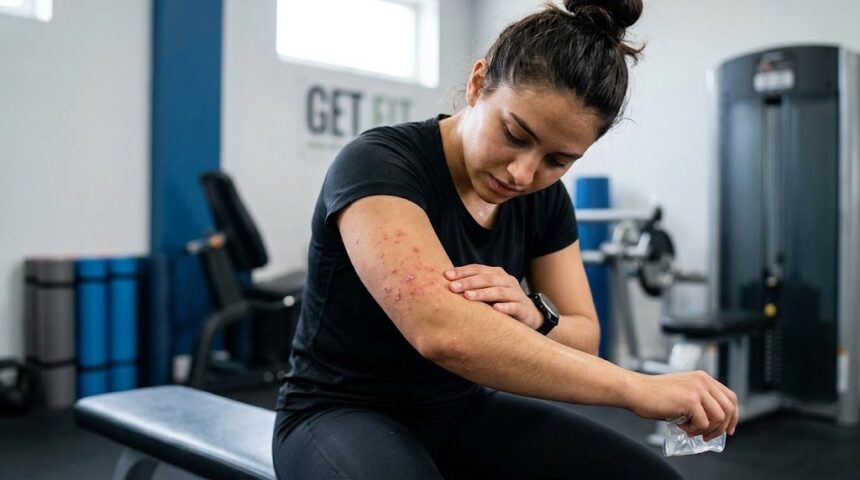
Small red or skin-colored bumps, sometimes with a white or yellow center (pus), clustered around hair follicles, often itchy, sometimes tender or mildly painful, that can look similar to acne but are centered specifically around hairs. In darker skin tones, the bumps and any resulting marks may appear more violet, brown, or grayish rather than red.
Where Does Folliculitis Most Commonly Appear?
Folliculitis can develop anywhere hair grows, but certain areas are more prone to it depending on the cause. The scalp is a common site, particularly for a form called scalp folliculitis, which can cause itchy, sometimes tender bumps among the hair and, if severe or recurrent, occasional small areas of hair thinning. The beard area is frequently affected in people who shave regularly, sometimes called barber’s itch or pseudofolliculitis barbae when it’s specifically related to ingrown facial hair. The thighs and buttocks are common sites for irritant folliculitis from tight clothing or friction, and for hot tub folliculitis, since these areas have extended contact with a swimsuit or seat. The chest and back are typical locations for fungal (Malassezia) folliculitis, especially in warm, humid climates or after heavy sweating.
Is Folliculitis Contagious?
Bacterial and fungal folliculitis can spread to others through direct skin contact or shared items like razors, towels, or clothing, particularly if the skin is broken or irritated. Hot tub folliculitis specifically can affect multiple people who were exposed to the same contaminated water. Irritant folliculitis from shaving or friction isn’t contagious, since it isn’t caused by an infectious organism.
How to Treat Folliculitis
Treatment depends on the type and severity, but most mild cases can be managed with the following approach.
Mild, Self-Care Treatment
For mild folliculitis, especially from shaving or minor irritation:
- Apply a warm compress several times a day to soothe irritation and help any pus-filled bumps drain naturally
- Keep the area clean with a gentle, fragrance-free cleanser, avoiding harsh scrubbing
- Avoid shaving, waxing, or friction on the area until it clears
- Use an over-the-counter antibacterial wash containing benzoyl peroxide or chlorhexidine for mild bacterial folliculitis
- Avoid picking or squeezing the bumps, which can worsen inflammation or spread infection
Topical and Prescription Treatment
For folliculitis that doesn’t improve with self-care, or that’s more widespread:
- Topical antibiotics (such as clindamycin or mupirocin) for bacterial folliculitis that isn’t clearing on its own
- Topical or oral antifungal medication for fungal (Malassezia) folliculitis, since antibacterial treatment won’t help this type
- Oral antibiotics for more extensive or deep bacterial infections
- A brief course of a topical steroid in some cases to reduce inflammation, though this is used cautiously and typically alongside, not instead of, antimicrobial treatment
Treating the Underlying Cause
Beyond direct treatment of the bumps, addressing what’s causing the folliculitis matters for preventing recurrence — this might mean adjusting shaving technique, treating a hot tub or pool for proper chlorination, switching to looser, breathable clothing, or managing sweat and friction in areas prone to irritation.
Folliculitis vs. Acne vs. Keratosis Pilaris
These three conditions are commonly confused since they all involve small bumps, but they have different mechanisms and treatments.
- Folliculitis is centered on inflamed or infected hair follicles, often itchy, and can appear suddenly, sometimes tied to a specific trigger like shaving or hot tub use.
- Acne involves clogged pores from oil and dead skin combined with bacteria, and tends to appear in oil-prone areas like the face, chest, and back, without necessarily being centered on individual hairs.
- Keratosis pilaris involves a dry keratin plug in the follicle, feels rough and sandpaper-like rather than pus-filled, tends to be symmetrical on both arms or thighs, and is chronic rather than a sudden outbreak.
If bumps appeared suddenly after shaving, a hot tub, or heavy sweating, folliculitis is more likely. If they’ve been a long-standing, symmetrical, rough texture on the arms or thighs, keratosis pilaris is more likely. A doctor can confirm which condition you’re dealing with if it’s unclear.
How Long Does Folliculitis Take to Clear Up?
Mild folliculitis often improves within a few days to two weeks with basic self-care. More significant bacterial or fungal folliculitis treated with topical or oral medication typically improves within one to two weeks of starting treatment, though full clearing can take longer depending on severity. Folliculitis caused by ongoing irritation, like shaving in the same direction repeatedly, may keep recurring until the underlying habit changes, regardless of how well any individual outbreak is treated.
How to Prevent Folliculitis
- Shave in the direction of hair growth, use a sharp, clean razor, and consider skipping a few days between shaves in prone areas
- Shower after sweating heavily, such as after a workout, rather than sitting in damp clothes
- Avoid tight, non-breathable clothing in areas prone to friction and irritation
- Check that hot tubs and pools are properly chlorinated before use, and shower promptly afterward
- Avoid sharing razors, towels, or other personal items
- Use a clean towel and change pillowcases regularly if scalp or facial folliculitis is a recurring issue
Who Is More Likely to Get Folliculitis?
Some people are more prone to folliculitis than others. People who shave, wax, or tweeze regularly, especially in the beard area, legs, or bikini line, are more likely to develop irritation-related folliculitis or ingrown hairs. People with diabetes or a weakened immune system have a higher risk of bacterial and fungal skin infections generally, including folliculitis, and may need medical treatment sooner rather than waiting for it to resolve on its own. People who use hot tubs or pools frequently, particularly ones that aren’t well maintained, are at higher risk for Pseudomonas-related hot tub folliculitis. People who sweat heavily or wear tight, non-breathable clothing regularly, such as during intense exercise or certain occupations, are more prone to irritant and fungal folliculitis due to prolonged moisture and friction against the skin.
When to See a Doctor
Most folliculitis is manageable at home, but see a doctor if it doesn’t improve after 1-2 weeks of self-care, it’s spreading, increasingly painful, or accompanied by fever, the bumps are large, deep, or forming boils (a sign of a deeper infection called furunculosis), you have diabetes or a weakened immune system, since skin infections carry higher risk of complications, or folliculitis keeps recurring despite preventive efforts, which may need prescription-strength or longer-term treatment.
Frequently Asked Questions
What is the fastest way to get rid of folliculitis?
For mild cases, warm compresses several times a day combined with a gentle antibacterial or antifungal wash typically show improvement within a few days to a week. More significant cases need a prescription topical or oral medication matched to the specific cause (bacterial vs. fungal).
Can folliculitis go away on its own?
Yes, mild folliculitis, especially from minor irritation or shaving, often resolves on its own within a few days to two weeks with basic hygiene care. More extensive or infected folliculitis usually needs targeted treatment to clear fully.
Is folliculitis the same as acne?
No. Acne involves clogged pores from oil, dead skin, and bacteria, while folliculitis is inflammation or infection specifically centered on hair follicles, often triggered by shaving, friction, hot tubs, or bacterial or fungal overgrowth.
Why do I keep getting folliculitis after shaving?
Recurrent folliculitis after shaving is often caused by shaving against the direction of hair growth, using a dull or dirty razor, or hairs curling back into the skin (ingrown hairs), especially common in coarser or curlier hair types. Adjusting shaving technique and skipping a few days between shaves in prone areas usually helps.
Is hot tub folliculitis dangerous?
It’s usually not serious and often clears within a week or two without treatment, though it can be itchy and uncomfortable. It’s caused by Pseudomonas bacteria in improperly chlorinated water, and prompt showering after hot tub use helps prevent it.
Can folliculitis turn into something worse?
In some cases, untreated bacterial folliculitis can progress into a deeper infection, such as a boil (furuncle) or a cluster of connected boils (carbuncle), particularly if picked at or left untreated. Seeing a doctor for worsening, painful, or spreading folliculitis helps prevent this progression.
Does folliculitis leave scars?
Mild folliculitis that’s treated appropriately and not picked at usually heals without lasting marks. However, deeper or repeatedly irritated folliculitis, especially if scratched or squeezed, can occasionally leave dark spots (post-inflammatory hyperpigmentation) or, in more severe or chronic cases, small scars, which is one reason avoiding picking at the bumps matters.
Can stress cause folliculitis?
Stress itself doesn’t directly cause folliculitis, but it can indirectly contribute by increasing sweating, affecting immune function, or leading to habits like picking at skin, any of which can make existing irritation or infection more likely to flare.
Related Reading
- Keratosis pilaris treatment
- Acne causes and treatment: clear skin guide
- Athlete’s foot treatment
- Dry skin causes and remedies: home care guide
Informational only — not a diagnosis. See a doctor if folliculitis is spreading, painful, recurring, or accompanied by fever.