
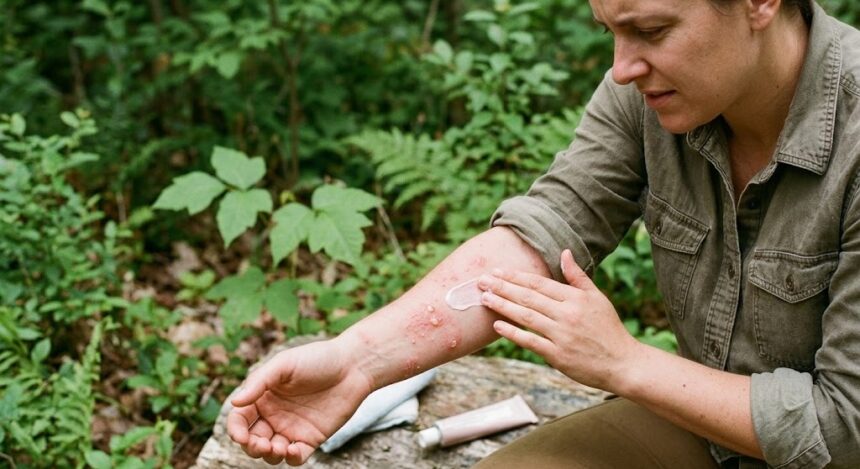
Poison ivy rash treatment starts with immediately washing the affected skin with soap and water to remove urushiol, the plant oil causing the reaction, then managing itching and inflammation with calamine lotion, oral antihistamines, or a topical corticosteroid, with most mild-to-moderate rashes resolving within 1-3 weeks. Prescription oral steroids are sometimes needed for severe reactions, particularly those covering a large body area, affecting the face or genitals, or causing significant swelling.
This guide covers how to treat poison ivy rash effectively, how long it takes to heal, what actually helps versus common myths, and when a reaction needs medical attention.
What Causes a Poison Ivy Rash?
Poison ivy (and its relatives poison oak and poison sumac) contain an oily resin called urushiol on their leaves, stems, and roots. When this oil contacts skin, it triggers an allergic contact dermatitis reaction in most people who are sensitized to it, causing redness, itching, swelling, and often blistering. Urushiol can transfer not just from direct plant contact, but also from contaminated clothing, gardening tools, pet fur, or even smoke from burning the plants, which can carry the oil into the airways and cause a more serious reaction if inhaled.
Immediate Steps After Suspected Exposure
Wash the Area Immediately
Washing exposed skin with soap and water as soon as possible, ideally within 10-30 minutes of contact, can significantly reduce or prevent a reaction by removing urushiol before it fully binds to the skin. After this window, washing still helps prevent spreading the oil to other areas or other people, even if it may not fully prevent the reaction at the original contact site.
Wash Clothing, Tools, and Gear
Urushiol can remain active on surfaces for a long time — potentially over a year on some materials — so washing clothing, shoes, gardening tools, and gear that contacted the plant helps prevent delayed or repeated exposure.
Avoid Touching Pets That May Have Contacted the Plant
Pet fur can carry urushiol without the animal itself reacting, so bathing a pet that may have brushed against poison ivy, wearing gloves during the process, helps prevent transferring the oil to your skin later.
How to Treat Poison Ivy Rash
Calamine Lotion or Cooling Compresses
Calamine lotion helps dry oozing blisters and soothe itching; cool, wet compresses applied for 15-30 minutes several times a day also help reduce itching and inflammation.
Oral Antihistamines
Diphenhydramine or other antihistamines can help reduce itching, particularly at night, and the sedating types can support sleep despite the discomfort, which matters since scratching worsens the rash and increases infection risk.
Topical Corticosteroids
Over-the-counter hydrocortisone cream can help with mild reactions; a doctor may prescribe a stronger topical or oral steroid for more significant or widespread rashes.
Oatmeal Baths
Colloidal oatmeal baths can soothe itching and inflammation, particularly helpful for rashes covering larger areas of the body.
Avoid Scratching
Scratching doesn’t spread the rash further (the reaction is limited to areas where urushiol actually touched skin), but it does increase the risk of secondary bacterial infection and can worsen scarring in already-inflamed skin.
Does Scratching Poison Ivy Spread the Rash?
No, this is a persistent myth. The rash appears in a pattern reflecting exactly where urushiol contacted the skin, and the fluid in blisters doesn’t contain urushiol or spread the reaction to new areas. The rash can appear to “spread” over several days simply because different areas absorbed different amounts of oil and react at different rates, or because of repeated contact with a contaminated object (like clothing) rather than because scratching itself spreads it.
Poison Ivy vs. Poison Oak vs. Poison Sumac
While all three plants cause the same type of urushiol-triggered allergic reaction and are treated identically, they look different and grow in different regions, which matters for prevention and identification. Poison ivy typically has clusters of three pointed, glossy leaves and grows as a vine or low shrub, common throughout most of the United States and parts of Canada. Poison oak has similarly clustered leaves but with a more rounded, lobed edge resembling oak leaves, and is more common on the West Coast and in the Southeast. Poison sumac has rows of paired leaflets (typically 7-13) along a central stem and grows as a shrub or small tree, mainly in wet, wooded areas, particularly in the Southeast and parts of the Midwest. Since the rash and treatment are essentially the same regardless of which plant caused it, the main practical value in telling them apart is improving future identification and avoidance.
Home Remedies: What Actually Helps vs. What Doesn’t
Effective and reasonable: Cool compresses, oatmeal baths, and calamine lotion for itch relief; over-the-counter or prescribed antihistamines and topical steroids for inflammation and itching; and thorough washing immediately after exposure to reduce reaction severity.
Not well supported or potentially harmful: Bleach or rubbing alcohol applied directly to the rash isn’t recommended and can further irritate already-inflamed skin without providing meaningful benefit. Popping blisters isn’t recommended, since it increases infection risk without speeding healing. “Toughening up” by repeated exposure has no basis in evidence and simply risks another reaction each time.
How Long Does Poison Ivy Rash Take to Heal?
Mild-to-moderate poison ivy rash typically resolves within 1-3 weeks with supportive care, following the same general course: itching and redness in the first few days, blistering and oozing peaking around days 4-7, and gradual healing over the following one to two weeks. More severe reactions, particularly those with extensive blistering, can take longer and may need prescription treatment to manage effectively.
When Is Poison Ivy a Medical Emergency?
Most reactions are manageable at home, but seek medical care for a rash covering a large portion of the body, significant swelling, especially around the eyes, face, or genitals, difficulty breathing or swallowing, which can occur if urushiol-containing smoke was inhaled from burning plants, signs of infection, such as increasing redness, warmth, pus, or fever, or a known severe allergic reaction history to poison ivy, oak, or sumac, since reactions can worsen with repeated exposure in some people.
Can You Become Immune to Poison Ivy?
Most people are sensitized to urushiol and will react upon exposure, though sensitivity varies between individuals and can change over time — some people who didn’t react as children develop sensitivity later, while a small percentage of people seem to have minimal or no reaction even with exposure. There’s no reliable way to build tolerance intentionally, and repeated exposure doesn’t reduce reaction severity; if anything, sensitization can sometimes increase with repeated contact over a lifetime.
How to Prevent Poison Ivy Rash
- Learn to identify poison ivy, oak, and sumac (“leaves of three, let it be” for poison ivy specifically, though poison oak and sumac have different leaf patterns worth learning separately)
- Wear long sleeves, pants, and gloves when in areas where these plants might be present
- Wash skin and clothing promptly after potential exposure, ideally within 30 minutes
- Use a barrier cream containing bentoquatam before anticipated exposure, which can help block urushiol absorption
- Never burn poison ivy, oak, or sumac, since inhaling the smoke can cause a severe reaction affecting the airways and lungs
Frequently Asked Questions
How do you get rid of poison ivy rash fast?
Washing the area immediately after exposure, then using cool compresses, calamine lotion, and antihistamines for symptom relief gives the fastest, most effective home management; there’s no way to eliminate an already-developed rash instantly, since it needs to run its course.
Does poison ivy rash spread by scratching?
No, scratching doesn’t spread the rash to new areas, since the reaction only occurs where urushiol actually contacted the skin; apparent spreading is usually due to different absorption rates in different areas or continued contact with a contaminated object.
How long is poison ivy contagious after exposure?
The rash itself isn’t contagious from person to person, but urushiol oil remaining on unwashed skin, clothing, or objects can transfer to another person or another part of your own body until it’s washed off, typically within the first hour or so after initial contact if not cleaned.
Can you get poison ivy rash without touching the plant directly?
Yes, urushiol can transfer from contaminated clothing, tools, pet fur, or other objects that touched the plant, and it can remain active on these surfaces for an extended period if not washed.
Is it bad to pop poison ivy blisters?
Yes, popping blisters increases the risk of infection without speeding healing, since the fluid inside doesn’t contain urushiol or contribute to spreading the rash.
Can poison ivy rash cause scarring?
Typically not, when managed with appropriate care and without excessive scratching, since it’s a superficial skin reaction; however, secondary infection from scratching or picking at the rash can occasionally lead to scarring, which is one reason to avoid scratching despite the itch.
Why does my poison ivy rash keep appearing in new spots days later?
This is usually not the rash “spreading” but rather areas that received a smaller initial dose of urushiol taking longer to react, or ongoing contact with a contaminated object like unwashed clothing, shoes, or gardening gloves that hasn’t yet been cleaned.
Can you have a poison ivy reaction without ever seeing the plant?
Yes, since urushiol transfers easily to clothing, tools, and pet fur, it’s entirely possible to develop a reaction from secondhand contact without ever directly touching or even seeing the plant itself, which can make identifying the exposure source confusing after the fact.
Related Reading
- Contact dermatitis symptoms: causes, types, and treatment
- Sunburn relief remedies: what actually works and what to avoid
- Sweat rash treatment: causes, types, and how to clear it up fast
Informational only — not medical advice. Seek medical care for severe or widespread reactions, facial or genital swelling, or difficulty breathing.