

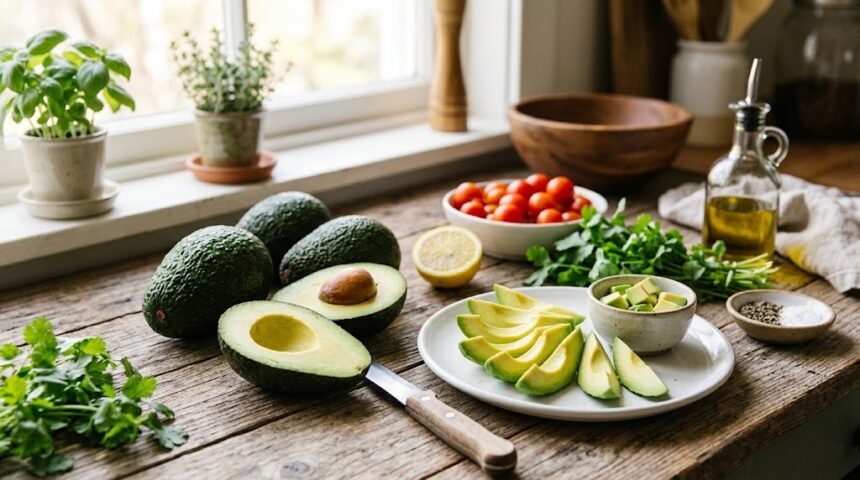
Avocado nutrition benefits include heart-healthy monounsaturated fats, high fiber content (about 10 grams per avocado), more potassium than a banana, and a range of antioxidants and vitamins (E, K, C, and several B vitamins), making it one of the more nutrient-dense fruits despite its relatively high calorie content of about 240 calories per whole avocado. Research links regular avocado consumption to improved cholesterol profiles, better nutrient absorption from other foods eaten alongside it, and increased satiety, though as with any calorie-dense food, portion awareness matters for weight management goals.
This guide covers avocado’s full nutritional profile, the specific research behind its health claims, how it compares to other healthy fat sources, and practical tips for including it in your diet.
Avocado Nutrition Facts
One whole avocado (about 200g) provides approximately 240 calories, 22g of fat (mostly monounsaturated), 12g of carbohydrates, 10g of fiber, 3g of protein, 690mg of potassium (more than a medium banana’s roughly 420mg), significant vitamin K, vitamin E, vitamin C, and several B vitamins including folate, and various antioxidants including lutein and zeaxanthin, compounds also associated with eye health.
What Are the Health Benefits of Avocado?
Heart Health
Avocado’s high monounsaturated fat content is associated with improved cholesterol profiles when it replaces saturated fat in the diet, similar to the cardiovascular benefits seen with olive oil. Research has specifically linked regular avocado consumption to modest reductions in LDL cholesterol and, in some studies, improvements in HDL cholesterol as well.
Fiber and Digestive Health
At about 10 grams of fiber per whole avocado — roughly a third of the daily recommended intake in one food — avocado is one of the more fiber-dense fruits available, supporting digestive regularity and feeding beneficial gut bacteria.
Nutrient Absorption
Because certain vitamins (A, D, E, and K) and plant compounds like carotenoids are fat-soluble, meaning they require dietary fat for proper absorption, eating avocado alongside vegetables like carrots, tomatoes, or leafy greens can meaningfully increase the absorption of their beneficial compounds compared to eating those vegetables with no fat present.
Satiety and Weight Management
The combination of fiber, healthy fat, and modest protein in avocado supports feelings of fullness, and some research has found that including avocado in a meal is associated with reduced hunger and desire to eat in subsequent hours compared to a similar-calorie meal without it.
Eye Health
Avocado contains lutein and zeaxanthin, antioxidants that accumulate in the retina and are associated with reduced risk of age-related macular degeneration and cataracts; avocado’s fat content also supports better absorption of these specific compounds from other foods eaten in the same meal.
Skin Health
Avocado’s vitamin E, vitamin C, and healthy fat content support skin barrier function and provide antioxidant protection, contributing to its frequent inclusion in “foods for skin health” discussions, alongside other nutrient-dense whole foods.
Is Avocado Good for Weight Loss or Does It Cause Weight Gain?
This depends entirely on overall context and portion size, since avocado is genuinely calorie-dense despite being nutrient-rich. Within a calorie-controlled diet, avocado’s fiber and healthy fat content support satiety, which can help with weight management by reducing subsequent hunger and snacking. However, adding avocado on top of an already calorie-sufficient diet without adjusting other intake will contribute to weight gain over time, simply due to its calorie density (about 240 calories per whole fruit). The practical takeaway is that avocado fits well into a weight-management plan when it replaces a similar-calorie, less nutritious food (like mayonnaise or butter) rather than being added indefinitely on top of an unchanged diet.
Avocado vs. Other Healthy Fat Sources
Avocado’s fat profile is similar to olive oil, both being predominantly monounsaturated fat with cardiovascular research support, though avocado additionally provides fiber, potassium, and a wider range of vitamins that oil alone doesn’t offer, since it’s a whole food rather than an extracted oil. Compared to nuts, avocado has a lower overall fat percentage by weight and provides more water content and a different vitamin and mineral profile, particularly higher potassium. Compared to coconut, which is high in saturated fat, avocado’s predominantly unsaturated fat profile is generally considered more favorable for cardiovascular health based on current research.
How to Tell if an Avocado Is Ripe
Getting the timing right matters for both taste and how you’ll use an avocado in a recipe. A ripe avocado yields to gentle pressure when pressed near the stem, without feeling mushy or leaving a deep indentation. Color can be a rough guide for some varieties (a darker, near-black skin often indicates ripeness in Hass avocados specifically), but pressure is a more reliable indicator across varieties than color alone. Removing the small stem nub at the top can help too — if it comes away easily and reveals green underneath, the avocado is ripe; brown underneath suggests it’s overripe, while resistance suggests it needs more time. Avocados that are underripe can be left at room temperature for a few days to ripen, and this process can be sped up by placing them in a paper bag, ideally with a banana or apple, which release ripening-accelerating ethylene gas.
Does Avocado Go Bad Quickly, and How Should You Store It?
Whole, unripe avocados store well at room temperature for several days while ripening. Once ripe, whole avocados can be refrigerated for a few extra days to slow further ripening and extend usability. Cut avocado browns quickly once exposed to air due to oxidation, similar to a sliced apple; this can be slowed by leaving the pit in a stored half, covering the exposed flesh tightly with plastic wrap, or brushing with a small amount of lemon or lime juice, whose acidity slows the oxidation reaction. Freezing mashed avocado (with a little lime juice added) is also an option for longer storage, though the texture changes somewhat and it’s best suited for uses like smoothies or spreads rather than fresh slices.
How Much Avocado Should You Eat?
There’s no official daily requirement for avocado specifically, but research showing cardiovascular and satiety benefits generally uses about half to one whole avocado per day as part of an overall healthy diet. Given its calorie density, incorporating avocado as a replacement for less healthy fats (like butter, mayonnaise, or processed spreads) rather than as a pure addition to an already sufficient diet is the most practical approach for most health and weight goals.
Common Ways to Include More Avocado in Your Diet
- Mash on whole grain toast as a replacement for butter or margarine
- Add sliced avocado to salads for satiety and nutrient absorption benefits
- Blend into smoothies for a creamy texture and healthy fat without adding dairy
- Use as a base for guacamole with tomato, onion, lime, and cilantro
- Substitute for mayonnaise in sandwiches or as a dip base
- Add to eggs, tacos, or grain bowls as a simple way to increase healthy fat and fiber intake
Frequently Asked Questions
Is avocado healthy to eat every day?
Yes, for most people, daily avocado consumption within an overall balanced, calorie-appropriate diet is associated with health benefits, particularly for heart health and satiety, without evidence of harm from typical intake amounts (about half to one avocado per day).
How many calories are in one avocado?
A whole medium avocado (about 200g) contains approximately 240 calories, most of which come from its healthy monounsaturated fat content.
Does avocado raise cholesterol?
No, research consistently shows avocado is associated with improved, not worsened, cholesterol profiles, particularly reduced LDL cholesterol, when it replaces less healthy fats in the diet.
Is avocado good for diabetics?
Avocado’s low sugar content, high fiber, and healthy fat profile make it generally well-suited for blood sugar management, and some research associates regular avocado consumption with improved markers related to insulin sensitivity, though portion size still matters given its calorie density.
Can eating too much avocado be bad for you?
Excess avocado consumption, like excess of any calorie-dense food, can contribute to weight gain if it’s not accounted for within overall calorie needs; there’s no specific toxicity concern with high avocado intake for most healthy people, but calorie awareness still applies.
Why does avocado have more potassium than a banana?
A whole avocado (about 200g) contains roughly 690mg of potassium, compared to about 420mg in a medium banana, largely due to avocado’s higher overall nutrient density per serving relative to its water content compared to banana.
Is avocado a fruit or a vegetable?
Botanically, avocado is a fruit — specifically a single-seeded berry — despite being commonly used in savory dishes the way vegetables typically are; this classification is based on plant biology (it develops from a flower and contains a seed) rather than culinary usage.
Can avocado help with hair health?
Avocado’s biotin, vitamin E, and healthy fat content are sometimes cited for supporting hair health, and it’s a common ingredient in hair masks, though direct clinical evidence specifically for hair growth or thickness from eating avocado is limited; its main established benefits relate to heart health, digestion, and overall nutrient density rather than hair-specific outcomes.
Related Reading
- Olive oil health benefits: what the research actually shows
- Potassium rich foods: best sources, daily needs, and who should be cautious
- Best foods for skin health: what the research actually shows
- Best fiber foods for digestion
Informational only — not medical advice. See a doctor or registered dietitian for personalized dietary guidance, especially if managing a chronic health condition.