
Dry skin causes and remedies both come down to one thing: your skin’s outer barrier is losing water faster than it can hold onto it. That barrier — a mix of skin cells and natural oils, often called the “skin barrier” or stratum corneum — normally locks moisture in and keeps irritants out. When it is damaged or overwhelmed, skin turns rough, tight, flaky, or itchy. Dry skin (medically called xerosis) is one of the most common skin complaints, especially during winter, and in most cases it responds well to a few targeted changes.
Understanding the Skin Barrier
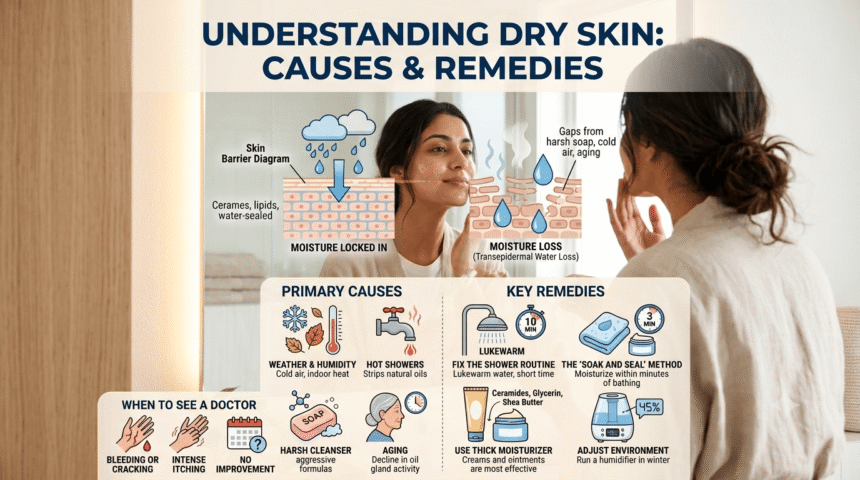
Picture your skin barrier like a brick wall: skin cells are the bricks, and natural lipids (ceramides, cholesterol, and fatty acids) are the mortar holding everything together and sealing in water. When that “mortar” breaks down — from harsh soap, hot water, cold air, or aging — water escapes through the gaps faster than your body can replace it. This is called transepidermal water loss, and it is the underlying mechanism behind almost every case of dry skin, regardless of the trigger.
What Causes Dry Skin?
Weather and environment
Cold, dry winter air holds very little moisture, and indoor heating drops humidity even further — often into the same range that causes the low indoor humidity discussed in our winter humidity guide. Low humidity pulls moisture directly out of exposed skin, which is why dryness, chapped lips, and static shocks all spike together in winter.
Hot showers and baths
Hot water feels good but strips away the natural oils that hold moisture in, faster than warm water does. Long, hot showers are one of the most common — and most fixable — causes of chronically dry skin.
Harsh soaps and cleansers
Traditional bar soap and sulfate-based body washes are formulated to strip oil, which is useful for heavy grease but too aggressive for everyday skin. Repeated use breaks down the lipid “mortar” in the skin barrier.
Aging
Oil gland activity naturally declines with age. Skin also gets thinner and produces less hyaluronic acid over time, making older adults significantly more prone to persistent dryness, especially on the lower legs and arms.
Underlying skin conditions
Eczema (atopic dermatitis), psoriasis, and ichthyosis all involve a genetically weaker skin barrier and chronic dryness that basic moisturizing alone will not fully resolve.
Medical conditions and medications
Hypothyroidism and diabetes are both linked to drier skin as a secondary symptom. Certain medications — including some acne treatments (retinoids), diuretics, and cholesterol drugs — list dry skin as a known side effect.
Dehydration
Being under-hydrated internally is not the main cause of dry skin, but it does not help. Along with fluid intake, the signs covered in our guide to common dehydration symptoms are worth checking if dryness is paired with fatigue, headache, or dark urine.
Signs Your Dry Skin Needs More Than a Lotion
Ordinary dryness usually responds to better moisturizing within a week or two. Watch for these signs that point to something more:
- Skin that cracks, bleeds, or oozes
- Red, scaly patches that itch intensely, especially in the creases of elbows or knees
- Dryness that shows up suddenly and does not match a season or routine change
- Signs of infection — warmth, swelling, or pus around cracked skin
- Dryness accompanied by fatigue, hair thinning, or weight change (possible thyroid link)
Home Care That Actually Fixes Dry Skin
Fix the shower routine
- Use lukewarm water instead of hot, and keep showers under 10 minutes.
- Choose a fragrance-free, moisturizing cleanser instead of soap or foaming body wash.
- Pat skin dry — do not rub — and leave it slightly damp before the next step.
Moisturize the right way
- Apply a thick moisturizer within 3 minutes of stepping out of the shower, while skin is still damp, to seal in existing water — this “soak and seal” method is more effective than moisturizing dry skin later.
- For very dry or cracked skin, ointments (like petroleum jelly) and creams work better than thin lotions, which contain more water and evaporate faster.
- Look for ceramides, glycerin, hyaluronic acid, or shea butter on the label — these ingredients repair and hold moisture in the skin barrier rather than sitting on top of it.
- Body oils, such as those covered in our guide to body oils, can help lock in moisture as a final layer over a water-based moisturizer, though oil alone without a humectant underneath is less effective on very dry skin.
Adjust your environment
- Run a humidifier in the bedroom during winter to keep indoor humidity around 40-50% — see our full breakdown on how to increase humidity in your home during winter for specific target numbers and setup tips.
- Wear breathable fabrics like cotton next to skin, and avoid wool directly on dry, irritated areas.
- Stay hydrated and eat a balanced diet with enough healthy fats — helpful for overall skin health, though drinking water alone will not fix a damaged skin barrier once it is compromised.
Ingredients and products to avoid
- Alcohol-based toners and astringents, which strip natural oils
- Fragranced lotions and detergents, a common source of irritation on already-compromised skin
- Over-exfoliating with acids or scrubs, which thins the barrier further
Dry Skin vs. Dehydrated Skin: What’s the Difference?
These terms get used interchangeably, but they describe different problems. Dry skin is a skin type — it lacks oil (lipids) and is usually a long-term characteristic. Dehydrated skin is a temporary condition where skin lacks water, and it can affect any skin type, including oily skin. Dehydrated skin often feels tight and looks dull but may still produce plenty of oil. If your skin is oily yet feels tight and shows fine lines that plump up after applying a hydrating serum, dehydration — not dryness — is the more likely issue, and a lightweight hyaluronic acid serum will help more than a heavy cream.
Seasonal Considerations
Dry skin is not purely a winter problem, but winter remains the most common trigger because it combines three drying factors at once: cold outdoor air, low humidity, and indoor heating. Layering strategy matters here too — heavy synthetic fabrics can trap sweat and then dry out skin as it evaporates, so breathable layers plus a humidifier tend to outperform simply “bundling up” more.
When to See a Doctor
Book an appointment if:
- Dryness does not improve after 2 weeks of consistent moisturizing and gentler cleansing
- Skin cracks, bleeds, or shows signs of infection
- Itching is severe enough to disrupt sleep or daily life
- You notice thick, scaly patches that could point to eczema or psoriasis needing prescription treatment
- Dry skin appeared suddenly alongside other symptoms like fatigue or weight changes, which can signal a thyroid issue worth checking
A dermatologist can prescribe stronger barrier-repair creams, topical steroids for flare-ups, or identify an underlying condition — such as eczema, psoriasis, or a thyroid disorder — that over-the-counter products cannot fix on their own.
Frequently Asked Questions
Is dry skin the same as eczema?
No. Dry skin is a general skin type or temporary condition, while eczema (atopic dermatitis) is a chronic inflammatory condition that causes dryness plus intense itching, redness, and flare-ups, and typically needs prescription treatment to manage fully.
How often should I moisturize dry skin?
At minimum, twice daily — morning and after showering at night — and more often on hands or areas exposed to frequent washing or cold air.
Does drinking more water fix dry skin?
It helps overall hydration but will not repair a damaged skin barrier on its own. Topical moisturizing and gentler cleansing make the biggest measurable difference.
Can dry skin cause premature wrinkles?
Dryness makes fine lines more visible because dehydrated skin cells do not plump the surface the way well-hydrated skin does, but it does not permanently create new wrinkles on its own.
Related Reading
Quick Takeaways
- Dry skin means your skin barrier is losing water faster than it can retain it.
- Lukewarm showers, gentle cleansers, and moisturizing within minutes of bathing make the biggest difference.
- Ointments and creams beat thin lotions for very dry or cracked skin.
- A bedroom humidifier helps in winter, when indoor heating dries the air further.
- See a doctor for cracking, bleeding, infection signs, or dryness that does not improve within two weeks.