
Intermittent fasting for beginners is a timed eating pattern, not a magic diet. You cycle between periods of eating and not eating without necessarily changing what you eat—though food quality still matters. This guide covers intermittent fasting benefits, how a 16:8 fasting schedule works, common intermittent fasting mistakes, intermittent fasting side effects, and who should skip fasting altogether.
This article is general nutrition education. It is not personalized medical advice, a prescription for weight loss, or a treatment for diabetes or other conditions. Talk with a clinician before starting if you take medicine, are pregnant, have a history of disordered eating, or have a chronic illness.
Quick answer: what is intermittent fasting?
Intermittent fasting (IF) means you limit eating to a set window each day or week. Popular options include 16:8 (fast 16 hours, eat within 8), 14:10, and occasional 24-hour fasts. During the fasting window you typically drink water, black coffee, or plain tea without calories. The goal is usually metabolic flexibility, appetite awareness, or calorie control—not starvation.
Intermittent fasting benefits (what evidence actually supports)
Research on intermittent fasting benefits is promising but not a guarantee for every person. Reported and studied effects include:
- Simpler calorie control: A shorter eating window can reduce late-night snacking without counting every gram.
- Weight and fat loss support: When total calories drop, weight often falls. IF is one tool among many; it is not superior to calorie restriction for everyone.
- Improved insulin sensitivity in some adults: Time-restricted eating may help blood sugar patterns in people with overweight, especially with medical supervision.
- Clearer hunger cues: Many beginners notice they were eating from habit rather than hunger.
- Possible cardiovascular markers: Some trials show modest improvements in blood pressure or lipids when weight also improves.
Benefits shrink or reverse if you compensate by overeating ultra-processed food in the eating window. Pairing IF with protein-forward meals and plants usually works better than fasting plus junk food. For protein ideas that support satiety, see high protein foods for weight loss.
The 16:8 fasting schedule for beginners
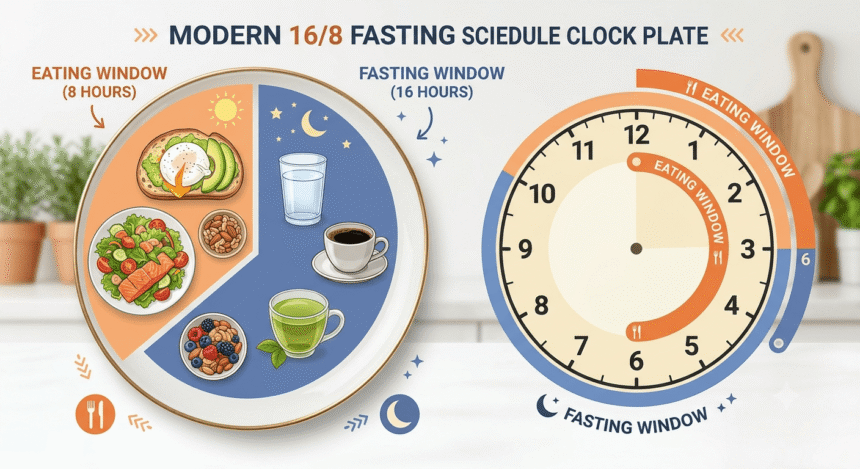
A 16:8 fasting schedule is the most beginner-friendly pattern. You fast for 16 hours and eat during an 8-hour window. Examples:
- Eat 12:00–20:00, fast overnight and morning
- Eat 10:00–18:00 if you prefer an earlier dinner
- Eat 13:00–21:00 if evenings are social
How to start 16:8 safely
- Pick a window you can keep on workdays and weekends.
- Start with 12:12 for a few days, then 14:10, then 16:8.
- Drink water throughout the fast. Black coffee or unsweetened tea is usually fine.
- Break the fast with a balanced meal: protein, fiber, and some fat—not only sweets.
- Keep strength training or walking if you already exercise; do not jump into extreme workouts on day one of fasting.
Sleep matters. Cutting sleep to “make the fast longer” raises hunger hormones and undermines intermittent fasting benefits. If dehydration sneaks in—dry mouth, headache, dark urine—review dehydration symptoms and increase fluids.
Other schedules (optional later)
- 14:10: Gentler entry point for people who feel shaky on 16:8.
- 5:2: Two lower-calorie days per week; harder to track and not ideal as a first step.
- Alternate-day fasting: More aggressive; higher dropout and side-effect risk for beginners.
Beginners should master consistent 16:8 before experimenting with longer fasts.
What to eat in the eating window
IF does not cancel nutrition quality. Build plates around:
- Lean or plant proteins for fullness
- Vegetables and fruit for fiber and micronutrients
- Whole grains or roots for energy if they suit your gut
- Healthy fats such as olive oil, nuts, or avocado in modest amounts
Water-rich produce helps if you feel “empty” during fasting hours. Ideas appear in our hydrating foods guide. People with reflux may need to avoid large late meals even inside the window—see acid reflux symptoms and remedies.
Intermittent fasting mistakes beginners make
Avoid these common intermittent fasting mistakes:
- Jumping straight to 20+ hour fasts because a video said it burns more fat. Longer is not automatically better.
- Using the eating window as a binge license. Calorie surplus still stores fat.
- Skipping protein and fiber, then feeling ravenous and irritable.
- Adding cream, sugar, or “fasting” creamers that break the fast without you noticing.
- Ignoring medications. Blood sugar drugs, blood pressure meds, and some others need timing advice from a clinician.
- Training hard in a depleted state without adjusting carbs around workouts.
- Comparing your window to influencers with different jobs, hormones, and genetics.
- Using fasting to punish body image distress. That pattern can slide into disordered eating.
Intermittent fasting side effects
Mild intermittent fasting side effects are common in the first one to two weeks:
- Hunger waves, especially at old snack times
- Headache, lightheadedness, or irritability
- Constipation if fiber and fluids fall
- Temporary fatigue or poorer workout performance
- Bad breath from low carbohydrate intake in some people
- Sleep disruption if caffeine is pushed later into the day
Most mild effects ease as routines stabilize. Stop and seek care for fainting, chest pain, severe dizziness, vomiting, or mood collapse. Women who notice cycle changes, and anyone with a history of amenorrhea, should discuss IF with a clinician before continuing.
Coffee on an empty stomach can worsen burning or nausea for some people—context in why coffee can hurt the stomach.
Who should not use intermittent fasting
- Children and teens (unless under specialist care)
- Pregnancy and breastfeeding
- History of anorexia, bulimia, or compulsive restriction
- Underweight adults or people with active nutrient deficiencies
- Type 1 diabetes or insulin-treated type 2 diabetes without medical oversight
- People with advanced kidney, liver, or adrenal disease without specialist input
If weight-loss medication is already part of your plan, do not stack aggressive fasting without asking the prescribing clinician. Background reading: weight loss medications in 2026.
A simple 14-day beginner plan
- Days 1–3: 12:12, track energy and sleep
- Days 4–7: 14:10, keep protein at each meal
- Days 8–14: 16:8 if you feel stable; otherwise stay at 14:10
Rate hunger, mood, and workouts daily. If scores drop for more than a few days, widen the window.
Gut and mood considerations
Some people feel better digestion with IF; others get bloating when they break a fast with huge meals. Large refeeds can mimic bloating after eating. Smaller first meals help. Stress and sleep also shape hunger—see mental health habits as complementary support, not a fasting substitute.
Women, hormones, and fasting reality
Intermittent fasting for beginners is often marketed as gender-neutral, but menstrual cycles, perimenopause, pregnancy plans, and thyroid conditions change the risk–benefit balance. Some women feel fine on 16:8; others notice cycle irregularity, worse sleep, or intensified cravings when calories and carbs fall too hard. That does not mean women “cannot fast.” It means you should treat cycle changes, hair shedding, persistent cold intolerance, or loss of period as data—not as proof you need a longer fast.
If you track workouts and recovery, note whether performance drops across two weeks. A wider 14:10 window with better protein can outperform a strict 16:8 that wrecks training. Athletes in heavy training blocks often place the eating window around workouts rather than chasing an influencer’s noon start time.
Breaking the fast without rebound hunger
The first meal after a fast sets the next four hours. A huge pastry-and-latte break can spike energy then crash appetite control. A better pattern for most beginners:
- 20–40 g protein within the first meal
- Fiber from vegetables, fruit, or oats
- Some fat for satiety (olive oil, nuts, egg yolk, avocado)
- Carbohydrates matched to your activity that day
Chew slowly for the first ten minutes. Thirst is often mistaken for hunger at the end of a fast—drink water first, then eat. If coffee was your only “breakfast” during the fast and your stomach burns, switch to water or delay caffeine until food is in—details in coffee-related stomach pain.
Tracking what matters (and what does not)
Useful beginner metrics: weekly average weight (not daily panic), waist comfort, energy 1–10, sleep quality, and how many nights you stuck to the window. Less useful: obsessively photographing every plate for social media, comparing your 16:8 to someone with a different job and body, or buying unregulated “fasting boosters.”
If weight is not moving after three to four consistent weeks, look at liquid calories, weekend eating windows that stretch to 14 hours of eating, and protein intake before you add colder plunges or longer fasts. An anti-inflammatory, plant-forward plate inside the window still matters—see the anti-inflammatory foods list.
Workplace and social strategies
Office culture often centers on morning pastries and late team lunches. Practical options: shift your window to include the social meal that matters most, bring a protein-forward lunch so you are not starving into vending-machine choices, and tell close coworkers you are “eating later” without turning it into a TED Talk. Travel days are for survival—choose the gentler window rather than stacking airport fasting with poor sleep.
Family dinners that start at 7 p.m. may require an eating window that ends at 8 or 9 p.m. That is still intermittent fasting. Rigidity that isolates you from every shared meal is a warning sign, not discipline.
Frequently asked questions
What are the main intermittent fasting benefits for beginners?
The clearest benefits are a simpler eating schedule, fewer late-night calories, and potential support for weight and metabolic markers when overall diet quality is decent. Results vary and are not automatic.
How does a 16:8 fasting schedule work?
You fast about 16 hours and eat within about 8 hours—for example noon to 8 p.m. Water and black coffee are usually allowed during the fast. Consistency matters more than a perfect clock.
What intermittent fasting mistakes should I avoid?
Avoid extreme fasts on day one, bingeing in the eating window, skipping protein, breaking the fast with sugary drinks, and ignoring medical conditions or medications.
What intermittent fasting side effects are normal?
Temporary hunger, headache, irritability, and mild fatigue are common early on. Severe dizziness, fainting, or mood crisis is not “normal”—stop and seek care.
Can I exercise while intermittent fasting?
Light walking is fine for most beginners. Hard training may need food nearby. Listen to performance and safety, not social media rules.
Related reading
- High protein foods for weight loss
- Best foods for gut health
- Hydrating foods for energy
- Dehydration symptoms
- Anti-inflammatory foods list
Disclaimer
This guide to intermittent fasting for beginners is educational only. It is not medical, dietary, or weight-loss advice for your individual case. Consult a qualified clinician or registered dietitian before starting, especially if you have medical conditions, take medications, or have a history of disordered eating.