

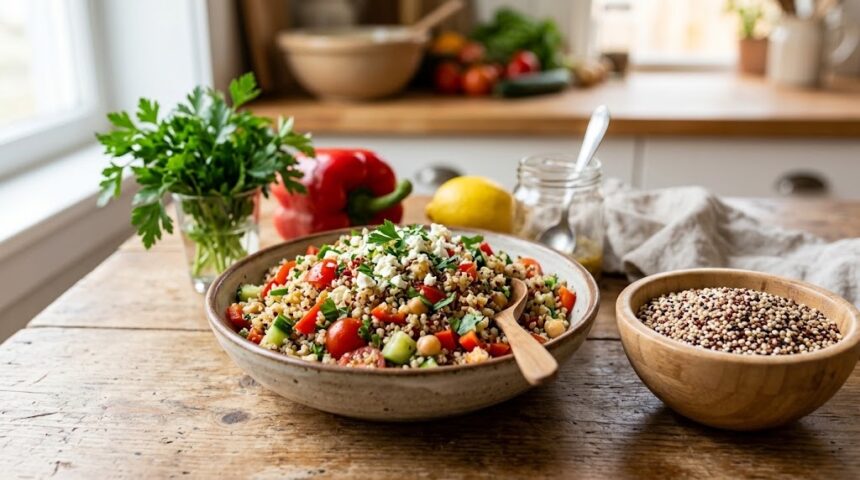
Quinoa nutrition benefits include a complete plant protein (containing all nine essential amino acids, unlike most grains), high fiber content, more iron and magnesium than most other grains, and a naturally gluten-free profile, making it a nutrient-dense alternative to rice or refined pasta. Technically a seed rather than a true cereal grain, quinoa has become a popular staple in balanced eating patterns because it combines a favorable macronutrient profile with a relatively low glycemic impact compared to many refined carbohydrate sources.
This guide covers quinoa’s nutritional profile, its specific health benefits, how it compares to rice and other grains, and answers to common questions about cooking and eating quinoa.
Quinoa’s Nutritional Profile
A cooked cup of quinoa (roughly 185 grams) provides approximately 220 calories, 8 grams of protein, 5 grams of fiber, and meaningful amounts of magnesium, phosphorus, manganese, folate, and iron. What sets it apart nutritionally from most other grains is its protein quality — quinoa is one of the few plant foods considered a “complete protein,” containing all nine essential amino acids the body can’t produce on its own, including lysine, which is often limited in other grains like wheat and rice.
Key Health Benefits of Quinoa
Complete Plant Protein
Quinoa’s complete amino acid profile makes it a particularly useful food for vegetarians and vegans, who often need to combine multiple plant protein sources across the day to get all essential amino acids — quinoa provides this in a single food, making it a convenient, versatile protein source.
High Fiber Content
With roughly 5 grams of fiber per cooked cup, quinoa contains meaningfully more fiber than white rice (about 0.6 grams) and more than most other common grains, supporting digestive health, satiety, and a more gradual blood sugar response.
Naturally Gluten-Free
Quinoa is naturally free of gluten, making it a valuable grain alternative for people with celiac disease or gluten sensitivity, though those with celiac disease should still check for cross-contamination labeling, since quinoa is sometimes processed in facilities that also handle wheat.
Rich in Minerals
Quinoa provides notably more iron and magnesium than white rice and most other common grains, both of which are minerals many people, particularly women and those following plant-based diets, don’t get enough of through diet alone.
Lower Glycemic Impact
Quinoa has a lower glycemic index than white rice, meaning it causes a more gradual blood sugar rise, which can be helpful for people managing insulin resistance, prediabetes, or type 2 diabetes as part of an overall balanced diet.
Antioxidant Content
Quinoa contains plant compounds called quercetin and kaempferol, antioxidants that have been studied for anti-inflammatory properties, adding to its nutritional profile beyond its macronutrient content.
Quinoa vs Rice: How Do They Compare?
- Protein: Quinoa provides significantly more protein (about 8g per cup) and a complete amino acid profile, compared to white rice (about 4g per cup) and brown rice (about 5g per cup)
- Fiber: Quinoa (about 5g per cup) has notably more fiber than white rice (about 0.6g) and somewhat more than brown rice (about 3.5g)
- Minerals: Quinoa generally provides more iron and magnesium than either white or brown rice
- Glycemic index: Quinoa has a lower glycemic index than white rice, making it a somewhat better option for blood sugar management
- Cost and availability: Rice is typically cheaper and more widely available; quinoa tends to cost more and can be harder to find in some regions
How to Cook Quinoa
Rinse quinoa thoroughly before cooking to remove its natural coating of saponins, bitter-tasting compounds that can otherwise make it taste soapy. Combine 1 part quinoa with about 2 parts water or broth, bring to a boil, then reduce to a simmer and cook covered for about 15 minutes, until the liquid is absorbed and the grains appear translucent with a visible curled germ ring. Let it rest for a few minutes off heat, then fluff with a fork before serving.
Simple Ways to Use Quinoa
- As a base for grain bowls with vegetables, protein, and a dressing
- Cold in a salad with chopped vegetables, herbs, and a lemon-olive oil dressing
- As a side dish in place of rice alongside roasted or grilled protein
- Cooked with milk and cinnamon as a warm breakfast porridge alternative
- Added to soups for extra protein and texture
Frequently Asked Questions
Is quinoa healthier than rice?
Quinoa generally offers more protein, fiber, and minerals like iron and magnesium than white or brown rice, along with a complete amino acid profile, making it a more nutrient-dense option, though both can fit a healthy diet depending on individual needs and budget.
Is quinoa a grain or a seed?
Quinoa is technically a seed from a plant related to spinach and beets, not a true cereal grain, but it’s cooked and eaten similarly to grains and is commonly classified as a “pseudo-cereal” for nutritional and culinary purposes.
Is quinoa a complete protein?
Yes, quinoa contains all nine essential amino acids the body needs from food, making it one of the few plant-based complete protein sources, which is particularly useful for vegetarian and vegan diets.
Is quinoa gluten-free?
Yes, quinoa is naturally gluten-free, making it a suitable grain alternative for people with celiac disease or gluten sensitivity, though checking for certified gluten-free labeling is worthwhile to avoid cross-contamination during processing.
Why does quinoa taste bitter sometimes?
Quinoa naturally has a bitter coating of compounds called saponins, which can make it taste soapy if not rinsed thoroughly before cooking; most packaged quinoa is pre-rinsed, but an extra rinse at home can further reduce any bitterness.
Is quinoa good for weight loss?
Quinoa’s combination of protein and fiber supports satiety, which can be helpful for managing appetite as part of a weight loss plan, though like any food, portion size and overall calorie balance still matter most.
Related Reading
- Complex carbohydrates food list: best sources
- Whey protein vs plant protein: which should you choose?
- Best sources of iron in food: complete guide
- Mediterranean diet meal plan: a full week of meals and how to start
Informational only — not medical advice. See a doctor or registered dietitian for guidance tailored to your individual nutrition needs.