

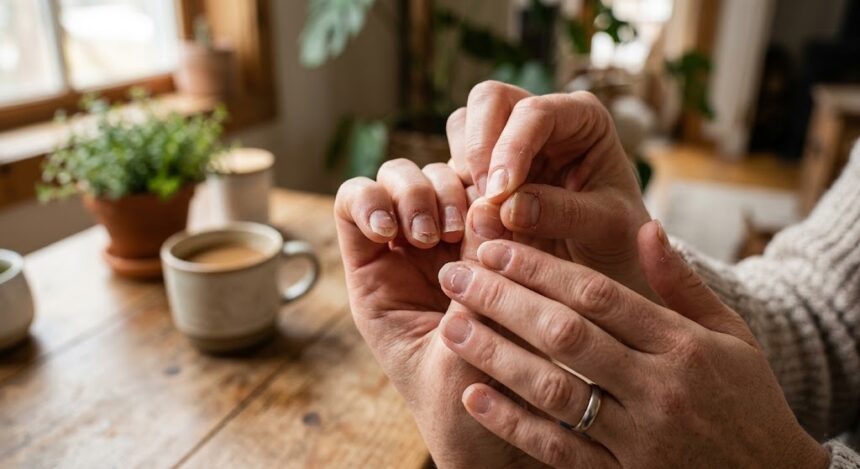
Brittle nails are most commonly caused by excessive moisture exposure and drying (from frequent hand washing, dish washing, or nail polish remover), aging, nutrient deficiencies (particularly biotin, iron, and zinc), and underlying conditions like thyroid disorders, though in many cases the cause is simply repeated moisture cycling — nails swelling with water exposure and then drying out repeatedly — rather than a nutritional or medical problem. Most cases improve significantly with consistent moisturizing, glove use during wet tasks, and protecting nails from frequent polish removal, typically within 3-6 months as new, healthier nail grows out.
This guide covers the most common causes of brittle nails, how to tell if a deficiency or medical condition might be involved, effective treatment approaches, and how long it takes to see improvement.
What Causes Brittle Nails?
Nails become brittle — splitting, peeling, or breaking easily — when their structure is disrupted, either through repeated damage to the outer nail layers or through changes in how the nail is formed at its base (the nail matrix). Several distinct causes can produce this same brittle, peeling appearance.
Moisture Cycling
Repeatedly wetting and drying the nails — through frequent hand washing, dishwashing, swimming, or exposure to cleaning products — causes nails to swell and contract repeatedly, weakening their structure over time. This is one of the most common causes of brittle nails and is often mistaken for a nutritional problem when it’s actually a mechanical, moisture-related issue.
Nail Polish and Removers
Frequent use of nail polish, particularly with acetone-based removers, can dry out and weaken nails over time, especially with back-to-back manicures without breaks.
Aging
Nails naturally become more brittle, thinner, and prone to ridges and splitting with age, related to slower nail growth and reduced natural oil and moisture retention in the nail plate.
Nutrient Deficiencies
Low biotin (vitamin B7), iron deficiency (including iron-deficiency anemia), and zinc deficiency are all associated with brittle, weak, or ridged nails, though true deficiency-related brittle nails are less common than moisture-related causes in people eating a varied diet.
Thyroid Disorders
Both an underactive thyroid (hypothyroidism) and, less commonly, an overactive thyroid can cause brittle, slow-growing, or otherwise abnormal nails, since thyroid hormone affects nail growth and structure.
Certain Medical Conditions
Conditions like psoriasis, lichen planus, and some circulatory issues can affect nail structure and appearance, sometimes including brittleness, alongside other more specific nail changes.
Frequent Use of Harsh Chemicals
Cleaning products, solvents, and some nail treatments (like gel or acrylic removal processes) can weaken and dry nails with repeated exposure.
Types of Nail Brittleness
Not all brittle nails look or behave the same way, and the specific pattern can offer a clue to the underlying cause. Onychoschizia refers to nails that split or peel in horizontal layers, typically starting at the free edge, and is the classic pattern most associated with moisture cycling and chemical exposure. Onychorrhexis refers to vertical ridging and splitting, sometimes linked to aging or, less commonly, certain nutrient deficiencies or skin conditions like lichen planus. Nails that are uniformly thin and bend or crack rather than splitting in layers are more often linked to overall nail plate thinning from aging or prolonged gel or acrylic use. Recognizing which pattern applies can help focus on the most likely cause rather than assuming a single explanation applies to every type of nail fragility.
Is It a Deficiency, or Just Dry Nails?
Most brittle nails are related to moisture and mechanical factors rather than a nutrient deficiency, particularly in people eating a reasonably varied diet. Signs that a deficiency might be involved include brittle nails accompanied by other symptoms, such as fatigue, hair thinning, or pale skin (which can suggest iron deficiency), spoon-shaped nails (koilonychia), which is more specifically associated with iron deficiency, or nail changes alongside other signs of thyroid dysfunction, like unexplained weight changes, fatigue, or temperature sensitivity. If brittle nails are an isolated symptom without these accompanying signs, moisture and mechanical causes are more likely, and dietary supplementation without a confirmed deficiency generally shows limited benefit.
Does Biotin Help Brittle Nails?
Biotin supplementation has some supporting evidence, primarily from a small number of older studies showing improved nail thickness and reduced splitting with biotin supplementation, particularly in people with confirmed or suspected biotin deficiency or in some cases of unexplained brittle nails. However, the evidence base is relatively limited and dated, and biotin is unlikely to provide significant benefit for brittle nails caused primarily by moisture and mechanical factors rather than an actual deficiency. It’s also worth noting that biotin supplementation can interfere with certain thyroid and other lab test results, so it’s worth mentioning biotin use to a doctor before blood testing.
How to Treat and Prevent Brittle Nails
- Moisturize nails and cuticles regularly, ideally with a dedicated nail and cuticle oil or a hand cream applied directly to the nails, not just the surrounding skin
- Wear gloves for wet tasks, such as washing dishes or cleaning, to reduce repeated moisture cycling
- Limit exposure to acetone-based nail polish remover, opting for acetone-free formulas when possible
- Take breaks between nail polish applications, particularly gel or acrylic manicures, to let nails recover
- Keep nails trimmed relatively short, since shorter nails are less prone to snagging and breaking
- Avoid using nails as tools (opening cans, scraping labels), which causes direct mechanical damage
- Consider a nail hardener or strengthening treatment, though these vary in formulation and some can be drying with overuse, so moderation and monitoring your nails’ response matters
- Apply hand cream after every hand washing, since this is one of the most frequent moisture-cycling events in a typical day and one of the easiest habits to build consistently
How Long Does It Take for Brittle Nails to Improve?
Since nail improvement depends on new, healthier nail growing out rather than repairing existing damaged nail, visible improvement typically takes 3-6 months, matching the general timeline for a full fingernail to grow out. Consistency with moisturizing and protective habits during this period matters more than any single quick fix, since brittle nails generally result from ongoing patterns of moisture exposure and mechanical stress rather than a single cause that can be immediately reversed.
When to See a Doctor
See a doctor if brittle nails are accompanied by other symptoms like fatigue, hair loss, or pale skin, which could suggest an underlying deficiency or thyroid issue worth testing for, the nails show significant changes beyond typical brittleness, such as pitting, significant discoloration, separation from the nail bed, or spoon-shaped curving, home care and protective measures haven’t improved brittle nails after several months of consistent effort, or you have a known thyroid condition or other chronic illness and notice new or worsening nail changes.
Frequently Asked Questions
What vitamin deficiency causes brittle nails?
Biotin, iron, and zinc deficiencies are most commonly associated with brittle nails, though true nutrient deficiency is a less common cause than moisture-related and mechanical factors in people eating a varied diet.
Does drinking more water help brittle nails?
General hydration supports overall health, but brittle nails are more directly related to external moisture cycling (repeated wetting and drying) and mechanical damage than internal hydration status, so drinking more water alone is unlikely to significantly improve nail brittleness.
Can brittle nails be a sign of a serious health problem?
In most cases, no — brittle nails are usually related to moisture exposure, aging, or mechanical factors. However, in some cases, they can be associated with thyroid disorders, anemia, or other conditions, particularly when accompanied by other symptoms, making it worth mentioning to a doctor if you’re concerned.
How long does biotin take to work for nails?
In studies showing benefit, biotin supplementation was typically taken for several months (often 6 months or longer) before noticeable improvement in nail thickness and reduced splitting was observed, and it’s most likely to help in people with an actual biotin deficiency rather than in everyone with brittle nails.
Why do my nails get brittle in winter?
Cold, dry winter air reduces ambient humidity, which can dry out both skin and nails more than in warmer, more humid conditions, making winter a common time for brittle nails and cracked cuticles to worsen for many people.
Can gel manicures cause brittle nails?
Yes, the application and removal process for gel and acrylic manicures, particularly frequent or improperly performed removal involving scraping or excessive filing, can significantly weaken and thin natural nails over time, making breaks between treatments and gentle removal techniques important.
Should I take a nail supplement even without a confirmed deficiency?
General nail-support supplements (often containing biotin along with other vitamins) are generally low-risk for most healthy people, but the evidence for benefit is strongest specifically in people with an actual deficiency. For brittle nails caused mainly by moisture and mechanical factors, consistent moisturizing and protective habits are likely to produce more noticeable improvement than a supplement alone.
Do brittle nails run in families?
There can be a genetic component to naturally thinner or more fragile nails, similar to variations in hair or skin type between individuals, though most day-to-day brittleness is still significantly influenced by moisture exposure and mechanical habits rather than genetics alone.
Related Reading
- Nail fungus treatment: causes, symptoms, and how long it takes to clear
- Dry skin causes and remedies: home care guide
- Vitamin D rich foods
Informational only — not medical advice. See a doctor if brittle nails are accompanied by other symptoms or don’t improve with consistent home care.