
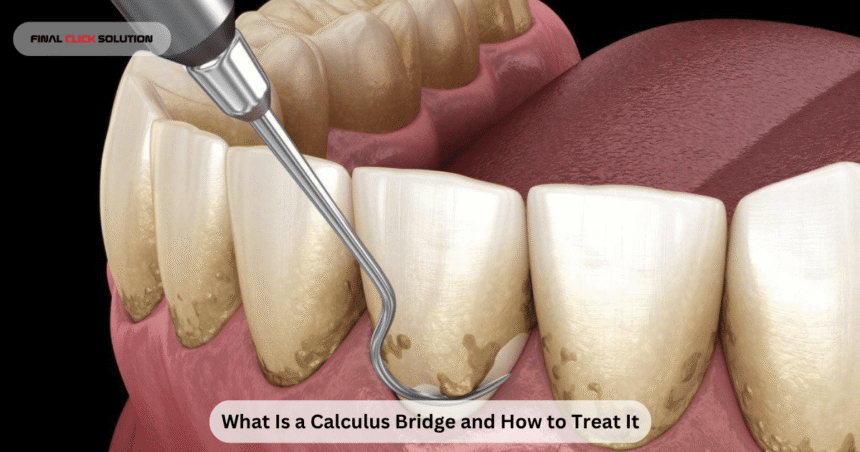
A calculus bridge is a band of hardened dental tartar (calculus) that has mineralized across several teeth, often along the lower front inside surfaces or near upper molars, and it cannot be brushed or flossed off once it has set. Soft plaque becomes calculus when minerals from saliva lock it to the tooth. The rough shelf then collects more plaque, inflames gums, and can hide decay at the edges.
The word “bridge” here is informal clinical slang for continuous tartar, not a dental prosthetic bridge that replaces missing teeth. Confusing the two leads people to search the wrong treatment path.
How plaque turns into a tartar shelf
Plaque is a living biofilm. After a sugary or starchy meal it thickens if it is not disrupted. Within days, calcium and phosphate from saliva can calcify it. Lower incisors sit near sublingual salivary ducts, which is why lingual tartar there is classic. Upper molars sit near parotid duct openings and often show buccal calculus.
Some people mineralize plaque faster because of saliva chemistry, crowded teeth, dry mouth, smoking, inconsistent cleaning, orthodontic appliances, or long gaps between professional care. Age is not a requirement; teenagers with neglected hygiene can form heavy deposits.
A mature calculus bridge may look yellow, tan, brown, or gray-black, especially with tobacco staining. It feels like concrete to the tongue. Gums beside it may bleed, swell, or recede. Bad breath and a metallic or foul taste are common because the surface is porous with bacteria.
Why picking it at home fails and causes harm
Toothbrushes, whitening strips, and mouthwash do not dissolve established calculus. Scraping with pins, craft knives, or “tartar removal” kits sold online can gouge enamel, cut gums, and push fragments under the tissue. Bleeding after DIY scraping is injury, not proof of success.
Hard brushing only abrades gums and exposed roots. If you feel a ridge, leave it and book scaling. Meanwhile, keep cleaning the soft plaque on either side of the deposit so inflammation does not accelerate.
Sports guards worn over unclean teeth add another plaque surface. Clean both the mouth and the appliance; see how to clean a gum shield without warping it.
Gum disease, cavities, and other downstream problems
Calculus itself is mineral, but it shelters biofilm against the gingiva. Gingivitis—red, bleeding gums—often improves after professional removal plus daily plaque control. Periodontitis involves deeper pocketing and bone loss; tartar below the gumline is part of that environment. Loose teeth, drifting, or pus need periodontal assessment, not only a polish.
Edges of a calculus bridge can also trap food against enamel and raise cavity risk next to the deposit. Sensitivity may appear after cleaning when previously covered root surfaces are exposed. That sensitivity is usually temporary and managed with fluoride toothpaste and time, not a reason to avoid scaling.
Systemic links between periodontitis and conditions such as diabetes run both ways: harder glucose control can worsen gum inflammation, and active gum infection can complicate metabolic control. This is association and shared inflammation biology, not a claim that scraping tartar cures heart disease. Still, oral care belongs in whole-person health, alongside habits in women’s preventive health routines or general medical follow-up.
What professional treatment involves
A dentist or hygienist removes calculus with hand scalers, ultrasonic instruments, or both. Supragingival deposits (above the gum) come off in a prophylaxis visit when gums are otherwise healthy. Subgingival tartar and periodontal pockets may need scaling and root planing, sometimes by quadrant, sometimes with local anesthetic.
Lasers and locally delivered antimicrobials are adjuncts in selected cases, not magic replacements for mechanical removal. Antibiotics are not routine for uncomplicated tartar; they may be used when infection criteria are met. Advanced bone loss can require periodontal surgery or extraction of hopeless teeth.
Aftercare includes gentle but thorough cleaning, possible chlorhexidine short courses when prescribed, and a shorter recall—every three to four months for some periodontal patients instead of six. If bleeding persists for weeks despite good technique, return; residual calculus or uncontrolled periodontitis may remain.
Pain control is usually straightforward: over-the-counter analgesics as directed, soft foods if gums are tender, and avoiding aggressive flossing cuts on the same day if the tissue is raw. Fever, spreading facial swelling, or difficulty swallowing after a procedure needs urgent attention.
Prevention after the bridge is gone
Brush along the gumline with a soft brush and fluoride toothpaste twice daily. Clean between teeth every day. Interdental brushes often outperform floss in wider spaces left by recession. A water flosser can help some people but does not replace all mechanical disruption.
Reduce grazing on sticky carbohydrates. Drink water after meals. Treat dry mouth instead of ignoring it. Tobacco cessation slows staining and improves gum healing. If you grind or wear a night guard, keep that appliance as clean as your teeth.
Hydration supports saliva. People who work long shifts or train hard should watch dehydration symptoms that leave the mouth dry and use hydrating foods between long gaps without water rather than constant sugary sports drinks.
Coverage for periodontal visits varies widely. Ask what your dental benefit pays for scaling versus “cleaning,” and whether medical insurance ever contributes when gum infection is severe. Essential health-insurance facts help you prepare questions even when dental is carved out as a separate policy.
What the cleaning appointment feels like
Ultrasonic scalers use rapid vibration and water to fracture calculus. You will feel pressure, hear a high-pitched sound, and taste mineral dust and water. Hand instruments then refine surfaces. Local anesthetic is offered when deposits sit under inflamed gums or when root surfaces are sensitive. Numbness wears off in a few hours; avoid chewing until it does.
Heavy bridges sometimes come off in large pieces. That can feel dramatic and is still controlled professional care. Teeth may look longer afterward because swollen gums recede slightly as inflammation settles and because tartar no longer fills the gaps. This is exposure of the true anatomy, not the cleaning “eating enamel.”
Stain, tobacco, and why color returns
Coffee, tea, red wine, and tobacco darken porous calculus and the pellicle on enamel. Polishing after scaling improves appearance, but stain can return within days if exposure continues. Whitening toothpastes do not remove calculus; they may modestly slow some surface stain. Smoking cessation helps gums more than any paste.
Chlorhexidine rinses prescribed short-term after periodontal therapy can also stain. That tradeoff is temporary and should be weighed against infection control. Ask how long to use the rinse and whether a follow-up polish is planned.
Crowding, bridges, implants, and dentures
Overlapped lower incisors are calculus magnets. Orthodontic alignment can make home cleaning easier but is a separate decision. Fixed prosthetic bridges (the tooth-replacement kind) collect plaque under the false tooth; a floss threader or superfloss is required. Do not confuse that prosthetic bridge with a calculus bridge.
Implants can develop peri-implant tartar and inflammation. Special instruments are used so the implant surface is not scratched carelessly. Denture wearers still need the remaining natural teeth and gums scaled; a full denture does not make oral bacteria irrelevant if any roots or implants remain.
Building a recall plan you will keep
People who form calculus quickly often do better on a three- or four-month hygiene cycle. Put the next visit on the calendar before you leave. Ask for hands-on coaching with an interdental brush sized in your mouth, not a generic floss lecture. If arthritis or dexterity limits cleaning, adaptive handles and water flossers can be part of a realistic plan.
Set a two-week check-in at home: are gums still bleeding daily? Is breath improved? Is the tongue catching a new ridge? Recurrence within weeks suggests missed subgingival deposits, technique gaps, or dry mouth that needs medical review—not personal failure. Photograph the area only if your clinician wants a baseline; photos do not replace probing depths.
Bleeding gums after scaling are not automatic failure
Some bleeding during and shortly after a deep clean is expected when gums were inflamed. It should trend down over days if plaque is removed daily. Continuous heavy bleeding, fever, or rapidly increasing swelling is different and needs a call back. Saltwater rinses, if recommended, soothe tissue; they do not replace interdental cleaning once tenderness allows.
Related reading
- mouthguard hygiene that reduces extra plaque
- dry-mouth risks tied to low fluid intake
- foods that support saliva-friendly hydration
- insurance questions before postponing scaling
Frequently asked questions
What is a calculus bridge on teeth?
It is continuous hardened tartar joining multiple teeth, usually near the gumline. It starts as plaque and mineralizes from saliva until ordinary brushing cannot remove it.
Can I remove a calculus bridge at home?
No. Professional scaling is required. Home scraping tools risk cutting gums and damaging enamel.
Will a calculus bridge grow back?
New plaque can mineralize again, especially if cleaning technique, dry mouth, smoking, or recall gaps stay the same. Prevention and regular professional care slow recurrence.
Does tartar mean I already have gum disease?
Heavy calculus raises the chance of gingivitis and can accompany periodontitis, but only a dental exam and periodontal charting determine the diagnosis.
Disclaimer
Oral findings need direct examination. This explanation of tartar bridges is educational and does not authorize home surgery or delay care for swelling, loose teeth, or spreading infection. Consult a dentist or periodontist for diagnosis and treatment.