

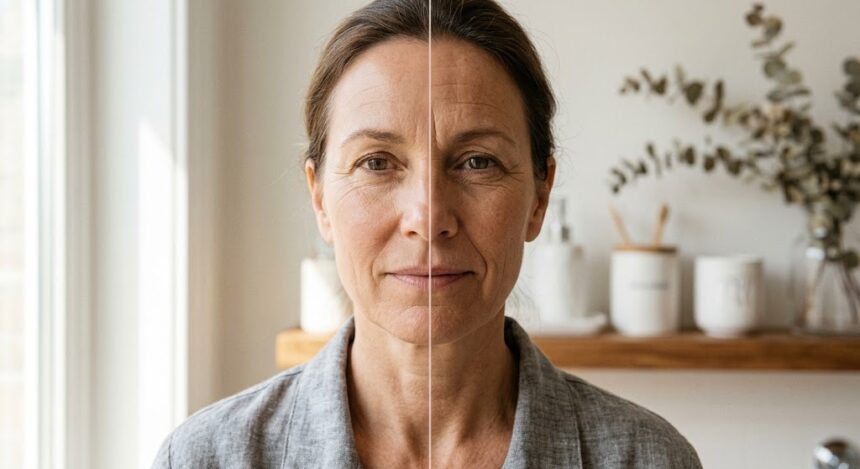
Fine lines and wrinkles are related but distinct signs of skin aging: fine lines are shallow, thin lines that typically appear first, often from repeated facial expression (like around the eyes or mouth), and can sometimes fade or soften with proper hydration and skincare, while wrinkles are deeper, more permanent creases that form as collagen and elastin decline with age and sun damage, and don’t fully resolve with topical treatment alone. Fine lines are essentially an earlier stage in the same aging process that eventually produces wrinkles if the underlying causes — sun exposure, collagen loss, repeated muscle movement — continue unaddressed.
This guide covers exactly how fine lines differ from wrinkles, what causes each, which treatments work for which stage, and how to prevent fine lines from progressing into deeper wrinkles.
What Are Fine Lines?
Fine lines are the earliest visible signs of skin aging — shallow, thin lines that typically appear in areas of repeated facial movement, such as around the eyes (“crow’s feet”), on the forehead, and around the mouth. They form initially from a combination of repeated muscle contraction (from smiling, squinting, or other expressions) and early changes in skin’s collagen and elastin support. Fine lines are sometimes described as more superficial and can be less noticeable when skin is well-hydrated, since dehydration makes fine lines more visually apparent by making the skin’s surface appear less smooth and plump.
What Are Wrinkles?
Wrinkles are deeper, more established creases in the skin that form as the structural proteins collagen and elastin break down significantly over time, combined with cumulative sun damage (photoaging) and, in some cases, loss of underlying facial fat and bone density that changes how skin drapes over the face. Unlike fine lines, wrinkles represent a more permanent structural change to the skin and don’t disappear with hydration alone, generally requiring more targeted treatments like retinoids, professional procedures, or, for some types, addressing volume loss with fillers.
Types of Wrinkles
Dermatologists often categorize wrinkles into two main types based on their cause:
Dynamic Wrinkles
Caused by repeated muscle movement — such as forehead lines from raising eyebrows, or frown lines between the brows — dynamic wrinkles are initially only visible during the expression itself but can become permanently etched into the skin over years of repeated movement. Treatments like botulinum toxin injections work specifically on this type by temporarily relaxing the underlying muscle movement.
Static Wrinkles
Present at rest, without requiring any facial movement, static wrinkles result from a more advanced combination of collagen and elastin loss, sun damage, and sometimes volume loss. These generally need treatments that address the skin’s structure directly, such as retinoids, certain energy-based devices, or dermal fillers, rather than muscle-relaxing treatments alone.
Key Differences Between Fine Lines and Wrinkles
Depth
Fine lines are shallow and superficial, visible mainly on close inspection or in certain lighting, while wrinkles are noticeably deeper creases visible at a normal viewing distance.
Cause
Fine lines are more influenced by hydration, repeated expression, and early collagen changes, while wrinkles result from more significant, cumulative collagen and elastin breakdown, combined with sun damage and sometimes volume loss.
Reversibility
Fine lines can sometimes visibly improve with proper hydration, sun protection, and topical treatment like retinoids, since less structural damage has occurred. Wrinkles are more resistant to topical treatment alone and often require more intensive intervention to meaningfully improve.
Typical Age of Onset
Fine lines often begin appearing in the mid-to-late 20s to early 30s for many people, while more established wrinkles typically become more prominent from the late 30s into the 40s and beyond, though this varies significantly based on genetics, sun exposure, and skincare habits.
What Causes Fine Lines and Wrinkles to Form?
Both share overlapping causes, though their relative importance differs by stage: UV exposure (photoaging) is considered the single largest external contributor to skin aging, breaking down collagen and elastin over years of cumulative sun exposure, natural collagen and elastin decline, which begins gradually in the mid-20s and accelerates with age, repeated facial expressions, which create dynamic wrinkles over years of consistent muscle movement, dehydration, which makes existing fine lines more visually pronounced, though it doesn’t create structural wrinkles on its own, smoking, which significantly accelerates collagen breakdown and reduces skin blood flow, and genetics, which influence how quickly and where an individual develops visible signs of aging.
How to Treat Fine Lines
- Retinoids (over-the-counter retinol or prescription tretinoin), which speed skin cell turnover and stimulate collagen production over consistent use
- Hyaluronic acid serums, which improve hydration and can visibly soften the appearance of fine lines by plumping the skin’s surface
- Consistent, broad-spectrum sunscreen, which prevents further UV-related damage that would otherwise deepen fine lines into wrinkles
- Vitamin C serum, which supports collagen production and provides antioxidant protection against further damage
- Adequate hydration and a humidifier in dry environments, which reduces the surface dehydration that makes fine lines more visually apparent
How to Treat Wrinkles
- Prescription-strength retinoids, which have the strongest topical evidence for improving collagen production and wrinkle appearance over months of consistent use
- Botulinum toxin injections, effective specifically for dynamic wrinkles caused by muscle movement, such as forehead lines and crow’s feet
- Dermal fillers, which can address static wrinkles related to volume loss, particularly around the mouth and cheeks
- Laser resurfacing and microneedling, which stimulate deeper collagen remodeling for more significant improvement in established wrinkles
- Chemical peels, which can improve surface texture and some wrinkle appearance, particularly when combined with other treatments
How Long Does It Take to See Improvement?
Timelines differ meaningfully between the two, which is worth knowing before starting any treatment. For fine lines, consistent use of hydrating ingredients like hyaluronic acid can show visible improvement within days to a couple of weeks, while retinoids typically take 8-12 weeks of regular use to show measurable improvement in fine line appearance through increased collagen production. For wrinkles, topical retinoids generally require 3-6 months of consistent use before noticeable improvement, since deeper structural collagen remodeling is a slower process, while professional treatments like injectables show results within days (for botulinum toxin) to a couple of weeks (for fillers), and energy-based treatments like laser resurfacing often need multiple sessions over months for full results.
Can Fine Lines Turn Into Wrinkles?
Yes, fine lines and wrinkles exist on a continuum rather than being entirely separate conditions — untreated fine lines, combined with ongoing sun exposure, repeated expression, and natural collagen decline, commonly progress into deeper, more permanent wrinkles over years. This is part of why addressing fine lines early, particularly with sun protection and retinoids, is considered a meaningful prevention strategy for delaying the development of more significant wrinkles later.
Frequently Asked Questions
Can fine lines be reversed completely?
Fine lines can often be significantly improved, and sometimes largely reversed, with consistent hydration, sun protection, and treatments like retinoids and hyaluronic acid, since less permanent structural damage has occurred compared to established wrinkles.
What is the difference between expression lines and wrinkles?
Expression lines (dynamic wrinkles) are caused specifically by repeated facial muscle movement and are initially visible only during that expression, while the broader term “wrinkles” includes both these dynamic lines and static wrinkles present even at rest, caused by more permanent structural skin changes.
At what age do fine lines usually start?
Fine lines often begin appearing in the mid-to-late 20s to early 30s for many people, though this varies significantly based on genetics, sun exposure history, and skincare habits.
Does drinking water get rid of fine lines?
Adequate hydration can improve the appearance of fine lines by making skin look plumper and smoother, but it doesn’t address the deeper structural collagen and elastin changes that cause wrinkles, so it’s a helpful but limited part of a broader anti-aging approach.
Is retinol effective for both fine lines and wrinkles?
Yes, retinoids are among the most well-researched topical treatments for both, working by speeding cell turnover and stimulating collagen production, though more established wrinkles generally take longer and may need additional treatments beyond retinol alone for significant improvement.
Can Botox treat fine lines, or only wrinkles?
Botox works specifically on dynamic wrinkles caused by muscle movement and isn’t typically the first choice for very early, superficial fine lines, which usually respond better to hydration, sun protection, and retinoids before considering injectable treatments.
Do fine lines and wrinkles appear in the same areas of the face?
Often yes, initially — areas with the most repeated movement, like around the eyes, forehead, and mouth, tend to show fine lines first and later develop into more established wrinkles in those same locations, since ongoing muscle movement and cumulative sun exposure typically affect these zones most consistently over time.
Can lifestyle changes alone prevent wrinkles from forming?
Lifestyle changes — consistent sun protection, not smoking, adequate hydration, and a nutrient-rich diet — can meaningfully slow the pace and severity of wrinkle formation, but they can’t fully prevent the natural, genetically influenced collagen decline that occurs with age, meaning some degree of wrinkle formation over decades is a normal part of aging even with excellent skin care habits.
Related Reading
- Vitamin C serum benefits: what it actually does for your skin
- Hyaluronic acid serum benefits: how it works and how to use it
- Red light therapy for skin: what it actually does and what to expect
- Collagen supplements benefits: what the research actually shows
Informational only — not medical advice. See a dermatologist for personalized treatment recommendations, especially before considering injectable or professional procedures.