

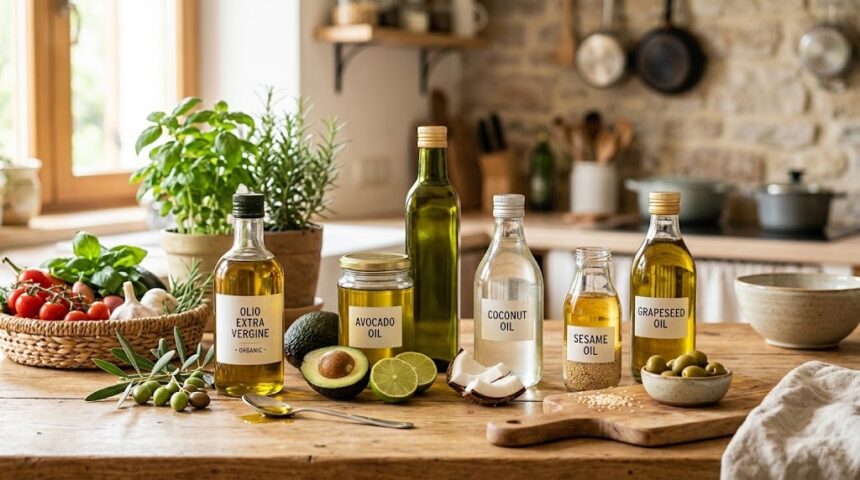
The best cooking oils for health are generally those high in monounsaturated or polyunsaturated fats with a smoke point suited to how you’re cooking — extra virgin olive oil for low-to-medium heat and dressings, avocado oil for high-heat cooking, and oils like canola or sunflower for baking, while oils high in saturated fat (like coconut oil) or highly processed seed oils used repeatedly at high heat are better used sparingly. The “best” oil isn’t one single product; it depends on the smoke point needed for the cooking method and the overall fat profile you’re aiming for across your diet.
This guide covers how to choose a cooking oil based on smoke point and fat type, the healthiest options for different cooking methods, oils to limit, and answers to common questions about cooking oil and health.
What Makes a Cooking Oil “Healthy”?
Two factors matter most: the fat profile and the smoke point. Fat profile refers to the balance of saturated, monounsaturated, and polyunsaturated fat in the oil — research consistently links replacing saturated fat with unsaturated fat (mono- or polyunsaturated) to better cardiovascular outcomes. Smoke point is the temperature at which an oil starts to break down and produce harmful compounds and off flavors; using an oil past its smoke point isn’t just a flavor issue, it can generate compounds linked to inflammation and oxidative stress, which is why matching the oil to the cooking method matters as much as the oil’s general health reputation.
Best Oils by Cooking Method
Low to Medium Heat, Dressings, and Finishing
- Extra virgin olive oil — rich in monounsaturated fat and antioxidant polyphenols, with the strongest body of research behind it for heart health; best for sautéing, dressings, and drizzling rather than very high-heat frying, though it can handle typical stovetop cooking well
- Flaxseed oil — high in omega-3 fatty acids, but heat-sensitive and best used unheated, in dressings or drizzled over finished dishes
High Heat Cooking and Frying
- Avocado oil — a high smoke point (around 500°F/260°C) combined with a mostly monounsaturated fat profile similar to olive oil, making it a strong choice for searing and high-heat cooking
- Refined avocado or light olive oil — refining raises the smoke point compared to extra virgin versions, useful for higher-heat cooking while keeping a favorable fat profile
- Peanut oil — a high smoke point and mostly unsaturated fat, commonly used for stir-frying and deep-frying
Baking
- Canola oil — a neutral flavor, moderate smoke point, and relatively low saturated fat content make it a common, budget-friendly choice for baking
- Sunflower or safflower oil — also neutral-flavored with a favorable unsaturated fat profile, suitable for baking and general cooking
Oils to Use Sparingly
- Coconut oil — high in saturated fat (over 80%), which most major health organizations recommend limiting despite its popularity; occasional use is fine, but it shouldn’t be a primary everyday cooking oil
- Palm oil — also high in saturated fat, and commonly found in processed foods rather than home cooking
- Butter and ghee — flavorful and fine in moderation, but high in saturated fat, so best used as an accent rather than the primary cooking fat
- Reused frying oil — repeatedly heating any oil past its smoke point, especially reused frying oil, breaks it down and generates harmful compounds regardless of the oil type
Are Seed Oils Actually Bad for You?
Seed oils (canola, sunflower, soybean, corn) have become a subject of significant debate online, with some claiming they’re inherently harmful due to their omega-6 content. However, the current body of scientific evidence, including large reviews of randomized trials, does not support the idea that these oils are harmful when used as part of a normal diet — they’ve actually been associated with modestly lower cardiovascular risk in most studies compared to saturated fat alternatives like butter. The concern is less about the oil itself and more about the ultra-processed foods it’s often found in, and about total dietary balance rather than any single oil being uniquely dangerous.
Cooking Oil Smoke Points at a Glance
- Extra virgin olive oil: ~375-410°F (190-210°C)
- Refined avocado oil: ~500-520°F (260-270°C)
- Canola oil: ~400-450°F (205-230°C)
- Peanut oil: ~450°F (230°C)
- Coconut oil (refined): ~400°F (204°C)
- Butter: ~300-350°F (150-175°C), lowest among common cooking fats
These figures vary somewhat by brand and refinement level, so they’re useful as general guidance rather than exact figures.
Frequently Asked Questions
What is the healthiest oil for everyday cooking?
Extra virgin olive oil is widely considered one of the healthiest all-purpose options for everyday low-to-medium heat cooking, given its strong research backing for heart health and its favorable monounsaturated fat and antioxidant profile.
Can you fry with olive oil?
Yes, olive oil (particularly refined or “light” olive oil) can handle typical frying temperatures reasonably well, though for very high-heat deep frying, an oil with a higher smoke point like avocado or refined peanut oil is generally more stable.
Is coconut oil healthy?
Coconut oil is high in saturated fat, and most major health organizations recommend limiting it rather than using it as a primary cooking oil, despite its popularity in some wellness circles. Occasional use as part of a varied diet is generally not a concern.
Are seed oils inflammatory?
Current evidence, including large clinical trial reviews, does not support the claim that seed oils are inherently inflammatory or harmful when consumed as part of a normal diet; they’ve generally been linked to neutral or favorable cardiovascular outcomes compared to saturated fat.
What happens if you cook oil past its smoke point?
Cooking an oil past its smoke point breaks down its structure, produces a burnt flavor and visible smoke, and generates compounds, including some linked to oxidative stress, which is why matching an oil’s smoke point to your cooking temperature matters for both flavor and health.
Which oil is best for high-heat stir-frying?
Avocado oil and peanut oil are both well suited to high-heat stir-frying, since they combine a high smoke point with a predominantly unsaturated fat profile.
Related Reading
- Healthy fats vs unhealthy fats: what the research actually shows
- Olive oil health benefits: what the research actually shows
- Avocado nutrition benefits: what the research actually shows
- Best diet for high cholesterol: foods that help and foods to limit
Informational only — not medical advice. See a doctor or registered dietitian for guidance tailored to your health status, particularly if you’re managing cholesterol or cardiovascular risk factors.