

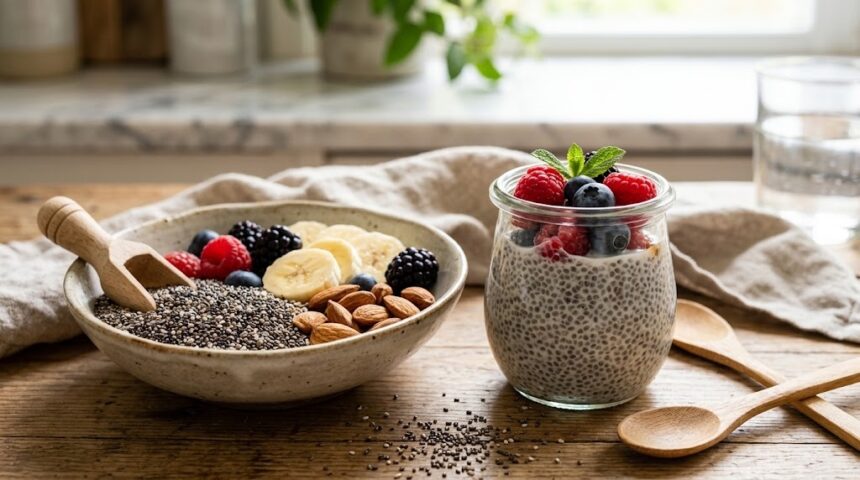
Chia seeds benefits include high fiber content (about 10 grams per ounce, among the highest of any food), plant-based omega-3 fatty acids, complete plant protein, and significant amounts of calcium, magnesium, and antioxidants, all in a small, versatile seed that can be added to almost any meal without cooking. Their unique ability to absorb up to 10-12 times their weight in liquid, forming a gel-like texture, is central to several of their benefits, particularly for digestion, blood sugar stability, and hydration.
This guide covers chia seeds’ full nutritional profile, the specific research behind their health claims, how to prepare them properly, and practical ways to add them to your diet.
Chia Seeds Nutrition Facts
One ounce (about 2 tablespoons) of chia seeds provides approximately 138 calories, 4.4g of protein (a relatively complete plant protein profile), 8.7g of fat (largely omega-3 alpha-linolenic acid, or ALA), 12g of carbohydrates, of which about 10g is fiber, making chia one of the most fiber-dense foods available, and meaningful amounts of calcium, phosphorus, magnesium, and manganese, along with antioxidant compounds.
What Are the Health Benefits of Chia Seeds?
Fiber and Digestive Health
At roughly 10g of fiber per ounce — split between soluble and insoluble fiber — chia seeds support digestive regularity and, since soluble fiber forms a gel when combined with liquid, contribute to a soft, well-formed stool and slower digestion that supports feelings of fullness.
Blood Sugar Stability
The soluble fiber in chia seeds slows carbohydrate digestion and absorption when eaten alongside a meal, which several studies have linked to reduced post-meal blood sugar spikes, making chia seeds a reasonable addition for people managing blood sugar, alongside other dietary strategies rather than as a standalone treatment.
Heart Health
Chia’s ALA omega-3 content is associated with modest improvements in triglycerides and, in some research, blood pressure, though ALA is a less potent form of omega-3 than the EPA and DHA found in fatty fish, meaning chia contributes to but doesn’t fully replace fish-based omega-3 sources for cardiovascular benefit.
Bone Health
Chia seeds provide a notable amount of calcium, magnesium, and phosphorus per serving — all minerals involved in bone structure — making them a useful addition to a bone-supportive diet, particularly for people who consume less dairy.
Satiety and Weight Management
The combination of fiber, protein, and the gel-forming property of chia seeds when combined with liquid supports feelings of fullness, which may help with appetite regulation as part of an overall weight management approach, though chia alone isn’t a significant weight-loss intervention.
Antioxidant Content
Chia seeds contain several antioxidant compounds, including chlorogenic acid and quercetin, which help protect cells from oxidative stress, contributing to their nutrient density beyond fiber and healthy fat alone.
How to Prepare Chia Seeds Properly
Chia seeds can be eaten dry, sprinkled onto food, but they’re most commonly and effectively used after being soaked in liquid, which activates their gel-forming property. To make basic chia gel or pudding, combine 3 tablespoons of chia seeds with 1 cup of liquid (water, milk, or a plant-based milk), stir well to prevent clumping, and let sit for at least 15-30 minutes, or ideally overnight in the refrigerator, until it reaches a pudding-like consistency. Eating chia seeds without adequate liquid, particularly in large amounts, is generally not recommended, since their significant water-absorbing capacity can theoretically contribute to digestive discomfort if consumed dry in large quantities without sufficient fluid.
Chia Seeds for Hydration and Endurance
Chia seeds have a long history of use by endurance athletes, particularly in Mexican and Central American running traditions, largely due to their water-retention properties. When soaked, chia’s gel-like coating helps slow fluid absorption in the digestive tract, which some athletes use as a strategy to support sustained hydration during long periods of exercise, alongside regular water intake rather than as a replacement for it. This traditional use has some plausible physiological basis given chia’s known water-absorbing capacity, though large-scale clinical research specifically on chia for athletic hydration performance is still fairly limited compared to its more established benefits for fiber and general nutrition.
Chia Seeds vs. Flaxseed: What’s the Difference?
Both are excellent plant-based fiber and omega-3 sources, but they have some practical differences. Chia seeds don’t need to be ground to be digested and absorbed effectively, since their fiber and nutrients are accessible even when eaten whole, while flaxseed generally needs to be ground for the body to access its nutrients efficiently, since whole flaxseed can pass through the digestive system largely intact. Chia seeds have a milder, more neutral taste and a distinctive gel-forming texture when wet, while ground flaxseed has a more noticeable nutty flavor and a drier texture. Nutritionally, both are comparable sources of fiber and ALA omega-3s, so the choice often comes down to texture preference and how you plan to use them in recipes.
How Much Chia Seed Should You Eat?
Most research showing benefit uses around 1-2 tablespoons (about 15-30g) per day, and this amount is generally sufficient to gain the fiber, omega-3, and mineral benefits without excessive calorie or fiber intake that could cause digestive discomfort in sensitive individuals. Starting with a smaller amount and gradually increasing, while ensuring adequate water intake, helps the digestive system adjust, particularly for people not used to a high-fiber diet.
Ways to Add Chia Seeds to Your Diet
Beyond basic chia pudding, chia seeds are versatile enough to fit into many parts of a normal diet without much effort. Stir a tablespoon into oatmeal, smoothies, or yogurt for an easy fiber and omega-3 boost. Use soaked chia gel as an egg substitute in baking (roughly 1 tablespoon chia plus 3 tablespoons water per egg), which works particularly well in denser baked goods like muffins or pancakes. Sprinkle dry seeds over salads, soups, or roasted vegetables for a subtle textural addition. Mix into homemade salad dressings or sauces, where they’ll thicken slightly over time due to their gel-forming property.
Are There Any Risks or Side Effects of Chia Seeds?
Chia seeds are generally very safe for most people, but a few considerations are worth knowing. Excessive intake without adequate fluid can contribute to digestive discomfort, bloating, or in rare, extreme cases, difficulty swallowing if consumed dry and then swallowed without enough liquid, since the seeds can expand once they reach moisture in the throat or esophagus. People on blood-thinning medication should be aware that chia’s omega-3 content has a mild blood-thinning effect, worth discussing with a doctor if taking anticoagulants regularly in larger amounts. People with a known seed or nut sensitivity should introduce chia cautiously, as with any new food.
Frequently Asked Questions
What do chia seeds do for your body?
Chia seeds provide fiber for digestive health, plant-based omega-3 fatty acids for heart health, calcium and magnesium for bone health, and protein and healthy fat that support satiety and blood sugar stability.
Should you soak chia seeds before eating them?
It’s recommended, particularly if eating a meaningful amount, since soaking activates their gel-forming property and makes them easier to digest comfortably; chia seeds can also be eaten dry in small sprinkled amounts on food without soaking.
How long should chia seeds soak before eating?
At least 15-30 minutes to reach a gel-like consistency, though soaking overnight in the refrigerator produces a thicker, pudding-like texture that many people prefer for dishes like chia pudding.
Can chia seeds help you lose weight?
Chia seeds can support weight management indirectly through their fiber and protein content promoting fullness, but they’re not a standalone weight-loss food, and results depend on how they fit into an overall calorie-appropriate diet.
Is it safe to eat chia seeds every day?
Yes, for most healthy people, daily consumption of about 1-2 tablespoons is considered safe and is the amount used in most research showing benefit, though it’s reasonable to introduce them gradually if you’re not used to a high-fiber diet.
What is the difference between chia seeds and basil seeds?
They’re visually similar once soaked, both forming a gel-like coating, but chia seeds generally have a higher fat and omega-3 content, while basil seeds (sabja seeds) tend to be slightly higher in certain other nutrients; both offer comparable fiber and hydration-related benefits.
Can you eat chia seeds raw?
Yes, raw chia seeds are safe to eat, either dry (sprinkled in small amounts on food) or soaked in liquid; no cooking or heating is required to access their nutritional benefits, though soaking makes them easier to digest and creates the characteristic gel texture many people prefer.
Do chia seeds expire?
Yes, though they have a relatively long shelf life compared to many seeds, typically 2-4 years unopened when stored in a cool, dry place, due to their antioxidant content helping resist rancidity; once exposed to air, moisture, or heat repeatedly, quality and nutrient content gradually decline.
Related Reading
- Best fiber foods for digestion
- Magnesium rich foods
- Healthy fats vs unhealthy fats: what the research actually shows
- Calcium rich foods for bone health
Informational only — not medical advice. See a doctor before significantly increasing chia seed intake if you take blood-thinning medication or have a swallowing disorder.