
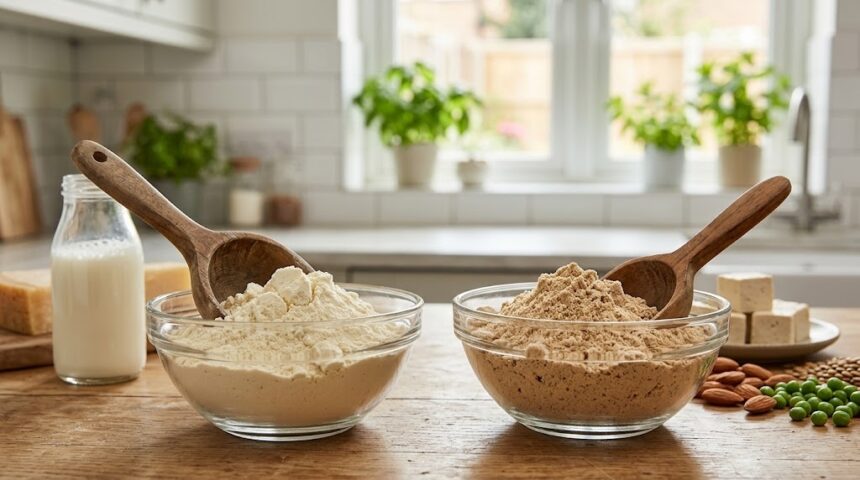
Whey protein is generally faster-absorbing and has a complete amino acid profile with higher leucine content, making it slightly more effective for muscle protein synthesis per gram, while plant protein (pea, soy, rice blends) is dairy-free, more sustainable, and, when sourced from a blend of plants, can match whey’s amino acid profile closely enough that the practical difference in muscle-building results is small for most people. For most fitness and health goals, the choice comes down to dietary preference, tolerance, and specific needs (like dairy allergy or vegan diet) rather than one being definitively superior for everyone.
This guide covers the real nutritional and performance differences between whey and plant protein, who benefits more from each, and how to choose based on your specific goals.
What Is Whey Protein?
Whey protein is a byproduct of cheese production, derived from milk, and is considered a “complete” protein containing all nine essential amino acids in proportions well-suited to muscle protein synthesis. It comes in several forms: whey concentrate (around 70-80% protein, retains more lactose and fat), whey isolate (90%+ protein, less lactose, more filtered), and whey hydrolysate (pre-broken-down for faster absorption, often used in specialized products).
What Is Plant Protein?
Plant protein powders are typically made from pea, rice, soy, hemp, or a blend of these sources. Individually, most plant proteins are “incomplete,” meaning they’re lower in one or more essential amino acids — pea protein tends to be lower in methionine, while rice protein is lower in lysine, for example. However, blended plant proteins (combining two or more sources, such as pea and rice) can offset these individual gaps and provide a more complete amino acid profile comparable to animal-based proteins.
Whey vs. Plant Protein: Amino Acid Profile and Muscle Building
Whey protein is naturally high in leucine, a specific amino acid that plays an outsized role in triggering muscle protein synthesis, and this has historically given whey a research edge for muscle building compared to single-source plant proteins. However, research comparing whey to blended plant proteins (rather than single-source plant proteins) shows the practical difference in muscle-building outcomes narrows significantly, and some studies find comparable results when plant protein intake is adjusted slightly higher to account for its generally somewhat lower digestibility and leucine content. In practice, this means a well-formulated blended plant protein, consumed in adequate amounts, can support similar muscle-building outcomes to whey for most people, particularly when total daily protein intake is sufficient regardless of source.
Absorption Speed: Does It Matter?
Whey protein, particularly whey isolate and hydrolysate, absorbs faster than most plant proteins, which has led to marketing around “fast-absorbing” whey for post-workout use. However, research on the practical importance of absorption speed for muscle building has become more nuanced — for most people, especially those not training at an elite or bodybuilding level, total daily protein intake and consistent distribution across meals matters more than the precise absorption speed of any single protein source or the specific timing relative to a workout.
Digestive Tolerance
Whey protein contains lactose (more in concentrate, less in isolate), which can cause bloating, gas, or digestive discomfort in people with lactose intolerance. Plant protein is naturally lactose-free, making it a more comfortable option for people with dairy sensitivity, though some plant proteins (particularly pea protein) can cause mild digestive symptoms in sensitive individuals due to their fiber and specific plant compound content. For people with no dairy sensitivity, this difference is largely irrelevant, but for those who experience digestive discomfort with dairy, plant protein is often the more comfortable choice.
Environmental and Ethical Considerations
Plant protein production generally has a smaller environmental footprint compared to dairy-based whey protein, in terms of water use and greenhouse gas emissions, making it a preferred choice for people prioritizing environmental sustainability. It’s also the necessary choice for vegans and often preferred by vegetarians who avoid dairy, or anyone avoiding animal products for ethical or religious reasons.
Taste, Texture, and Mixability
Beyond nutrition, practical differences in taste and texture often influence which protein people actually stick with consistently, which matters more for long-term results than small nutritional edges on paper. Whey protein generally mixes smoothly and has a milder, creamier taste that many people find easier to incorporate into shakes, smoothies, and baking. Plant protein, particularly pea-based formulas, has historically had a slightly grittier texture and a more noticeable earthy or “green” taste, though formulation has improved significantly in recent years, and many modern blended plant proteins are much closer to whey in taste and mixability than earlier versions. Trying a few different brands or blends, rather than assuming one bad experience represents all plant protein options, is worth doing before concluding a category doesn’t work for you.
Cost Comparison
Cost can be a meaningful practical factor when choosing between whey and plant protein, especially for regular, long-term use. Whey protein, particularly whey concentrate, is generally the more affordable option per gram of protein, since it’s a byproduct of the well-established dairy industry with efficient production at scale. Plant protein tends to cost somewhat more per serving, particularly for blended, higher-quality formulas, reflecting less mature production infrastructure and the need to combine multiple plant sources to achieve a complete amino acid profile. For people on a tighter budget without dairy sensitivity, this cost difference can reasonably factor into the decision alongside taste and dietary preference.
Which Is Better for Weight Loss?
Both whey and plant protein can support weight loss similarly, primarily through their shared effects on satiety (helping you feel fuller after eating) and supporting lean muscle mass during a calorie deficit, which helps maintain metabolic rate. Neither protein type has a meaningfully unique fat-burning property beyond its general contribution to protein intake and appetite regulation, so the choice for weight loss purposes comes down to which one you’ll consistently use and tolerate well, rather than one being inherently superior for fat loss specifically.
How Much Protein Do You Actually Need?
Regardless of source, most active adults benefit from roughly 1.6-2.2 grams of protein per kilogram of body weight per day for muscle building and maintenance, though general health guidelines for less active adults are somewhat lower (around 0.8-1.2 g/kg). Protein powder, whether whey or plant-based, is a convenient supplement to help reach this target through diet, particularly for people who struggle to get enough protein from whole foods alone, but it’s a tool for reaching a total intake goal, not something with unique properties beyond the protein content itself.
Which Should You Choose?
Choose whey protein if you have no dairy sensitivity, want a well-researched, cost-effective option with a complete amino acid profile in a single source, and prioritize the fastest possible absorption for post-workout use, though this timing precision matters less than commonly marketed. Choose plant protein if you’re vegan, vegetarian avoiding dairy, or lactose intolerant, prefer a more environmentally sustainable option, or simply prefer to avoid animal-derived products for personal reasons — just look for a blended plant protein source (such as pea plus rice) rather than a single-source option to ensure a more complete amino acid profile.
Frequently Asked Questions
Is whey protein better than plant protein for building muscle?
Whey has a slight research edge due to its higher leucine content and complete amino acid profile in a single source, but well-formulated blended plant proteins (like pea and rice combined) can produce comparable muscle-building results when total protein intake is adequate.
Can plant protein build muscle as effectively as whey?
Yes, particularly when using a blended plant protein source rather than a single plant protein, and when consuming a slightly higher amount to account for generally lower digestibility compared to whey; total daily protein intake matters more than the specific source for most people.
Is plant protein easier to digest than whey?
For people with lactose intolerance or dairy sensitivity, yes, since plant protein doesn’t contain lactose; for people without dairy sensitivity, digestive tolerance between the two is generally comparable, though individual response varies.
Which protein powder is best for weight loss?
Neither whey nor plant protein has a unique fat-burning advantage over the other; both support weight loss similarly through satiety and muscle maintenance during a calorie deficit, so the better choice depends on personal preference and tolerance.
Do I need to combine different plant proteins to get all essential amino acids?
It’s recommended, since most single plant protein sources are missing or low in at least one essential amino acid; choosing a blended plant protein powder (such as pea and rice, or pea and hemp) provides a more complete amino acid profile similar to animal-based protein.
Is whey protein bad for you?
For most healthy people without a dairy allergy or lactose intolerance, whey protein is considered safe when consumed in reasonable amounts as part of an overall balanced diet; people with dairy sensitivities may experience digestive discomfort and should consider a lactose-free whey isolate or a plant-based alternative instead.
Can I mix whey and plant protein together?
Yes, there’s no issue combining them, and some people do this specifically to get whey’s fast absorption and leucine content alongside plant protein’s fiber and micronutrient profile; this is mostly a matter of personal preference rather than a necessary strategy for most people’s goals.
Does cooking or baking with protein powder destroy the protein?
No, protein is generally stable at typical baking temperatures, though very high heat over prolonged periods can cause some minor structural changes to the protein; for typical baking recipes, whey and plant protein both hold up well enough to be commonly used in protein-enhanced baked goods without meaningfully losing their nutritional value.
Related Reading
- Best diet for high cholesterol
- Mediterranean diet meal plan: a full week of meals and how to start
- Magnesium rich foods
Informational only — not medical advice. See a doctor or registered dietitian for personalized protein recommendations, especially if managing a health condition.