

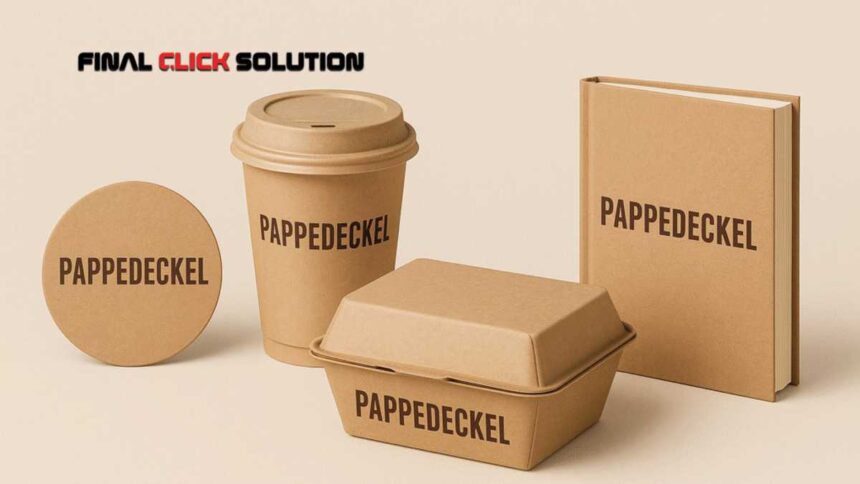
I’ll never forget the first time I truly appreciated what pappedeckel could do. I was moving apartments, frantically searching for affordable packing materials, and there it was in my storage room—a stack of sturdy cardboard sheets I’d been meaning to throw away. That moment changed everything. What I initially dismissed as waste became my moving day hero, protecting my grandmother’s china and saving me probably a hundred euros in bubble wrap.
Pappedeckel, or cardboard in English, is one of those materials we see every day but rarely think about deeply. It’s everywhere—wrapping our online orders, forming the backbone of cereal boxes, creating display stands in stores. Yet most of us only scratch the surface of what this humble material can accomplish. Over the years, I’ve developed what my friends jokingly call an obsession with cardboard, and honestly? They’re not wrong. But this obsession has taught me incredible things about sustainability, creativity, and resourcefulness that I want to share with you today.
Understanding Pappedeckel and Its Amazing Properties
Before we dive into the practical uses, let me take you through what makes this material so special. Pappedeckel isn’t just any cardboard—it’s typically the thicker, more substantial variety made from multiple layers of paper pulp pressed together. The German term specifically refers to this robust cardboard that’s sturdy enough for serious applications.
I remember asking my neighbor, who worked in a packaging factory for thirty years, what made good cardboard different from the flimsy stuff. He explained it with such passion, describing how the grain direction matters, how moisture content affects strength, and how different thicknesses serve different purposes. That conversation happened five years ago, and I still think about it whenever I’m selecting materials for a project.
The beauty of pappedeckel lies in its versatility. It’s lightweight yet surprisingly strong when used correctly. It can be cut, folded, glued, and painted. It’s biodegradable, recyclable, and often made from recycled content itself. In a world increasingly concerned about plastic waste, this material represents a return to sustainable packaging and creative solutions.
Protective Packaging Solutions for Every Need
Let me tell you about my small business journey. When I started selling handmade pottery online three years ago, packaging costs were eating into my profits terribly. Professional packaging supplies were expensive, and I worried constantly about items breaking during shipping. Then I started experimenting with pappedeckel solutions.
The first thing I learned was layering technique. You don’t need fancy materials when you understand how to create cushioning systems with cardboard. I’d cut strips, create accordion folds, and build custom-fitted inserts for each piece. My breakage rate dropped from about fifteen percent to less than two percent. Customers started commenting on the thoughtful packaging, and some even messaged asking if they could buy the inserts separately for their own storage needs.
For anyone shipping fragile items, here’s what works: create a box within a box system using cardboard sheets. The outer box takes the impact, while the inner protective layer cradles your item. Between the two, crumpled or accordion-folded cardboard strips act as shock absorbers. This method costs pennies compared to commercial alternatives and often works better because you’re customizing it exactly to your item’s shape and weight.
I’ve also discovered that pappedeckel excels at protecting corners and edges during moves or storage. Cut triangular pieces and fold them into corner protectors. They slide right over furniture edges, picture frame corners, or appliance sides. My sister borrowed this idea when moving her vintage mirror collection, and everything arrived without a single scratch.
Creative Storage and Organization Systems
My apartment is small. Like, really small. We’re talking about a one bedroom where the kitchen, dining area, and living room basically occupy the same space. Storage was my constant nightmare until I embraced cardboard as a legitimate organizational tool.
The transformation started with my closet. I was spending money on fabric storage bins that would collapse under weight or plastic ones that looked cheap and felt wasteful. Then I started creating custom cardboard dividers and boxes. I measured my shelves precisely, cut cardboard to fit, and created compartments for everything from scarves to charging cables.
What surprised me most was how sturdy these solutions remained over time. The cardboard boxes I made for shoe storage three years ago still look decent and function perfectly. I reinforced the edges with packing tape and covered some with wrapping paper or fabric scraps for aesthetics. Total cost? Maybe five euros for the entire closet system, compared to the hundred plus I would have spent on commercial organizers.
For drawer organization, thin pappedeckel works wonderfully. I created dividers for my kitchen utensil drawer, my desk supplies, even my jewelry. The key is measuring carefully and making the dividers slightly taller than they need to be initially—you can always trim them down, but you can’t add height back.
My favorite organizational project was building a vertical file system for my home office. I was drowning in papers, bills, and project documents. Commercial file organizers seemed unnecessarily expensive for what they were—basically just shaped cardboard anyway. So I made my own using old shipping boxes. I cut matching pieces, scored fold lines carefully, assembled them with strong glue, and created a system with labeled slots for different document categories. It’s been sitting on my desk for two years, and every visitor asks where I bought it.
Sustainable Gardening Applications
This use might surprise you, but pappedeckel has become essential to my gardening practice. I started a small balcony garden four years ago, knowing nothing about plants except that I wanted to grow my own herbs and maybe some tomatoes.
Cardboard works brilliantly as a weed barrier in container gardens and raised beds. I learned this accidentally when I laid cardboard pieces under my first planter to protect the balcony surface from water damage. Later, when I built a small raised bed at my parents’ house, I remembered that cardboard layer and researched its gardening applications. Turns out, it’s a permaculture staple.
The cardboard suppresses weeds while slowly decomposing and adding organic matter to the soil. It’s way better than plastic landscape fabric, which never breaks down and can harm soil health over time. I now lay cardboard sheets at the bottom of any new planting area, wet them thoroughly, then add soil on top. The weeds can’t push through, but water penetrates fine, and earthworms actually love working through the decomposing cardboard.
Another brilliant use is for starting seedlings. Instead of buying plastic seed starting trays, I cut cardboard egg cartons or toilet paper rolls into sections. Fill them with seed starting mix, plant your seeds, and the whole thing can go directly into the ground when it’s time to transplant. The cardboard decomposes naturally, and you avoid transplant shock because you’re not disturbing the roots.
I also use cardboard as mulch around the base of plants. It retains moisture, regulates soil temperature, and breaks down into nutrients. My tomato plants performed significantly better after I started using this method compared to my first year when I left the soil bare.
Educational and Entertainment Value for Children
My nephew changed how I viewed pappedeckel. He was six when I started babysitting him regularly, and keeping him entertained on a budget was challenging. We couldn’t always go out, and I didn’t want to just plant him in front of screens for hours.
Cardboard became our creative playground. We built entire cities with boxes and cardboard sheets. He’d draw windows and doors, I’d help with cutting and assembling, and we’d spend entire afternoons constructing elaborate structures. The best part? When he got bored with a creation, we’d recycle it and start fresh with no guilt about wasted money or plastic toys heading to landfill.
We made puppets, creating characters from his favorite stories using cardboard bodies and decorating them with markers, fabric scraps, and glue. We built a puppet theater from a large box, cutting out a stage opening and painting the whole thing. That theater provided months of entertainment and helped develop his storytelling skills and confidence.
One rainy weekend, we constructed a cardboard maze that wound through my entire apartment. We used boxes, sheets, and various cardboard pieces to create tunnels, walls, and obstacles. He invited his friends over, and they played in that maze for hours. The structural engineering lessons he learned while figuring out how to make walls stand up and corners turn properly were worth more than any expensive toy could teach.
For educational projects, cardboard works perfectly for models and dioramas. Whether it’s a solar system model, a historical scene, or a biology project showing plant parts, pappedeckel provides an affordable and accessible base material. It’s easy to work with, forgiving of mistakes, and encourages kids to think spatially and solve problems creatively.
DIY Furniture and Home Decor Projects
I’ll admit, I was skeptical about cardboard furniture initially. It seemed too flimsy, too temporary, too makeshift. But necessity pushed me to experiment, and the results genuinely impressed me.
My first project was a side table for my bedroom. I was broke after paying unexpected car repairs, but I desperately needed somewhere to put my alarm clock and water glass. I researched cardboard furniture techniques, learned about honeycomb structure for strength, and spent a weekend building.
The key to strong cardboard furniture is understanding structural principles. You can’t just stack flat pieces and hope for the best. Instead, you create internal support systems, often using triangular or honeycomb patterns that distribute weight effectively. My side table used a technique where I glued multiple layers of cardboard together, creating a thick, sturdy surface, then built columnar supports underneath using rolled and glued cardboard tubes.
That table held my books, lamp, and various bedroom clutter for over a year before I finally replaced it with something more conventional. Even then, I only replaced it because my living situation changed, not because the cardboard table failed.
For decor, pappedeckel offers endless possibilities. I’ve created picture frames, decorative wall letters, intricate wall art, and even light fixtures. The material takes paint beautifully, especially after a primer coat. You can cover it with fabric, paper, or leave it natural for an industrial aesthetic that’s actually quite trendy right now.
One of my favorite decor projects was creating geometric wall art for my living room. I cut identical triangular pieces from cardboard, folded each along a center line to create dimension, painted them in an ombre pattern from deep blue to white, and arranged them on the wall in a flowing, wave like pattern. Visitors consistently ask about that piece, and nobody believes it’s made from old Amazon boxes.
Professional and Business Applications
When I started freelancing, presentation mattered more than I expected. Clients judge your professionalism by everything, including how you present proposals, samples, and deliverables. I couldn’t afford fancy presentation boxes or custom packaging, but I needed something better than plain envelopes.
Pappedeckel became my secret weapon. I learned to create professional looking portfolio boxes, custom sized for different presentation materials. I’d cut, fold, and assemble boxes, then cover them with quality paper or fabric. Adding ribbon closures and printed labels made them look completely professional.
For craft businesses, product displays made from cardboard work surprisingly well. I’ve seen jewelry displayed on cardboard stands covered in velvet, soap bars presented in cardboard trays wrapped in kraft paper, and art prints organized in cardboard dividers at markets. The material is cheap enough that you can create fresh displays for each event without worrying about the investment.
Small businesses are increasingly using pappedeckel for eco conscious branding. Custom printed cardboard packaging tells customers you care about sustainability. Even without printing, well designed cardboard packaging with stamps or labels can communicate quality and thoughtfulness.
Environmental Impact and Future Possibilities
Here’s what motivates me most about using pappedeckel extensively: the environmental math just works. Every cardboard project I complete is one less plastic item purchased, one less thing heading to landfill prematurely, one more example of circular economy thinking.
The statistics are compelling. Cardboard recycling rates are relatively high compared to other materials, and the recycling process is well established and effective. When cardboard does end up in landfill, it biodegrades relatively quickly compared to plastic, which can persist for centuries.
I’ve become somewhat evangelical about this material with friends and family. Not in an annoying way, I hope, but in a “let me show you this cool thing I made” way that gets people thinking differently about waste and resources. Several friends have adopted cardboard solutions for moving, storage, or crafts after seeing my projects.
The future looks interesting for pappedeckel applications too. Companies are developing stronger, more water resistant cardboard formulations. I’ve read about cardboard being used in emergency shelter construction, temporary event architecture, and even experimental furniture design at high end stores. The material is being taken seriously by designers and engineers, not just as a cheap alternative but as a legitimate choice with distinct advantages.