

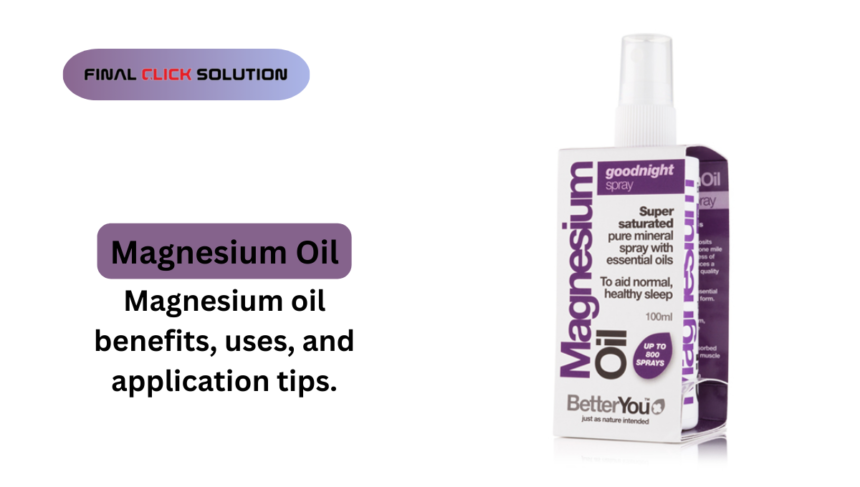
I’ll never forget the night I discovered magnesium oil. It was 2 AM, and I was lying in bed with my calf muscles cramping so badly that I thought I might cry. I’d tried everything—bananas, stretching, even those weird pickle juice remedies my grandmother swore by. Nothing worked. That’s when a friend mentioned this oily spray that wasn’t actually oil at all, and honestly, I thought she’d lost her mind. But desperation makes you do crazy things, right?
That moment changed everything for me. Within minutes of applying what I later learned was a concentrated solution of magnesium chloride, the cramping began to ease. I was hooked, not just on the product itself, but on understanding why something so simple could be so powerful. Today, I want to share everything I’ve learned about this incredible topical supplement that’s become a non-negotiable part of my wellness routine.
What Exactly Is This Mysterious Spray?
Here’s the thing that confused me at first: the name is completely misleading. When I first heard about it, I pictured some thick, greasy substance that would stain my clothes and make me slip on the bathroom floor. But it’s not oil at all. It’s actually a solution of magnesium chloride dissolved in water, and it gets its “oily” nickname from the slightly slick feeling it creates on your skin.
The texture is more like a very light, watery serum. When you spray it on your skin, it feels slightly slippery—kind of like when you accidentally get a bit of conditioner on your arms in the shower. That sensation is what people call “oily,” though it’s not greasy in the traditional sense.
I remember spending an entire evening researching the chemistry behind this stuff. Magnesium chloride, which is the active ingredient, is a compound that occurs naturally in seawater and ancient mineral deposits. When it’s concentrated and applied to the skin, your body can absorb it through a process called transdermal absorption. Pretty cool, right?
Why I Became Obsessed With Transdermal Magnesium
Let me take you back to my journey for a second. After that first miraculous night of cramp relief, I started digging deeper. I learned that magnesium is involved in over 300 biochemical reactions in our bodies. Three hundred! That’s not a typo. This mineral helps with everything from energy production to nerve function, from muscle contraction to bone health.
But here’s what really got me: a lot of us are walking around deficient in magnesium without even knowing it. Stress depletes it. Certain medications reduce our absorption. Even our modern agricultural practices have led to lower magnesium content in our food compared to decades ago. It’s like we’re all running on empty, wondering why we feel tired and achy all the time.
The traditional solution is oral supplements—pills, powders, those fizzy drinks that taste like chalk mixed with fake fruit flavoring. I tried them all. And you know what happened? My digestive system staged a full-scale rebellion. That’s the problem with oral magnesium: it can cause some seriously unpleasant digestive issues for many people. The topical approach bypassed all of that, delivering the mineral directly through my skin without upsetting my stomach.
The Benefits That Changed My Daily Life
I’m not exaggerating when I say this stuff transformed my wellness routine. The muscle cramp relief was just the beginning. After about two weeks of consistent use, I noticed I was sleeping more soundly. Not the kind of sleep where you’re knocked out but wake up groggy—I mean real, restorative sleep where I’d wake up feeling like I’d actually rested.
My post-workout recovery improved dramatically too. I’m a runner, and I used to spend the day after long runs feeling like I’d been hit by a truck. Sore muscles, stiffness, that general feeling of having overdone it. When I started applying the spray to my legs after runs, the soreness became much more manageable. It didn’t eliminate it completely—I mean, you still have to pay for pushing your body—but it took the edge off in a way that felt almost magical.
Then there were the unexpected benefits. My husband pointed out one day that I seemed less irritable. I hadn’t even noticed, but he was right. That constant low-level tension I’d been carrying around? It had eased. I wasn’t snapping at people over minor inconveniences. I felt more balanced, more capable of handling stress without immediately jumping to worst-case scenarios.
How to Actually Use This Stuff Without Making Mistakes
Okay, so here’s where I share all the things I wish someone had told me when I started. Because I definitely made some rookie mistakes at first.
My first application was a disaster. I was so excited that I sprayed it all over my body like it was some kind of luxury body mist. Big mistake. Within minutes, my skin was tingling and itching like crazy. I jumped in the shower, convinced I was having an allergic reaction. Turns out, I just used way too much, and I hadn’t diluted it properly.
Start small. Seriously. Begin with just a few sprays on one area—your legs or arms work well. Your skin needs time to adjust to the sensation. Some people experience tingling or itching at first, especially if you have sensitive skin or if you’re deficient in magnesium. It’s usually temporary and means your body is actually absorbing the mineral, but it’s not the most comfortable feeling.
I learned to apply it after showering, when my skin was clean and my pores were open. This seemed to improve absorption. I’d spray it on, let it sit for about twenty to thirty minutes, and then rinse it off if the feeling bothered me. Over time, I built up tolerance and could leave it on longer without discomfort.
The best areas for application are places with good blood flow and thinner skin. I focus on my legs, arms, and stomach. Avoid broken skin, fresh shaves, or sensitive areas. Trust me on this one—I once applied it right after shaving my legs, and it felt like I’d rubbed them with fire ants. Not pleasant.
Making Your Own Versus Buying It Ready Made
Here’s where things get interesting. You can actually make this at home pretty easily, and it’s significantly cheaper than buying pre-made versions. All you need is magnesium chloride flakes and distilled water. I started making my own about six months into my journey, and it’s become this weird little ritual I actually enjoy.
The basic recipe is simple: dissolve half a cup of magnesium chloride flakes in half a cup of boiling distilled water. Let it cool, pour it into a spray bottle, and boom—you’ve got yourself a batch that costs about a quarter of what you’d pay in stores.
But I’ll be honest: there’s something to be said for the commercial products too. Many of them include additional ingredients that make them more pleasant to use. Some add essential oils that smell amazing and provide their own benefits. Others include aloe vera to soothe the skin. I keep both homemade and store-bought versions on hand—the DIY stuff for everyday use and the fancy bottles for when I want a more spa-like experience.
The Side Effects Nobody Warns You About
Let’s talk about the less glamorous side of things, because I believe in keeping it real. That tingling sensation I mentioned? Some people find it so uncomfortable they give up entirely. It can range from a mild tingle to what feels like dozens of tiny needles pricking your skin. Not everyone experiences this, and it typically lessens with continued use, but it’s worth knowing about.
Some people also notice a slight white residue on their skin after it dries. This is just the magnesium chloride crystallizing, and it washes off easily. But if you’re someone who likes to apply it before getting dressed, you might want to give it time to fully absorb or rinse it off first.
I also learned the hard way that it can be somewhat sticky. That “oily” feeling I mentioned earlier? It’s not exactly unpleasant, but it’s definitely noticeable. I wouldn’t recommend applying it right before putting on your favorite silk blouse or heading out for a date night. It’s more of a nighttime or pre-shower thing for me.
How I Incorporated It Into My Wellness Routine
The key to getting real benefits from any supplement—topical or otherwise—is consistency. I know, I know, that’s boring advice. But it’s true. I started by using it every night before bed, specifically on my legs and lower back where I tend to hold tension.
My routine looks like this: shower, dry off, apply the spray to target areas, do my skincare routine while it absorbs, then either rinse it off or leave it on depending on how my skin feels that day. The whole process adds maybe five minutes to my evening routine, but the payoff has been completely worth it.
I also keep a small bottle in my gym bag now. After particularly intense workouts, I’ll apply it to my shoulders and legs in the locker room. It’s become as essential to my recovery as stretching and protein shakes.
The Science Behind Transdermal Absorption
Now, I’m not a scientist, but I’ve become a total nerd about this topic. The skin is actually a pretty sophisticated delivery system for certain substances. When you apply magnesium chloride topically, it penetrates through the outer layer of skin and enters your bloodstream through the capillaries underneath.
Some people debate whether this method is as effective as oral supplementation. The research is mixed, honestly. What I can tell you is that it worked for me when oral supplements didn’t. There’s something to be said for bypassing the digestive system entirely, especially if you’re someone who struggles with absorption issues or gastrointestinal sensitivity.
One study I read suggested that topical application might be particularly effective for localized issues—like applying it to sore muscles for targeted relief. That aligned perfectly with my experience of using it for cramps and post-workout soreness.
Common Mistakes I See People Make
After recommending this to countless friends and family members, I’ve noticed some patterns in how people mess it up. First, they expect instant, dramatic results. While I got quick relief from cramping, the other benefits—better sleep, less stress, improved recovery—took weeks to really notice. Patience is essential.
Second, people often use too little or inconsistently. You need regular application to maintain adequate levels. Using it once a week won’t do much. Third, they don’t pay attention to their body’s signals. If your skin is constantly irritated and uncomfortable, that’s feedback. Maybe you need to dilute it more, or apply it less frequently, or try a different brand.
Who Should Be Careful With This Approach
While I’m obviously a fan, it’s not for everyone. If you have kidney issues, you need to be cautious with any form of magnesium supplementation because your body might not excrete excess properly. People with very sensitive skin might find even diluted versions too irritating.
Pregnant women should definitely check with their healthcare provider first. And if you’re taking certain medications—particularly antibiotics or blood pressure medications—magnesium can interact with them. This isn’t medical advice, just common sense: when in doubt, ask a professional.
The Bottom Line From My Experience
Looking back on my journey with transdermal magnesium, I’m amazed at how something so simple became so transformative. It didn’t cure everything—I’m not going to make wild claims about miracle cures—but it genuinely improved my quality of life in measurable ways.
The cramping that used to wake me up at night? Gone. The post-run soreness that made me dread stairs? Manageable. The stress-related tension that had my shoulders permanently hunched? Significantly reduced. These changes happened gradually, but they added up to something meaningful.
I think what I appreciate most is how empowering it feels to have found something that works for my body, something I can make myself if I want to, something that doesn’t require a prescription or cause uncomfortable side effects. In a world where wellness can feel complicated and expensive, this simple spray has been refreshingly straightforward.
If you’re dealing with muscle cramps, poor sleep, or just feel like you could use better recovery after exercise, it might be worth trying. Start slowly, be patient with the process, and pay attention to how your body responds. It might not be the miracle solution for everyone, but for me? It’s been pretty close to one. And sometimes, that’s all we can ask for—something simple that makes our daily lives just a little bit better.